Skip to content

How the Chick-fil-A menu led to national recognition for group of Tucker HS students

Table of Contents

Four members, Chick-fil-A, and a dream. That’s all it took for a group of J.R. Tucker High School students to beat out more than 200 teams and land a spot in the Federal Reserve’s Journal of Future Economists.

The Federal Reserve’s High School Fed Challenge is an annual competition run by the Federal Reserve Bank of New York and the Federal Reserve Bank of Cleveland in which students work in teams to research a chosen topic and create a podcast script explaining an economic issue based on a theme.

Contestants this year were tasked with exploring the “Economics of Food.” In the sea of winning topics, exploring American agriculture, food insecurity, and food deserts, the Tucker group opted to focus on Chick-fil-A.

The students' submission connected the fast-food chain’s menu to questions of health consciousness and price elasticity, exploring the impact of price on consumers’ decisions to buy healthier alternatives depending upon their attitudes toward health.

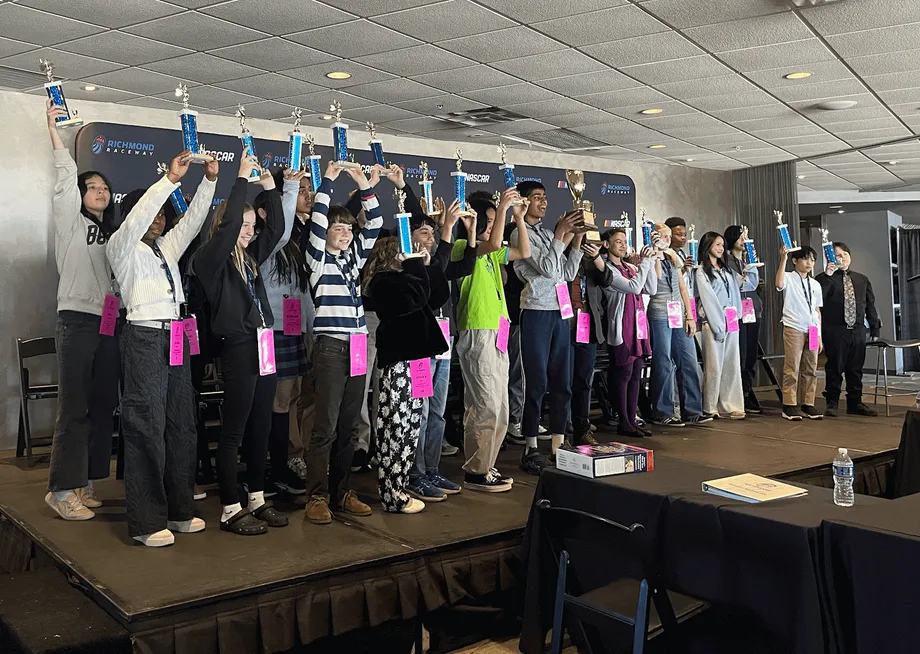
In doing so, the entry stood out among hundreds of applicants to become the first team from Henrico County selected among 12 high school groups published in the 2025 Journal of Future Economists.

Tucker is one of five schools in Henrico County to offer the International Baccalaureate Program, but it does not offer economics as part of its curriculum.

“Doing it externally is a way to, if nothing else, quench that curiosity,” Tucker High School senior Victor Ma said.

Ma, who was the team leader, aspires to become an economist. As such, he has had to be creative to find ways to explore economics in high school.

“I had already published a piece of research before this, and coming into this year, I also wanted to pursue something similar,” Ma said.

After doing some research, he stumbled upon the High School Fed Challenge. Wanting to share his passion for economics with his friends, he brought along Kyle Chen, Saicharan Valipireddy and Jahi Shah.

When the theme was announced, Ma and his team knew they wanted to explore fast food, as it allowed them to showcase the technicalities of economics with an easily digestible topic. When discussing which seemed to be the most popular fast-food chain around them, Ma instinctively thought of one brand: Chick-fil-A.

Using Chick-fil-A’s grilled and fried chicken sandwiches as a case study, the team surveyed 81 people to investigate the impact of price on consumer decisions. Combining original research with secondary data and linking their work to health trends such as the use of weight-loss drugs, they found that that health-conscious peolpe were more willing to pay for healthier options, while those less focused on health were far more influenced by price.

With guidance from faculty adviser and English teacher Linda Mills, the team highlighted how health awareness shapes consumer behavior. By showcasing the relationship between economics and public health through current issues, its insights led to the award-winning submission.

“When I found out we were selected, it kind of just felt like a weight was taken off my shoulders. It was really relieving to know that our hard work paid off,” Shah said.

Tucker 'exceptionally proud' of its team

The High School Fed Challenge is one of the many initiatives of the Federal Reserve to provide a platform for budding economists to explore the field.

“It's really designed to make sure that students have an opportunity to see how economics connects to some aspects of our daily life and encourage them to explore their interests and learn more about what being an economist might actually mean,” said Sarah Gunn, director of economics education at the Richmond Fed.

According to Gunn, this was the first-year students outside the New York region were able to participate.

“We're exceptionally proud that Tucker, our students, were one of the top 12 teams,” Gunn said.

As part of the competition’s rules, participants were asked to prepare a podcast script to present their research. In the early stages of producing their script, the Tucker team struggled to make complex concepts sound conversational.

“We’re all used to formal writing in IB, so breaking out of that shell was definitely one of the biggest challenges,” Chen said.

Chen said that the group had to work during its winter break to ensure it had thoroughly done its research. “We compiled probably six or seven pages of research,” he said.

To stand out among other participants, the students conducted their own research to calculate price elasticity. They asked people about their attitudes toward healthy eating and whether they’d be willing to pay more for different menu items at the fast-food chain. The team said that beyond having to write in a conversational tone, their next challenge was getting enough responses to analyze the data.

“We ended up leveraging Instagram stories and word of mouth to actually get people to participate in our survey,” Valipireddy said.

Months of research, rewrites, and late-night edits finally paid off, earning them a place on the national stage. While they were delighted to find out they were selected, that wasn’t their intent coming into the competition. Their true goal was to learn, to build skills, explore economics, and most importantly, have fun.

“I had a good time with this experience,” Shah said. “It was enjoyable, it was really interesting.”

For their faculty adviser, the competition was off her radar.

“All four of these guys are excellent students, so I was excited, but I didn’t know anything about it, so I had to go and read what the bank said about this, and what the Fed Challenge was,” Mills said. “I had never heard of it.”

After recognizing the students’ enthusiasm, she gladly supported their progress, offering feedback with each draft. She was particularly amazed by their work ethic, given the demands of their curriculum. “In the middle of all of this, they had their big 4,000-word IB extended essay on their plate, plus all of the work that goes into junior year,” she said.

What impressed her most was their drive to pursue an academic opportunity independently, without any grades or classes attached.

“This wasn’t something that was required. It wasn’t an assignment. They did all of this on their own. That, to me, is so impressive,” Mills said.

Outside the Fed Challenge, Gunn oversees several economic educational programs in classrooms. With Tucker High’s success, she hopes more schools will apply, especially now that the competition has opened nationwide.

“We just really want to ensure that all of the high schools in our region are aware that this is an opportunity for their students,” she said.

For Mills, simply watching her students beam with pride made the opportunity worthwhile.

“I personally was so excited for them, because they had done all the work, so that was kudos to them,” she said.

Comments