House panel advances bills limiting ICE activity in Virginia
Package would require judicial warrants for courthouse arrests and restrict immigration enforcement in schools, polling places and other public spaces
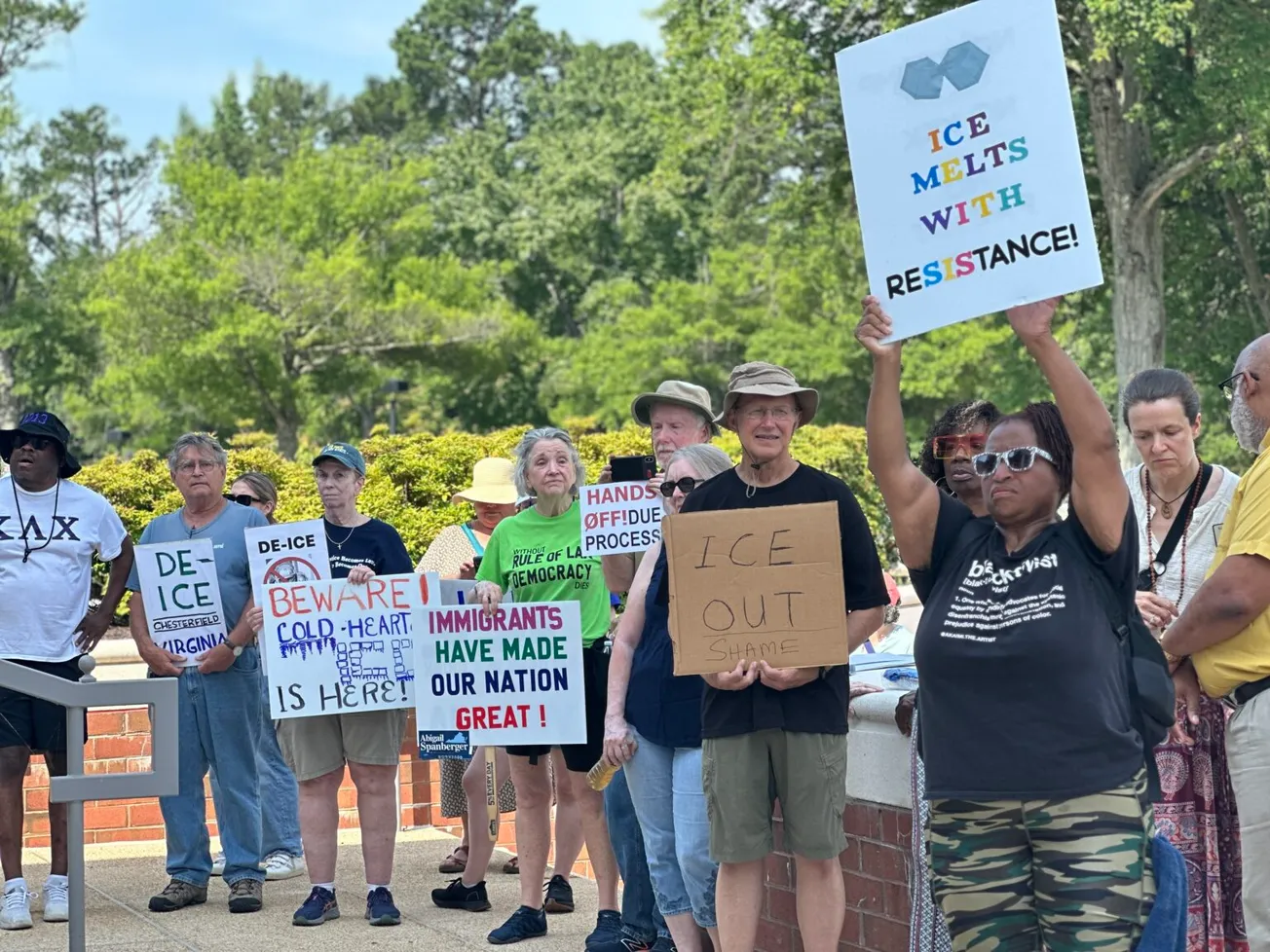
A Democratic House subcommittee early Friday morning advanced a broad slate of bills aimed at tightening how U.S. Immigration and Customs Enforcement can operate in Virginia. Lawmakers and supporters say the package of proposals is designed to protect access to courts, schools, polling places and other sensitive locations while restoring public trust shaken by recent federal immigration enforcement activity.
The measures, many of which were consolidated because of overlapping goals, now head to the full House Public Safety Committee.
Taken together, the bills would require judicial warrants for certain civil immigration arrests in courthouses and other public facilities, restrict immigration enforcement near polling places, limit cooperation between state and local law enforcement and federal immigration authorities, and impose new penalties on officers who conceal their identities or impersonate federal agents.
The subcommittee’s action comes amid heightened scrutiny of ICE activity across the commonwealth, including reports of masked or unidentified agents conducting civil arrests in and around courthouses cited by lawmakers. The courthouse arrests are a shift from prior federal policy that has drawn sharp criticism from Democrats and immigrant-rights advocates.
Courthouse arrest limits anchor broader ICE enforcement package
One of the central bills moving forward is House Bill 650, sponsored by Del. Katrina Callsen, D-Albemarle, which passed on a 4-1 party-line vote.
The bill would prohibit most civil arrests in courthouses without a judicial warrant or order and shield people required to attend court — along with their family members, witnesses and others accompanying them — from civil arrest while traveling to, attending or leaving court proceedings. Any violation could be punished as contempt of court.
“This bill is responsive to ICE enforcement activities that are happening in courthouses,” Callsen told the subcommittee.
“Since January 2025, ICE has reversed longstanding policies and started ramping up warrantless civil and administrative arrests within our courthouses.”
She said agents have appeared “sometimes masked and often unidentified,” creating confusion for court personnel and fear among victims and witnesses.
“If people are afraid to come to court, it hurts us all,” Callsen said, adding that the bill would codify the long-standing principle that arrests in courthouses require a warrant.
Because of their similar scope, lawmakers voted to merge several other proposals into Callsen’s bill before sending it forward.
Among them was HB 1260 by Del. Irene Shin, D-Fairfax, which would require public K-12 schools to notify parents and staff if federal immigration enforcement officers are present on school property and would bar access to nonpublic school areas without a judicial warrant.
The bill would impose similar notification and warrant requirements at public colleges and universities.
Shin said the proposal mirrors laws adopted in other states and was shaped by concerns in her district. In Herndon, she said, parents have seen immigration enforcement activity near school drop-off and pick-up times.
“It seems like a pretty crazy time to go and prey on vulnerable communities,” Shin said.
She emphasized that the bill distinguishes between judicial warrants and administrative paperwork, requiring the former to access nonpublic spaces.
Also folded into Callsen’s measure was HB 1265 by Del. Jackie Glass, D-Norfolk, which largely mirrors Callsen’s courthouse protections. Glass said similar laws have already withstood federal challenges in other states.
“They have defended themselves against the federal government,” she said of New York. “So that’s proof that the concept works, it’s necessary.”
Two other bills by Del. Alfonso Lopez, D-Arlington, were also merged into the courthouse proposal.
HB 1440 would prohibit federal immigration enforcement in nonpublic spaces of certain “protected areas,” including schools, hospitals, commonwealth’s attorney offices and other facilities designated by the attorney general, unless authorized by a judicial warrant or subpoena.
And HB 1442 would bar immigration enforcement activities within 40 feet of polling places, election board meetings or recount sites.
Lopez framed the proposals as a defense of core civic functions.
“The commonwealth has a right and duty to ensure that we have free and fair elections,” he said of the polling-place restrictions, arguing that immigration enforcement near voting locations could intimidate eligible voters.
On protected areas, Lopez said the goal is to prevent “harassment by federal agents in areas that would provide important community services, like education, health care, and legal assistance.”
Lawmakers target officer anonymity and impersonation concerns
In addition to the merged package, the subcommittee advanced several standalone bills targeting related issues.
HB 1482, by Del. Charlie Schmidt, D-Richmond, passed 4-1 and would prohibit state and local law-enforcement officers from wearing most facial coverings while performing their duties, with exceptions for health protection and SWAT operations.
The bill would also require officers to visibly display identification and create criminal penalties and civil liability for violations.
Christian Martinez Lemus of CASA, speaking in support, cited a December incident in which a masked individual posing as an ICE agent went door to door in Northern Virginia.
“When people can’t tell the difference between real law enforcement and imposters, it creates fear that prevents them from seeking help when they need it,” he said.
April Breslaw of the Virginia Grassroots Coalition echoed those concerns, telling lawmakers that anonymity “undermines public trust, endangers public safety, and hinders legitimate law enforcement operations.”
The panel also approved HB 1492, sponsored by Shin, which would increase penalties for impersonating a federal law-enforcement officer, elevating the offense to a felony.
Two bills addressing cooperation between Virginia law enforcement and federal immigration authorities were combined and also passed 4-1.
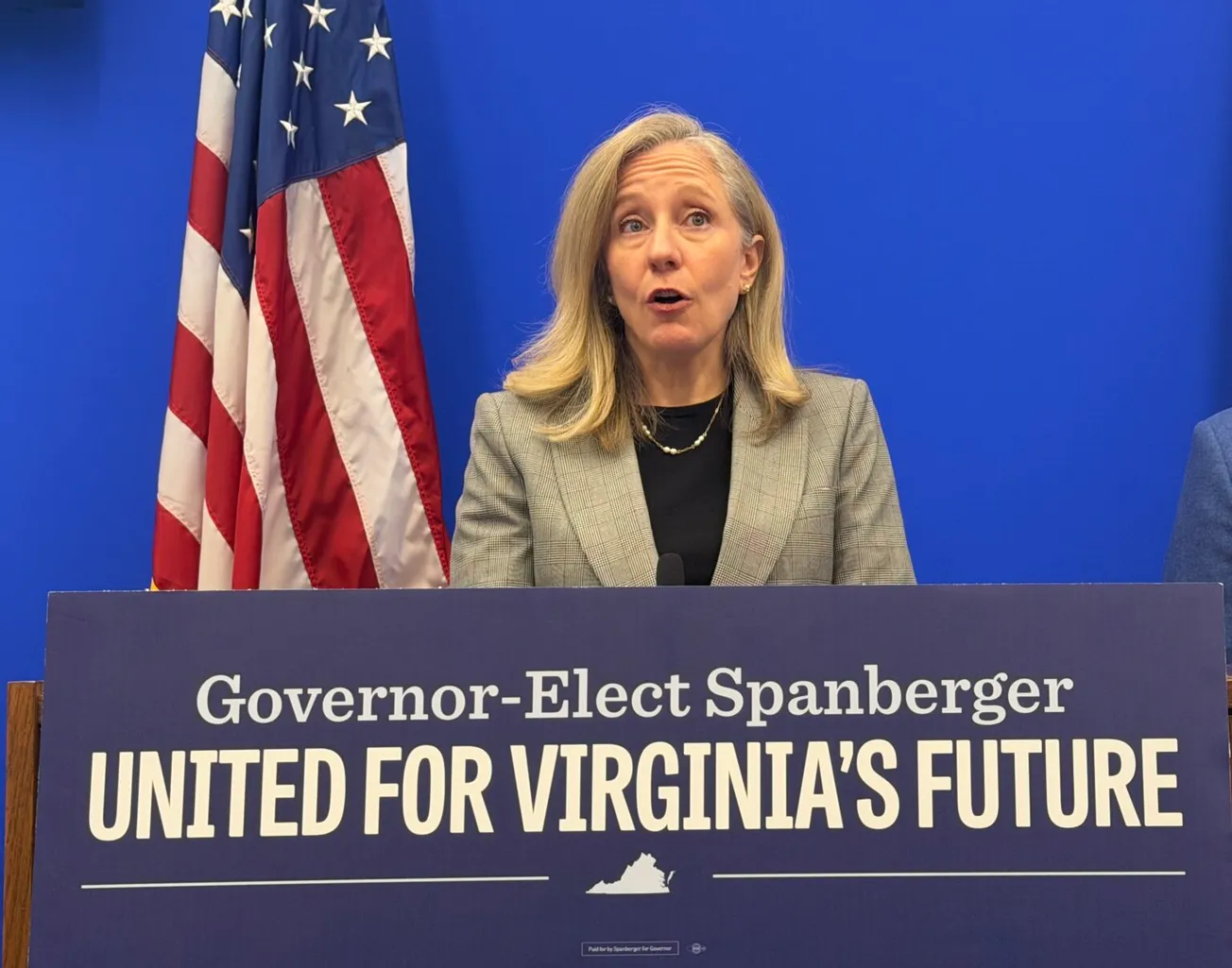
The measures follow Gov. Abigail Spanberger’s Executive Order 12, issued earlier this week, which formally ended an agreement with the U.S. Customs and Immigration Enforcement that allowed Virginia State Police and state correctional officers to assist with federal immigration operations.
HB 1441, by Lopez, would bar state and local officers from assisting in federal immigration enforcement unless required by law or presented with a valid judicial warrant, subpoena or detainer.
And HB 1438, by Del. Elizabeth Guzman, D-Prince William, would prohibit state agencies from entering agreements that deputize officers as federal immigration agents and require existing agreements to be terminated by September 2026.
Virginia Mercury is part of States Newsroom, a nonprofit news network supported by grants and a coalition of donors as a 501c(3) public charity. Virginia Mercury maintains editorial independence. Contact Editor Samantha Willis for questions: info@virginiamercury.com.