Henrico's Top Teachers – Brandi Wade, Baker Elementary School, exceptional education
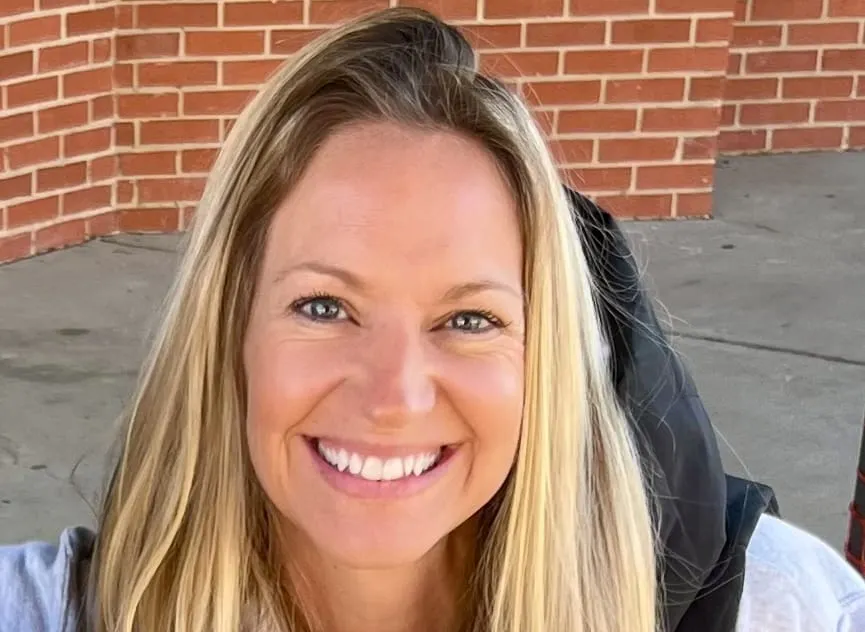
Brandi Wade was headed for a career in social work, but after meeting and marrying her husband, Chuck (a physical education teacher at Deep Run High School), those plans changed.
“I couldn’t find a job to get into social work, and he’s like, ‘Have you ever thought about being a teacher?’” Wade recalled. “I said ‘no,’ and he said ‘Well, you should!’”
Eighteen years later, she feels she’s where she should be, as an exceptional education resource teacher at Baker Elementary School in Varina. It’s been her only home in the profession, and though the work can be challenging and difficult, the breakthrough moments and impact her efforts have on students keep her coming back each year.
“It’s tough,” she said, “and it gets more and more tough each year, but then you have those success stories, those ‘ah-ha’ moments – nothing will ever replace them.”
Wade primarily works with 15 second- and third-graders at the school, helping them with math and reading each day, but when she is in their home classrooms, she also ends up helping other students at the same time. Her students may have behavioral issues, physical challenges or academic issues, so the role requires her to adapt quickly to a variety of situations and stay focused on reaching students where they are.
“I’m teaching life skills and social skills and all sorts of things,” she said. “It’s not just academic for them.
When they come to school, they see me as more than just their teacher.”
Baker is a Title I school, a federal designation that applies to schools in which a high percentage of students come from low-income families. That can present a number of challenges for the students Wade works with, since some are in single-parent households, foster homes or in homes where parents or guardians may not be able to offer consistent academic help.
One of Wade’s students this year presented a number of behavioral challenges early on, earning a handful of suspensions during the first few months of school even while on a pre-established behavioral plan. Wade admitted that trying to get through to him was one of the most significant challenges of her entire career.
“We invested so much time in him,” she said. “We bought into him, and he finally bought into us.”
Wade attended his youth sports games outside of school, worked with his family and developed a behavioral plan tailor just for him that rewarded him midday and at the end of the school day for sustained positive behavior. His family monitored and rewarded him for positive behavior at home, too.
“We stayed on him,” Wade said. “He realized that we weren’t giving up on him. We told him ‘We’re not backing off – you’re going to get it done.’
For the past six months, the student has not demonstrated any of the behavioral issues that caused him trouble last fall.
“He’s one of my proudest moments in all my 18 years.”
Wade conceded that social media and technology have created a number of issues for elementary school students, most of whom now have access to cell phones and iPads outside of school where they view inappropriate things.
“That translates into [poor behavior] at the bus stop or in school,” she said.
Combating those influences, Wade suggested, requires old-fashioned parenting.
“Just be involved. Be aware of what you’re kids are exposed to,” she said. “Be a parent, not a friend. We all look back and we want a parent. At the end of the day, my job is not to be their friend, it’s to parent them and teach them how to be a better person.”