Henrico Black History Month Spotlight – Louis Hansel Draper
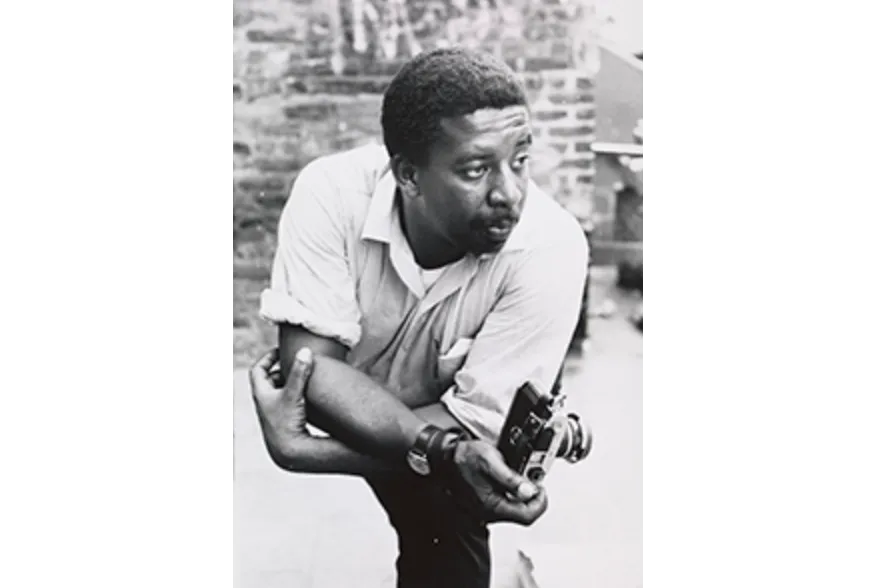
In honor of February as Black History Month, the Henrico Citizen will spotlight (on each weekday during the month) an important current or former Black resident of Henrico whose life has helped shape the county.
Born in Henrico County’s Bungalow City community off Nine Mile Road during the depths of the Great Depression, Louis Hansel Draper rose from modest beginnings to become one of the most influential Black photographers of the 20th century — an artist whose lens documented both the quiet dignity of everyday Black life and the urgency of the Civil Rights Era.
Draper was born Sept. 24, 1935 to Hannel and Dorothy Taylor Draper. He spent part of his childhood living with his maternal grandparents and later attended the Van deVyver Institute, a private Catholic school near Richmond, before graduating from Virginia Randolph High School in Glen Allen, the first high school for Black students in Henrico.
In 1953, Draper enrolled at Virginia State College (now Virginia State University) in Petersburg intent upon majoring in history. Photography entered his life almost by chance. His father, an amateur photographer, gave him his first camera while he was in college. After seeing the exhibition catalog for the landmark 1955 show The Family of Man, Draper discovered what he later described as a “mad desire” to become an art photographer. In 1957, he left school just short of graduation and moved to New York City to pursue his craft.
In New York, Draper studied with noted photographers Harold Feinstein and W. Eugene Smith and later earned a master of fine arts degree from New York University’s Institute of Film and Television. By 1959, he had already gained national attention when his work was included in the “Photography at Mid-Century” exhibition at the George Eastman House in Rochester, New York.
That same year, Draper created one of his most powerful and enduring images, Congressional Gathering, a stark black-and-white photograph of hanging drapery arranged to resemble Ku Klux Klan hoods. The image has been interpreted as a searing commentary on racial violence and Virginia’s Massive Resistance movement against school desegregation.
In 1963, Draper helped found the Kamoinge Workshop, a collective of African-American photographers based in Harlem. The group was formed to foster artistic excellence, mutual support, and mentorship at a time when Black photographers largely were excluded from mainstream institutions. Draper became a central figure within Kamoinge, serving as a mentor, archivist, and historian of the group. He later published a history of the collective in Photo Newsletter in 1972.
Throughout his career, Draper photographed cultural icons and civil rights leaders, including Fannie Lou Hamer, Malcolm X, Langston Hughes, Miles Davis, and John Coltrane. His work appeared in Essence magazine, Camera, and multiple volumes of The Black Photographers Annual.
Draper’s photographs are now held in major collections, including the Museum of Modern Art, the Schomburg Center for Research in Black Culture, and the Virginia Museum of Fine Arts. In 2025, his work was featured in the National Gallery of Art exhibition “Photography and the Black Arts Movement, 1955–1985.”
Beginning in 1982, Draper served as professor and coordinator of photography programs at Mercer County Community College in New Jersey, where he mentored a new generation of artists.
Louis Hansel Draper died Feb. 18, 2002, in Lawrenceville, New Jersey. He is buried at Forest Lawn Cemetery in Henrico County. His legacy endures through the images he created — photographs that captured not only faces and moments, but the spirit of a movement and a people.