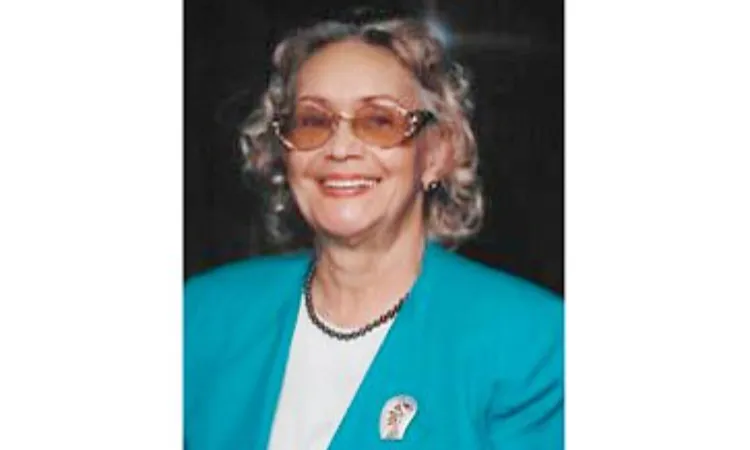
Henrico Black History Month Spotlight – Heidi Ford

In honor of February as Black History Month, the Henrico Citizen will spotlight (on each weekday during the month) an important current or former Black resident of Henrico whose life has helped shape the county.
Heidi E. Ford, an educator and agricultural extension professional who helped break racial barriers in Virginia’s higher education and outreach systems, built a decades-long career dedicated to public service, teaching and community development.
Born on Aug. 15, 1926, Ford likely end born in Sussex County, Virginia, where her parents, Wayne and Jane Hollemon Ford, operated a farm. Census records from 1930 list her father’s occupation as farming and note that both parents were literate, reflecting a family emphasis on education and opportunity. At the time of that census, Ford — recorded as “Elidi” — had not yet begun school.
Although available records confirm that Ford was college educated, details about where and when she completed her degree don’t exist. Her professional trail became clearer in 1948, when she joined the non-resident staff of Virginia Tech as a home demonstration agent in Nelson County. Home demonstration agents played an important role in mid-20th-century rural life, offering instruction in nutrition, home management, youth development and community improvement programs.
Ford’s career soon brought her to Henrico County, where records suggest she became the first African-American woman hired as a “home agent.” She served in that role from 1952 to 1955, marking an important milestone during a period when opportunities for Black women in local government and extension work were still limited by segregation and systemic barriers.
By 1964, Ford was listed as a district agent for Virginia State College in Petersburg, now Virginia State University. In that position, she helped lead special programs aimed at expanding education and resources to communities throughout the region. Her leadership and experience later helped pave the way for her return to Virginia Tech, where she became an associate professor in 1970.
Ford’s career also represented a historic breakthrough at the institutional level. An online exhibit by Alpha Kappa Alpha Sorority identifies her as the first African-American woman to work in the Extension Division of Virginia Tech.
In 1983, she was honored alongside other educators at Virginia Tech and received a 35-year service certificate from the U.S. Department of Agriculture, recognizing a career devoted to extension education and public outreach. At the time she retired in 1985, Ford was serving as the university’s equal employment opportunity officer, helping ensure fairness and access within the institution.
After retirement, Ford apparently relocated to Ettrick, closer to Virginia State College and her home region. She never married. Ford died on June 11, 1990, in Petersburg and was laid to rest near her mother at Little Mount Baptist Church cemetery in Sussex County.