Full text of Spanberger's first address to joint session of Virginia General Assembly
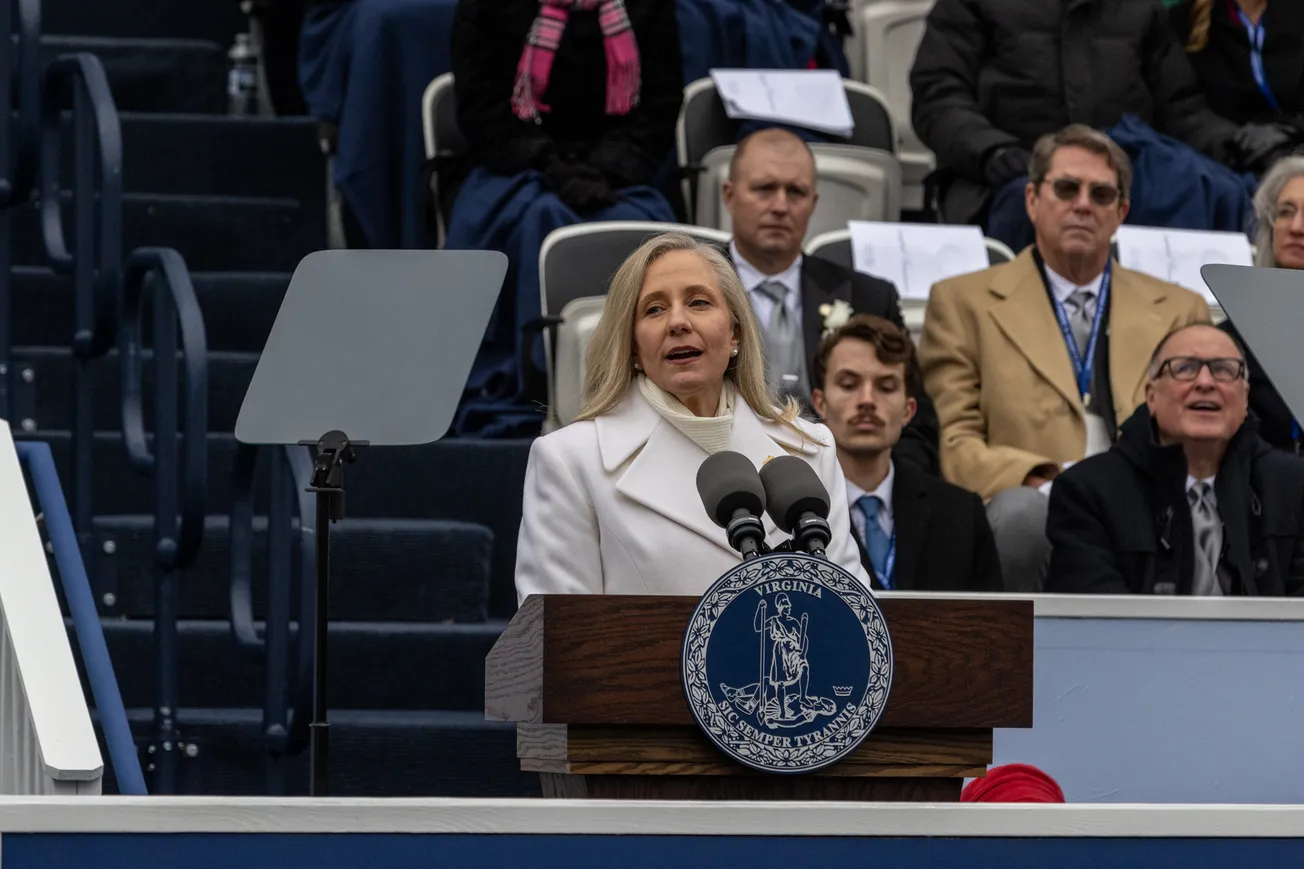
Virginia Gov. Abigail Spanberger Jan. 19 delivered her first address to a joint session of the Virginia General Assembly, during which she outlined her goals and priorities for the session and her four-year term. The full text of her address is below.
Mr. Speaker, Madam Lieutenant Governor, Madam President Pro Tempore, Members of the General Assembly, Mr. Attorney General, Justices of the Supreme Court, Members of the Cabinet, our Clerks, honored guests, and most importantly — my fellow Virginians:
Two days ago, we celebrated an inauguration — the peaceful transfer of power that has defined Virginia for 250 years.
On Saturday afternoon, I spoke about the urgent need to unite for a common purpose. Amid a national moment too often defined by chaos, our fellow citizens are anxious about the future.
Today, that work — the work of governing and providing stability — begins in earnest. Thank you for your time this afternoon; it is an honor to stand before you as your 75th Governor.
With us today in the gallery is the first First Gentleman in Virginia history — my husband Adam.
When we met, neither of us could have imagined we'd end up here — but I'm grateful to be taking on this adventure together. Adam, thank you for your willingness to serve Virginia in this new role.
As you know, the Constitution of Virginia requires the Governor to report on the State of the Commonwealth once a year. I have had this job for just a little more than 48 hours — so please bear with me.
In all seriousness, it is nearly impossible to step into Thomas Jefferson's Capitol and not feel the weight of our shared history. Generations of Virginians have stood in this building and shaped the course of our Commonwealth — and written the history of America.
And this week, we added new chapters to that history.
Just yesterday, Chief Justice Cleo Powell — the first African American woman to lead the Supreme Court of Virginia in our Commonwealth's history — swore in new Cabinet members.
Our fellow Virginians are also now served by two other history-making public servants: Lieutenant Governor Ghazala Hashmi — the first Muslim woman elected to statewide office in the country.
As well as Virginia’s first elected African American Attorney General, Jay Jones.
Finally, I also want to recognize the incoming class of delegates seated in this chamber. A record 42 women now serve in the House of Delegates.
These milestones belong to all Virginians — no matter your political affiliation. They are proof that our representative democracy is becoming exactly that — truly representative.
And this progress is thanks to voters — from every corner of this Commonwealth — who made their voices heard at the ballot box.
The voters sent us here. Each and every one of us. We must never forget that as we embark on the hard work we have ahead of us.
In November, Virginians from across the political spectrum united to build one of the broadest coalitions for change in a generation. They sent a message — loud and clear — that they want leaders who will work together and deliver results. I intend to listen.
People have asked me in recent weeks about the concept of a “mandate.” They wonder what the results of November's elections will mean in practice.
Here is what I believe: Virginians did not elect me to pursue a particular ideological agenda. Nor did they elect me to settle scores or add to the noise in our politics today. They did not elect me to grandstand.
My mandate is simple: to get things done for Virginia families, Virginia schools, and Virginia businesses. Period.
If I learned anything from my previous time in elected office, it’s that Virginians want a government that works. They want elected leaders who show up, listen, and work to make their lives a little easier.
They want us to address the challenges that are keeping them up at night.
That is what I pledge to do for the next four years. And I ask you — all of you, in both parties — to join me in this endeavor.
To the members of this General Assembly: I know what it means to represent your neighbors, to take on the burdens of public scrutiny, to give up time with your family in service to your community. That is no small thing.
Whatever differences we may have in the days ahead, I respect the service each of you has chosen to give, and this administration is committed to being your partner moving forward.
When we work together, Virginia succeeds. It's really as simple as that.
So let me say this directly at the start: my door is open. To every member of this body — Democrat or Republican. I’ve always believed that no person and no party has a monopoly on good ideas.
That's why I've built an administration that reflects that belief — a cabinet and staff of talented, experienced leaders ready to work alongside you. They are public servants.
I’m grateful to them — and to my entire cabinet and staff — that they have answered the call to serve in this capacity.
And to the career public servants serving our Commonwealth across state departments and agencies, thank you for everything you do.
Please understand that I want you — and expect you — to do your very best work. I want you to have the right tools and feel supported. And I want you to know that I am grateful for the expertise and commitment you bring to serving the citizens of Virginia.
We have several state employees joining us in the gallery today. Please join me in recognizing them.
During my time in Congress, I was ranked as the most bipartisan member from Virginia. I may have mentioned that once or twice during the campaign.
My administration intends to govern the same way.
And to work together to deliver for the people of Virginia, we must tackle the most pressing challenge facing our neighbors today: the high cost of living.
I want to take a moment on this — because when we talk about affordability, it's important to be clear about what we mean and why it matters.
Over the past two years, I have traveled to every corner of this Commonwealth. I have met seniors in Southwest Virginia struggling to afford their prescription medication, parents in Hampton Roads worried about rising energy bills, and young people in Northern Virginia who want to stay and build their lives here — but cannot find housing they can afford.
Now, I know there are some who want to dismiss these concerns. Some who look at Wall Street and say the economy is doing just fine. Some who simply want struggling families to be patient — that relief is right around the corner if they just wait a little longer.
There are some who have even called affordability a "hoax." A "con job."
I would invite them to come to Virginia and engage with the families and business leaders I have met. Because the facts tell a different story.
More than 70 percent of Virginians say they cannot find housing they can afford to rent or buy.
Nearly half of college students who graduate from Virginia universities leave the Commonwealth within five years — above the national average.
Prescription drug costs have risen. Energy bills are high.
My fellow Virginians, this is not a hoax. This is real life. And if we cannot be honest about the problem, it will be impossible to find solutions.
The truth is that prices have been rising for years. But the economic uncertainty and instability coming out of Washington over the past 12 months, particularly for Virginia, have made things undeniably worse — and families are paying the price.
So, what can we do, right here in Richmond, to make Virginia more affordable?
As Governor, I cannot wave a magic wand to make prices drop overnight. Believe me, I wish I could.
But there are tangible steps we can take right now on the state level to make good on our pledge to Virginia families.
On Saturday, some of my very first executive actions as Governor reflected this mission.
Two days ago, I ordered all of my Cabinet Secretaries and all Executive Branch agencies to identify where they can reduce costs for Virginians — whether that’s immediate fixes or longer-term budgetary, regulatory, or policy changes.
They must submit these reports within 90 days, because we can’t afford to wait. I look forward to reviewing the recommendations and putting them into action.
I have also directed a comprehensive, multi-agency review of regulations and permitting practices that impact our ability to build new homes.
We need to cut red tape, eliminate burdensome requirements, and streamline approvals. We need to get ready to build more housing — and that’s why I am establishing a Commission on Unlocking Housing Production.
And when it comes to the cost of healthcare, we’re not waiting around. My administration is establishing a new, Interagency Health Financing Task Force.
We need to make sure we’re spending our healthcare dollars effectively. We need to strengthen our healthcare infrastructure. And we need to identify where federal cuts will hurt Virginia the most. This Task Force will be entrusted with finding these answers, and it will get to work immediately.
But executive action alone is not enough. To deliver lasting relief, we need legislation.
That is why today, I am asking the General Assembly to join me in passing our Affordable Virginia Agenda — a legislative package designed to be a first step toward lowering costs for Virginia families in three critical areas: healthcare, energy, and housing.
I want to thank the majority leadership here today for partnering with me on unveiling these proposals.
But these are not hyperpartisan proposals; they are commonsense solutions. And I believe they deserve support from every member of this body, Democrats and Republicans.
Let me walk you through what we are proposing.
First, healthcare.
No Virginian should have to choose between filling a prescription and paying for groceries. But that is the reality for too many families.
So let's start with prescription drugs. Right now, pharmacy benefit managers — the middlemen known as “PBMs” — are driving up the cost of medications while pocketing the savings for themselves.
They steer patients away from local pharmacies. They claw back payments from small businesses. And they make it harder for Virginians to afford the medications they need. This has to stop.
Our legislation will require that rebates go back to patients — not corporate middlemen — and protect independent pharmacies from predatory practices.
Next: the Affordable Care Act marketplace. At the start of this month, we watched as leaders in Washington sat on their hands and allowed premiums to skyrocket. Virginia families simply can’t afford to wait for Congress to act. So we are going to act first.
Our proposal will establish targeted premium assistance. That way, we can keep coverage more affordable for Virginians who are most at risk of losing it.
And finally: we need to invest in our healthcare workforce. You cannot see a doctor if there is no doctor to see. Too many communities across Virginia — particularly in rural areas — are facing critical shortages of healthcare providers.
Our legislation will strengthen incentive programs to recruit and retain providers where they are needed most — so that every Virginian can access quality, affordable care close to home.
Second, energy.
Virginians are paying far too much to heat and cool their homes. And while we cannot control global energy markets, there are things we can do to lower monthly utility bills for Virginia families.
We are going to expand energy storage across the Commonwealth. Energy storage allows us to capture cheaper power and use it during peak demand — when prices are highest. That means savings for families and a more reliable grid for everyone.
We are also going to expand programs that help low-income Virginians make their homes more energy efficient. Simple improvements like better insulation and weatherization can save families hundreds — even thousands — of dollars per year.
Virginia needs to be more energy independent. That means solar. That means nuclear. And yes, despite what Washington might have you think, it also means offshore wind.
As we speak, the federal Interior Department is attempting to halt offshore wind development across the country — including one of the largest infrastructure projects in Virginia's history.
And while I was glad to see the court ruling on Friday that temporarily blocked this action by the federal government, we all know that this battle is far from over.
This project will create thousands of jobs and generate billions of dollars in economic activity in Hampton Roads, and as Governor, I will do everything in my power to make sure it continues to move forward.
And if we’re talking about energy affordability, let me say here today that the Commonwealth of Virginia is rejoining the Regional Greenhouse Gas Initiative —RGGI.
For me, this is about cost savings. RGGI generated hundreds of millions of dollars for Virginia — dollars that went directly to flood mitigation, energy efficiency programs, and lowering bills for families who need help most.
Withdrawing from RGGI did not lower energy costs. In fact, the opposite happened — it just took money out of Virginia's pocket. It is time to fix that mistake.
The third issue in our Affordable Virginia Agenda is housing.
This is personal for so many Virginians. Young people who grew up here and want to stay — but cannot find an apartment they can afford. Families who have saved for years but still cannot compete in the housing market. Seniors on fixed incomes watching their rent climb higher every year.
We have a housing shortage in Virginia. And until we address it, prices will keep rising.
So here is what we are going to do:
First, we are going to protect renters. Right now, Virginia law gives tenants just five days to respond after a landlord files to terminate their lease. Five days. That is not enough time to get your next paycheck, let alone find a new place to live. Our legislation will extend that window to two weeks — giving families a fair chance to get that paycheck, pay their rent, and stay in their homes.
Second, we are going to give communities more tools to build affordable housing. Not every solution works in every locality. What works in Arlington probably won’t work in Accomack.
Our proposal will empower local governments to adopt affordable housing programs that fit their needs — because the people closest to the problem are often best positioned to solve it.
And third, we are going to make it easier to finance the construction of housing that Virginia families can actually afford. Our proposal creates a revolving loan fund to support mixed-income developments — so that builders have the resources they need to create homes for working families, not just luxury units.
Healthcare. Energy. Housing. Three areas where Virginia families are feeling the squeeze — and three areas where we can deliver real relief.
These are commonsense proposals. They are not about ideology. They are about results.
And I am asking every member of this General Assembly — Democrat and Republican — to work together to put these bills on my desk as soon as possible.
Because here’s the truth: Affordability is not only a family budget issue; it’s an issue of economic competitiveness.
When a Virginia college grad can’t afford to live near their job, they’re going to move to Maryland or Georgia or Texas.
When healthcare costs rise, small businesses face higher expenses and workers have less money to spend.
When a family can’t afford childcare, oftentimes a parent drops out of the workforce altogether.
If we fail to act on affordability, we risk slower economic growth, lower tax revenue, and declining productivity — consequences that would disadvantage Virginia for decades to come.
Make no mistake about it: we are competing against 49 other states for the best talent in America — and the businesses that follow that talent. If we do not act, we will lose that competition.
On my watch as Governor, I do not intend to lose. I intend to dominate.
But we have some work to do. Recent data indicates that in 2025, Virginia saw more people leave the state than move in.
And a few months ago, Virginia lost its number-one spot in CNBC's annual "Top State for Business" rankings. And CNBC was clear about one major factor: federal job cuts that were disproportionately harming Virginia's economy.
The chaos coming out of Washington is not just bad policy. It is doing real damage to Virginia families and Virginia businesses.
These aren’t just federal workers — they're Virginians whose livelihoods depended on a stable federal workforce. People working in manufacturing, food service, and contracting.
Our economy is also still recovering from the longest federal government shutdown in history — a time when so many of our fellow Virginians were anxious about the possibility of more mass firings and the threat of withheld paychecks.
On Day One, I ordered the creation of Virginia’s Economic Resiliency Task Force — which will coordinate our statewide response to federal funding cuts, lost research dollars, tariffs, the ongoing impact of DOGE, and more.
Among its jobs will be to finally gather a full picture of the economic damage done to our Commonwealth — and then recommend measures we can take right now to slow down the long-term impacts. That’s the responsible thing to do.
To Virginia’s federal workers who have been laid off, furloughed, or are simply caught in the political headwinds of the moment, hear me when I say that as your Governor, I will direct the full power of the office to support you.
That’s why our Economic Resiliency Task Force will also focus on expanding job placement and public-private partnerships for displaced federal workers and contractors.
These are real people facing real challenges — and if some leaders in Washington won’t fight for them, leaders in Richmond will.
And it is not just federal job cuts hurting our economy. Current trade policies are doing real harm — and no one is feeling it more than Virginia's farmers and rural communities.
Agriculture is Virginia's largest private industry. Our farmers feed our families, steward our land, and anchor communities across the Commonwealth. They deserve a government that fights for them — not one that makes their lives harder with unpredictable tariffs and chaotic trade wars.
Cargo traffic at the Port of Virginia is already down nearly nine percent. That tells a story of broader struggles — for our farmers trying to get their products to market, for our forestry industry, for businesses large and small across the Commonwealth.
With that, I have directed our Secretary of Commerce and Trade Carrie Chenery and our Secretary of Agriculture and Forestry Katie Frazier to work together in a coordinated effort to help Virginia's farmers and producers expand their reach — domestically and internationally — and make sure that communities in rural Virginia can reap the benefits of trade.
I will always work as Governor to maintain a stable, predictable business climate for Virginia's employers, employees, and communities. And I will be a responsible steward of every tax dollar entrusted to us, working to protect our AAA bond rating. That is my commitment.
CNBC has done these national rankings 18 times. Virginia has been in the top three for 11 of those times — under Governors from both parties. When we get the fundamentals right, Virginia wins. Our job now is to put ourselves in a position to reclaim the top spot — and stay there.
Today, I do want to acknowledge Governor Youngkin’s meaningful work on economic development — particularly on shovel-ready sites and positioning Virginia for investment. His administration and the Virginia Economic Development Partnership deserve credit. Our task now is to build on that progress.
That means investing in our workforce. It means expanding apprenticeships and paid internships. It also means strengthening programs like G3 and Fast Forward that help Virginians earn credentials in high-demand fields.
It means aligning our community colleges with employer needs — and recognizing that right now, Virginia invests less per community college student than our neighbors in West Virginia and North Carolina. We can do better.
And it means supporting our veterans as they transition to civilian careers.
We have an unmatched tradition of military service here in Virginia. We are home to more than 700,000 veterans and some of the most important military installations in the world. The patriotic individuals who currently serve — and who have previously served have demonstrated leadership, discipline, and a commitment to mission that any employer should want to hire.
My administration will work to expand apprenticeships. We will streamline credentialing, so military experience translates to civilian licenses. And we will connect veterans with employers who truly understand their value.
I also want to speak about public safety — an issue near and dear to my heart.
You might know that I come from a law enforcement family. My father spent his career as a federal law enforcement officer. I served as a federal agent and later as a CIA case officer. I understand the sacrifices and the risks they face.
We cannot build a thriving economy without safe communities.
But frankly, too many of our law enforcement officers, firefighters, and first responders are being priced out of the communities they protect. If we are asking someone to risk their life for their community, the least we can do is make sure they can afford to live in it, don’t you think?
My administration will support these public servants with investments in recruitment, retention, training, and mental health resources. And we will work collaboratively with communities to keep every Virginian safe, regardless of their zip code.
Public safety, workforce development, and lowering costs in housing, healthcare, and energy — these are the building blocks of a thriving economy.
Now, let me address one more economic issue directly.
Because I think businesses of all sizes need clarity; they need predictability. They need to know the rules will not suddenly change on them. As I said clearly along the campaign trail, I will not repeal Virginia's Right-to-Work status.
But I want to be direct about something else: being pro-business and being pro-worker are not mutually exclusive.
Recent history shows us that Virginia's economic success has always come from balancing both. We can support business growth and invest in our workforce. We can attract new companies and protect workers. We can be the best state for business and the best state for working families.
That is not an either-or proposition.
That is why we will create a statewide paid family and medical leave program, guarantee paid sick days, increase access to Virginia’s child care subsidy program, and yes, Virginia — at long last, raise our minimum wage to $15 dollars an hour.
If you work full time in Virginia, you should be able to afford to live in Virginia.
We can do all of this. We can balance these forces. We’ve done it before, and we can do it again.
And if we do, Virginia will be the Best State for Talent in America.
But here's the truth: we cannot achieve these economic goals and attract talent if we don’t take a hard look at our investments in education. The workforce of tomorrow is sitting in our classrooms today.
I’m the proud product of Virginia Public Schools.
My husband Adam and I are also the parents of three daughters in Virginia public schools.
We both believe deeply in public education. And as Governor, I will work every day to make sure our schools are the best in America.
That starts with our teachers. Across the Commonwealth, we are consistently asking our teachers to do more with less. And we are still paying them below the national average.
If we want to recruit, retain, and support public educators, we need to pay them more. Period.
We also need to focus on getting back to the basics in the classroom. Last year, Virginia students ranked 51st in the nation for math recovery. Dead last — behind every other state and the District of Columbia. That is completely unacceptable.
Immediately after becoming Governor, I signed an executive order to promote academic excellence. I have directed the Virginia Department of Education to strengthen our core instructional systems — including in reading and math. And I have ordered the Department to expand our efforts in advanced math instruction, so that we can get our kids back on track, and then get ahead.
And the only way we’re going to improve student performance is if parents and educators are partners — working together to help students succeed.
Let me be clear: my administration will not use our students, our parents, and our teachers as political pawns in an ongoing culture war.
Working together to achieve better educational outcomes has always been a two-way street. Pitting parents and teachers against one another won’t work. It never has.
On the topic of education, there is one issue that consistently unites Virginians, no matter their political leanings: it’s the notion that every child deserves to learn without fear.
Gun violence is the leading cause of death for children and teens in America. Let me say that again: it’s the leading cause of death.
That is a horrifying fact — and one that should motivate every one of us in this chamber to ask: what can we do to mitigate this?
I grew up in a family where responsible gun ownership was the norm. As a federal agent myself, I carried a firearm every day as part of my job.
I respect the Second Amendment — don't let anyone tell you otherwise. But I also know we can take commonsense steps to keep our families, communities, and law enforcement safe.
Over the last four years, dozens of gun safety bills have been vetoed — many of which had passed through the General Assembly with bipartisan support.
This includes legislation that would ban ghost guns, restrict access to firearms to convicted domestic abusers, and strengthen red flag laws for those who might be a danger to themselves or others.
These are commonsense measures, supported by the overwhelming majority of the voters who sent us all here. Virginia is ready. And I am ready to sign. Send them to my desk.
Finally, a word on higher education.
Virginia has some of the finest colleges and universities in the world. And yet, news story after news story isn’t about their successes — it’s about them becoming political battlegrounds.
Our students and educators deserve better. Our institutions deserve better. Virginia deserves better.
This ends right now.
Through executive order, I have directed the Secretary of Education — alongside the Secretary of the Commonwealth Candi Mundon King — to review and evaluate the process for appointments to our higher education Boards of Visitors.
But I will also work with this General Assembly to pursue reforms that prevent any future governor — Democrat or Republican — from imposing an ideological agenda on our universities.
As Governor, I have and will appoint serious, mission-driven individuals to our Boards of Visitors — people whose allegiance is to the institutions they serve, not to any political agenda.
On Saturday, I was proud to fill vacancies on the boards of UVA, VMI, and George Mason, and now I trust these individuals to do right by the university and Virginia.
I’d like to take a moment to talk about the amendments now on their way to the people of Virginia for final approval at the ballot box.
First, the amendment on reproductive freedom.
Virginia is now the only state in the South where a woman has the same freedom to make her own healthcare decisions as she did before the fall of Roe v. Wade.
Let's speak plainly about what’s going on: in states with bans on reproductive healthcare, abortion services, and fertility treatments, women facing medical emergencies are being turned away — some of them are dying.
Virginia will not fall victim to this. Not on my watch.
I trust Virginia women. I trust Virginia families. Politicians should not dictate decisions for doctors or their patients.
I support the constitutional amendment protecting fundamental reproductive freedom in Virginia. I know Virginia voters do too.
Second, the amendment on marriage equality.
Marriage equality has been the law of the land in America for over a decade. And yet Virginia's most sacred legal document still contains discriminatory language from an earlier era.
It is time to remove it.
Every citizen of this Commonwealth should rest assured that they can marry the person they love; that their union is recognized and protected equally under the law; that their family is just as valid as any other. Our constitution should say so.
Third, the amendment on the restoration of voting rights.
Virginia is one of only two states that permanently strips voting rights from citizens for certain convictions — leaving restoration entirely to one person's discretion, the governor.
This is a shameful relic of our Jim Crow past. It is time to change it.
It’s worth noting that Governors of both parties have worked on this issue over the last two decades — most notably Governors Bob McDonnell and Terry McAuliffe. They restored the rights of tens of thousands of Virginians who served their time, rejoined their communities, and simply wanted to be able to participate in the most fundamental act an engaged citizen can take: the right to cast a ballot.
I thank the General Assembly for passing this constitutional amendment to automatically restore voting rights to Virginians who have completed their sentences.
And let me say something broader about voting in Virginia.
Virginia has not always been at the forefront of voting rights. Our history includes poll taxes, literacy tests, and deliberate efforts to keep citizens from the ballot box.
But look at how far we have come in the last few years alone. Expanded early voting. No-excuse absentee voting. Automatic voter registration. We made Election Day a state holiday. We passed the Virginia Voting Rights Act.
I believe that our democracy is strongest when every eligible citizen can participate — and when our decisions reflect the will of the people.
In that spirit, as we protect reproductive rights, marriage rights, and voting rights, we must be ready to contend with further attacks on our democratic institutions across the country. I know the General Assembly just took a step toward being prepared to respond to what is happening in other states.
Virginia's proposed redistricting amendment is a response to what we're seeing in other states that have taken extreme measures to undermine democratic norms. This approach is short-term, highly targeted, and completely dependent on what other states decide to do themselves.
For those who may oppose Virginia’s response, I call on you to make clear your opposition to what is happening in other states.
Make no mistake — Virginia will be responsive and targeted, but only with the will of the people. I trust the voters to get this right.
As you all know, trust is the most important currency we have in public life. And on that topic, I'd like to say a word about how I intend to work with the federal government over the next four years.
I believe the Governor of Virginia and the President of the United States should have a productive relationship built on mutual trust and respect. We are neighbors, after all.
And let me say here today, that where there are shared priorities, I will actively seek partnership. I want Virginia to lead the way.
But I also have a responsibility to the 8.8 million people who call Virginia home.
So when federal actions attack and threaten Virginia jobs, I will not hesitate to push back. When federal chaos creates uncertainty for Virginia families, I will work to provide stability. When Washington fails to lead with dignity and respect and follow the rule of law, Virginia will.
Above all else, my job as Governor is to provide what the federal government too often has not: predictability, steadiness, and an unrelenting focus on the people we serve.
I want to close by reflecting on why we are here this afternoon — not just in this chamber, but on this day. This day of reflection and service.
We gather on a day when Virginians — and all Americans — honor the legacy of Dr. Martin Luther King Junior.
If you’ll indulge me, I want to share a story about Dr. King that has stayed with me.
In January of 1957, Dr. King was just 28 years old when he was helping lead the Montgomery bus boycotts.
One morning, twelve sticks of dynamite were found on his front porch.
The fuses had been lit and then smoldered out before the explosives could detonate. Authorities believed the segregationists who put it there wanted the evidence found. A message of intimidation.
The next morning, Dr. King delivered a sermon. For the first time, he publicly shared a spiritual experience he'd had a year earlier — after a threatening late-night phone call had left him sitting alone at his kitchen table.
Then he said an internal voice — in his words “almost coming out of nowhere” — told him: "Stand up for truth. Stand up for righteousness."
And since that epiphany, he said he “can stand up without fear."
Dr. King did not demonize. He did not dehumanize. He fought for his cause while still seeing the humanity in everyone.
That is the model of leadership we should all strive to follow.
Because our collective work is not just about policy — it is about approach to governance.
If we are going to tackle the challenges before us — and there are many — we need to be able to work together.
My fellow Virginians, I am not naïve about the state of our politics in 2026.
The temperature has risen in Virginia and across this country. And too often, we have seen what happens when rhetoric turns reckless, when disagreement hardens into distrust, and when we forget that the people on the other side of an argument are still our neighbors.
So let me say this clearly — to everyone in this chamber and to everyone watching at home:
Threats and intimidation have no place in Virginia.
Political violence has no place in Virginia — against anyone, for any reason.
Dehumanization, harassment, and the politics of cruelty have no place in our Commonwealth.
We can disagree. We will disagree. That is the nature of democracy. But disagreement need not mean contempt.
Virginia can model something different. Not by pretending our disagreements do not exist — but by proving they can be navigated with seriousness, respect, and good faith. Before anything else, we are all Virginians.
So in that spirit, let me answer the question I was asked to address today: What is the state of our Commonwealth?
I believe that the state of our Commonwealth depends on whether we show up for each other — not just in this chamber, but in our neighborhoods, our schools, our places of worship, and our communities.
It depends on whether we endeavor to find common cause and we put the communities we serve ahead of the politics that divide us.
If we put Virginia first, then I can say with confidence that the state of our Commonwealth will be stronger, more prosperous, and more united than ever before.
In November, voters sent us here with a clear message: work together and deliver results. I heard that message. I hope you did too.
At a time of deep division, Dr. Martin Luther King Jr. reminded us to stand up for truth. To stand up for righteousness. And to do so without fear.
To every member of this General Assembly, let's rise to this moment.
Let's stand up — for the families counting on us.
Let's stand up — for the future we can build together.
Let's stand up — for the Commonwealth we love.
And let's deliver for the people who sent us here.
Thank you very much, Virginia! Thank you!