‘Fe y esperanza’ – Henrico's Venezuelan restaurateurs express 'faith and hope' in a turbulent time for their homeland
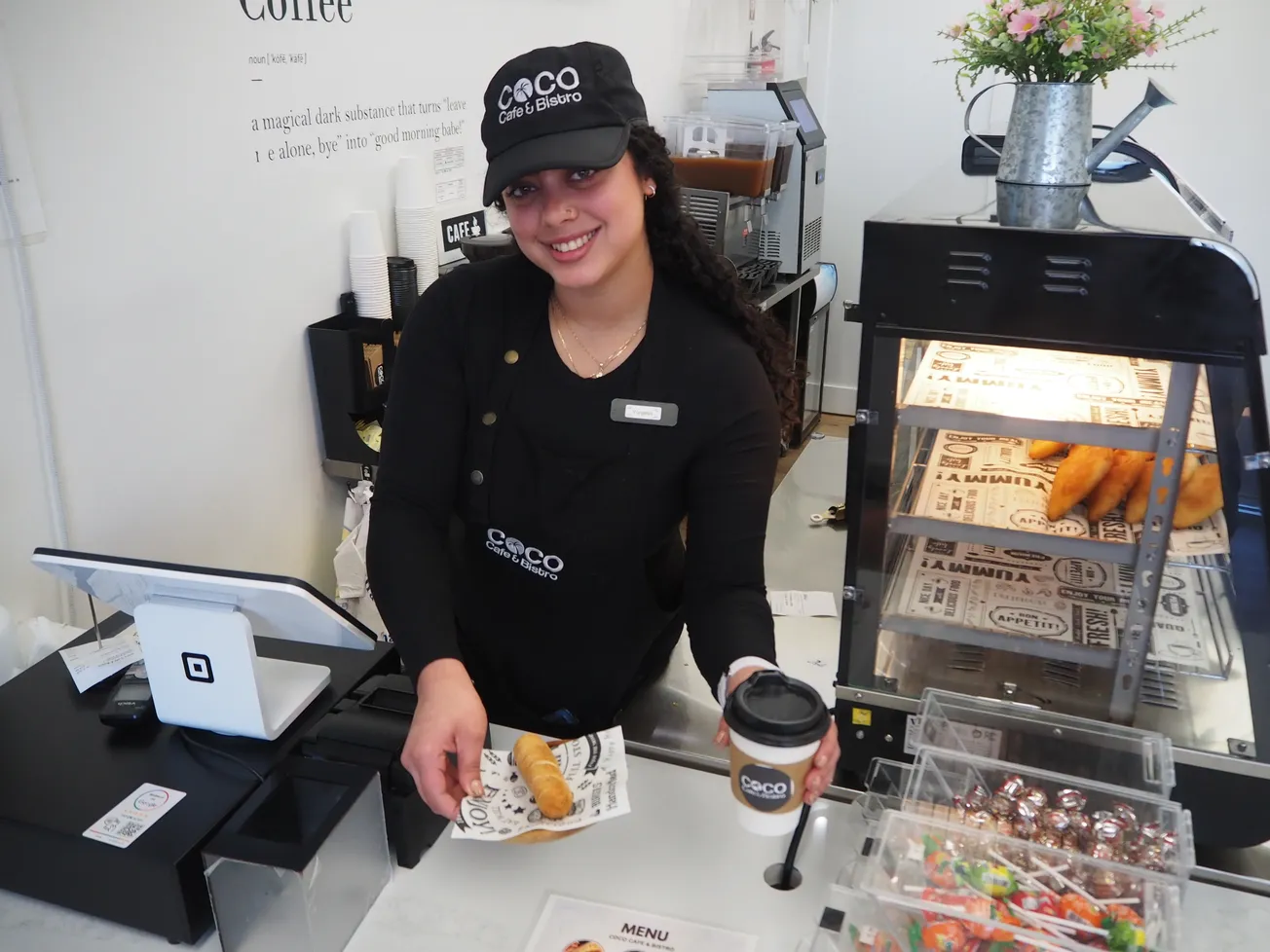
When Yorgelys Vazquez heard about the U.S. government’s middle-of-the-night bombing of her hometown of Caracas, Venezuela last month, the barista was wide awake, filled with a mix of feelings about the events 2,000 miles from Henrico County.
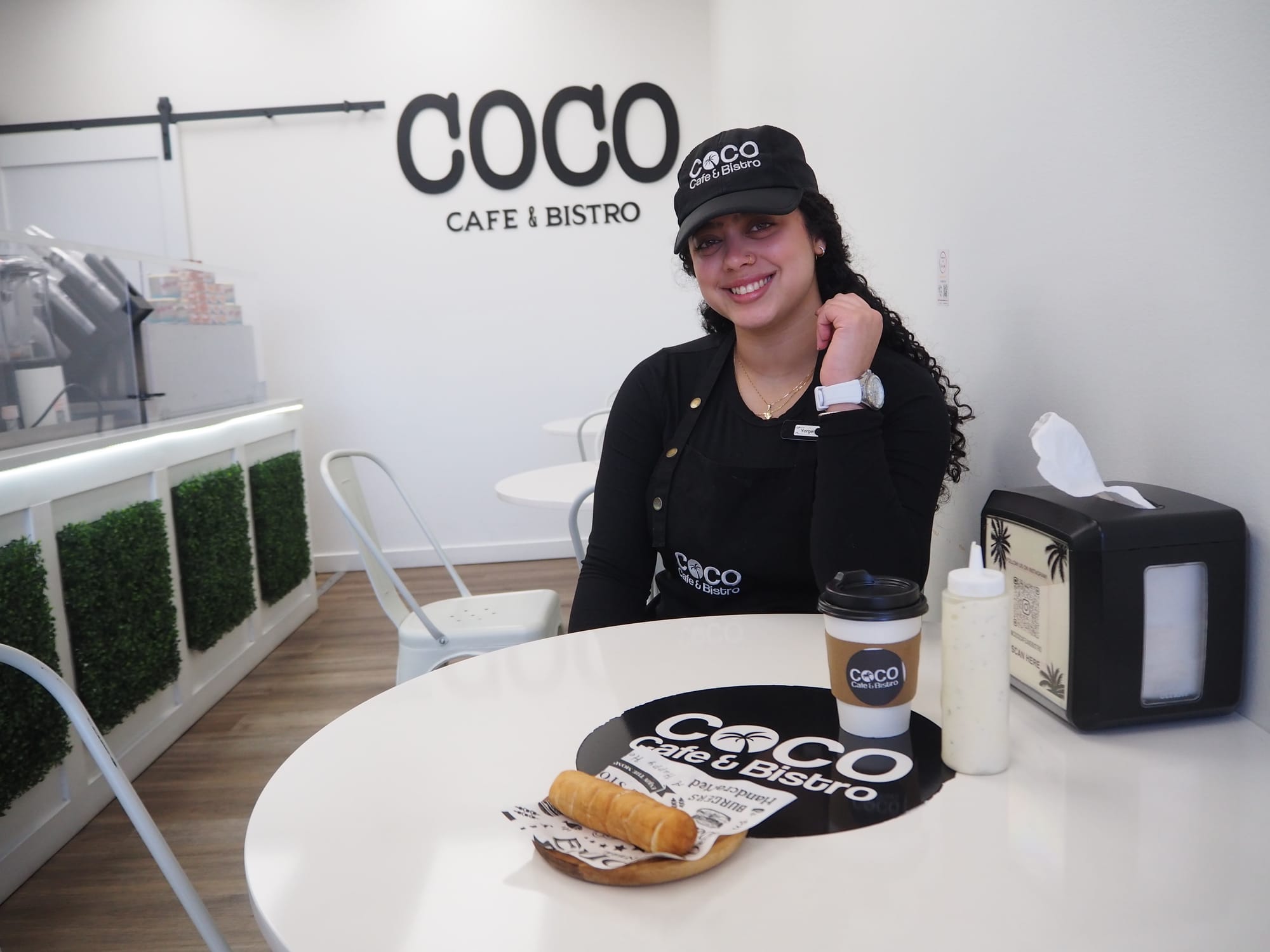
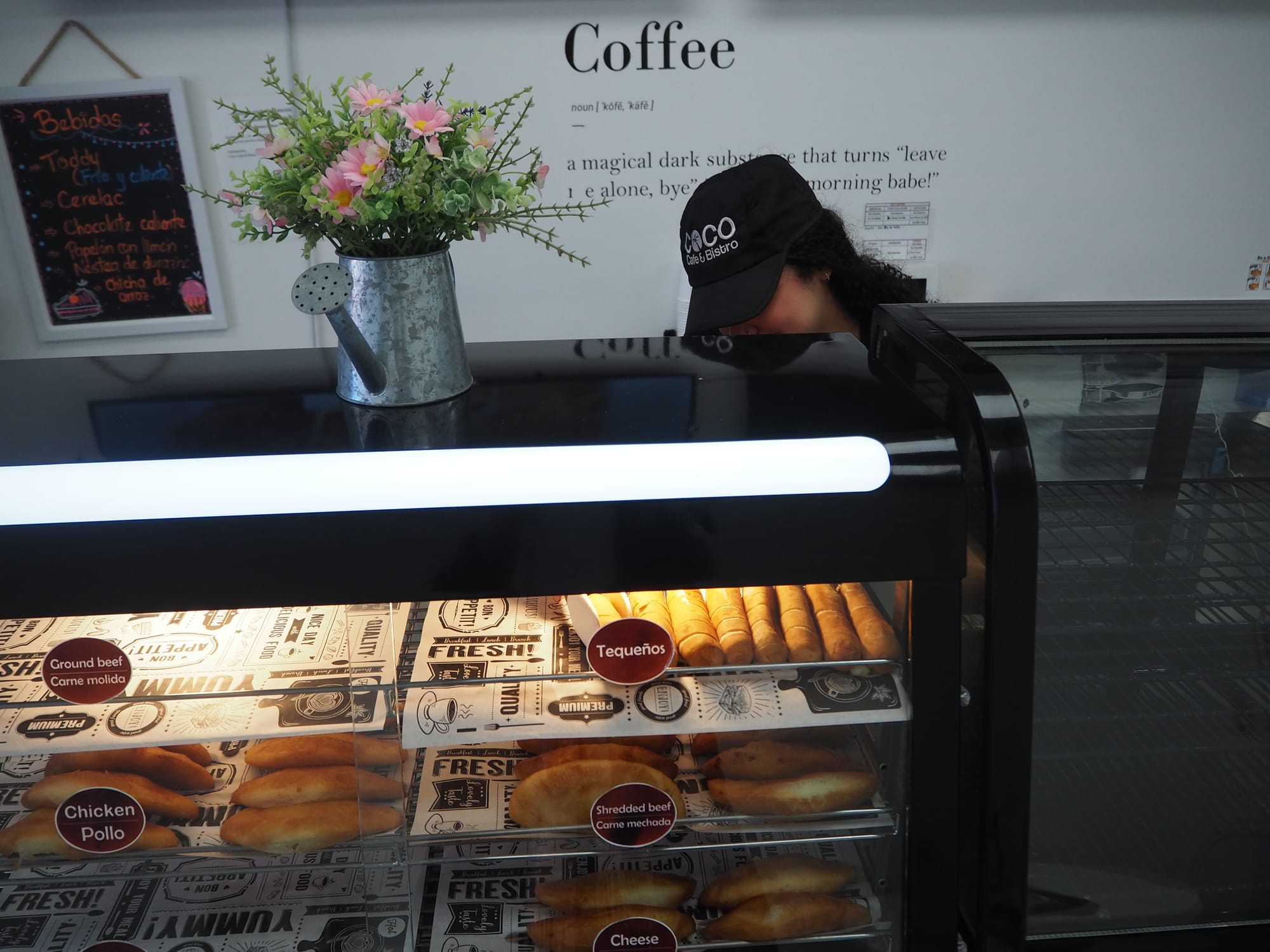
“I was scared,” Vazquez said, speaking in Spanish, during a lull in a recent morning rush at Coco Café & Bistro located at 8703 Broad Street, a restaurant that specializes in steamy tequeños, empanadas and milky café con leche for a mostly Venezuelan clientele. “My mom heard the explosions. I didn’t care what they did—as long as my family was okay.”
Vazquez, 22, feels concern and hope mixed with a guarded ambivalence about the U.S. military’s Operation Absolute Resolve. She, along with almost 8 million other Venezuelans, left the South American country for opportunities for what she viewed was a more stable nation, spurred by conditions she felt were unlivable and offered her no future.
“It’s a country without proper education, medicine — without anything,” Vazquez said. “No opportunities, no freedom. People are suffering badly. There are protests, a lot of crime, and the situation is still very bad. That’s because of the country’s situation — because the government is bad. The people who support it [are bad]. The police are also very bad. Everything connected to the government is bad — that’s basically what surrounds Venezuela. Those who run it are the criminals.”
Pursuing her dream to study to be a dentist in Venezuela was too costly, as salaries are only enough to buy a carton of eggs, she said, making school fees too prohibitive.
“I knew I wouldn’t have opportunities there,” Vazquez said.
Now Vazquez and her coworkers view the situation in Venezuela with a mixed outlook of happiness, hope and skepticism, as Nicolas Maduros’ second-in-command has been put in charge following the tactical operation that extracted Venezuela’s leader from his country.
“Many people feel it’ll be the same — that Maduro will return and nothing will change,” Vazquez said. “You lose hope. Now that it happened, you don’t know whether to feel happy or afraid. There’s a lot of uncertainty — especially for family back home.”
Maduro is currently being held in the Metropolitan Detention Center in New York, facing federal drug trafficking charges. He and his predecessor Hugo Chavez led the country, controlling elections and clamping down on dissent for 26 years, leading more than 1 million Venezuelans to resettle in the U.S.
Now she hopes that the U.S. government follows through with plans to run or right the country and that Venezuela rebuilds so that Venezuelans who left “can return safely, with opportunities.”
'You live with uncertainty'
She also wants to see all the leaders and members of the ruling party, known as “Chavistas” who caused many Venezuelans to suffer, imprisoned.
“There’s a lot of uncertainty — especially for family back home,” Vazquez said. “I feel fear for my family. There’s food scarcity now. Long lines everywhere. Prices have gone up even more. You live with uncertainty — should you stay here or go back? But at least something finally happened. There are many unanswered questions. But there’s also a spark of hope, even if fear tries to take it away.”
Coco Café & Bistro is one of a handful of Venezuelan restaurants in Henrico County that cater to the population of approximately 4,000 Venezuelans who have made this area their home and others who enjoy the menus of arepas, fried plantains and empanadas.
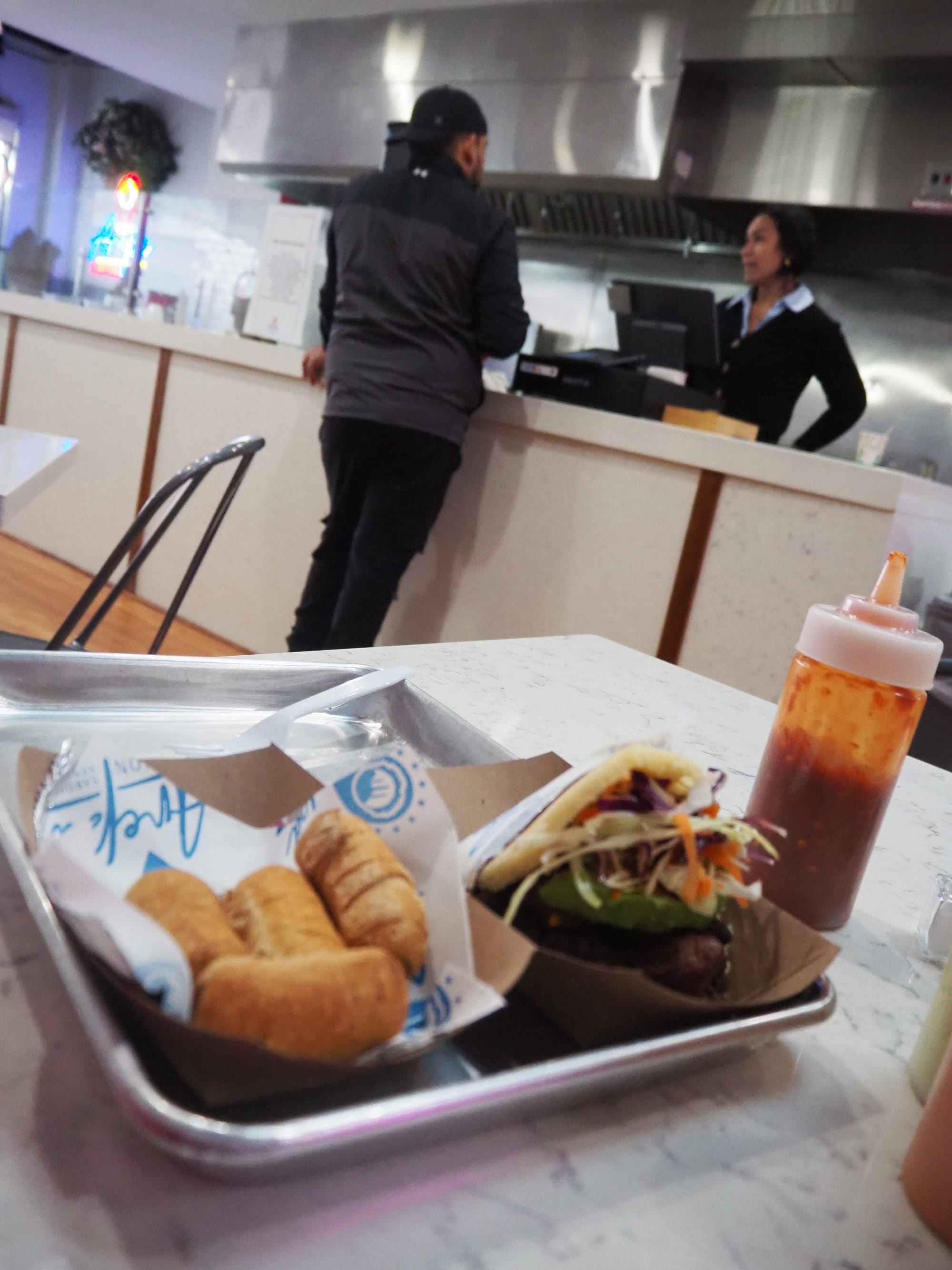
“I feel Maduro has to pay for many things,” said Adriana, a Coco Café & Bistro customer who gave only her first name, while speaking in Spanish. “He has to answer for the lack of food, for the lack of peace. There has been so much death, truly. I would not want to return to my country unless he is detained behind bars. Right now, there are so many families who have suffered too much.”
Adriana felt forced to migrate due to the conditions she described in Venezuela. On her journey, she walked with her children for seven days through the perilous Darian Gap jungle, a stretch of more than 60 miles of wet, rugged terrain of swamps, rainforests and mountains in Panama and Colombia.
“I almost drowned. In that jungle, the rivers rose, the water kept coming,” Adriana said. “I didn’t know how to swim. My eleven-year-old daughter didn’t either.”
As Adriana gathered her food and beverage and drove her children off to school she expressed her hopes for Venezuela and that those in power should face responsibility for their actions.
“May God take control and may everything fall into place. May so much war end. May there truly be peace,” Adriana said. “I don’t wish harm on anyone, but he forced us to emigrate from our country.”
Dancing with the devil
In Glen Allen, the Con Salsa Venezuelan restaurant serves flavorful dishes like parilla, patecon and cachapas.
On the night of the U.S. military operation, Con Salsa co-owner Maly Fong-Angarita and her family members were glued to social media to understand what was happening in Venezuela. In the days that followed, customers asked her and other staff their opinions and analysis of the events.
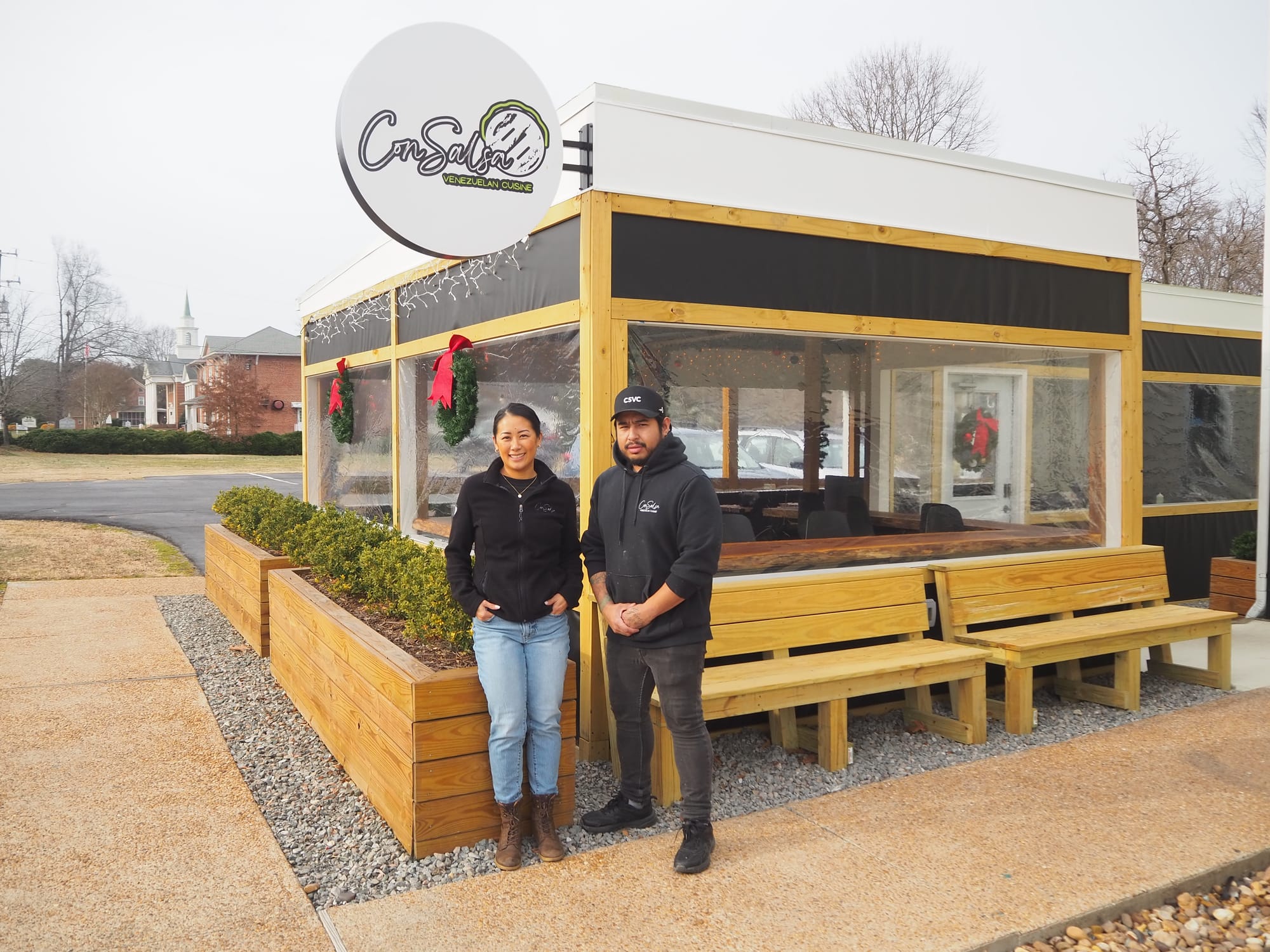
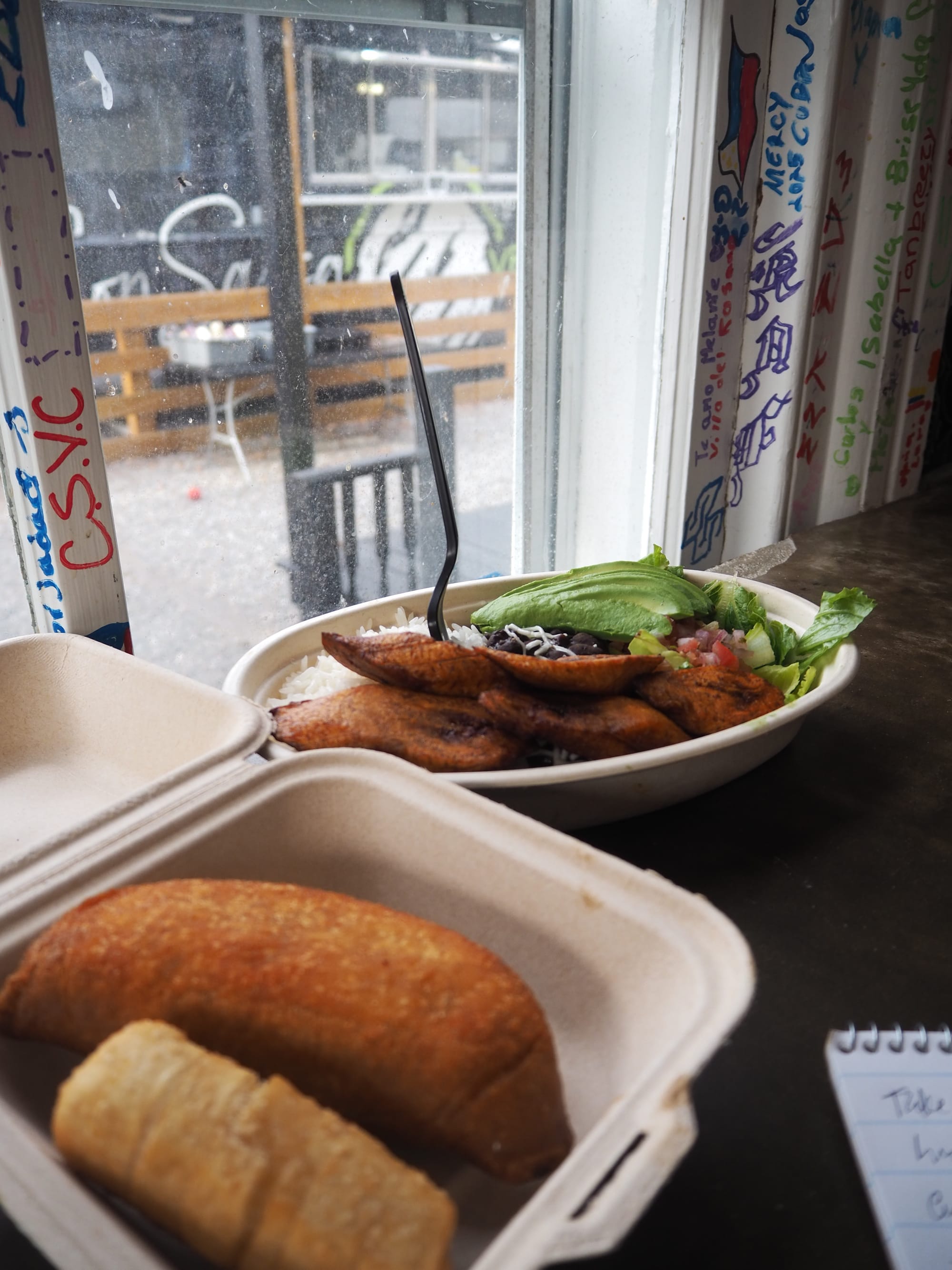
Con Salsa co-owner Maly Fong-Angarita (left) stands with Juan Diego (right), the Con Salsa kitchen manager outside the restaurant's enclosed seating area located at 3016 Mountain Road in Glen Allen. A steaming tequeño, empanada and bowl from the Con Salsa menu sit on a counter with a view of the Con Salsa restaurant food truck. (Dina Weinstein/Henrico Citizen)
“The government claims it's a socialist state,” Fong-Angarita told curious customers about the country she left 26 years ago, after Chavez led a coup d’etat. “And they claim it's all for the people. Under that label, they have exploited and done so much to the benefit of the government.”
She explained Venezuela is not a democracy because no dissent is allowed.
“The government will tell you they are a democracy because they believe the elections were fairly conducted when Chavez took reign of the country. He did a lot of things similar to Cuba. The people who are in power have been there for so many years without free and true elections. But they stole the elections. The candidate in the recent elections who was elected by the majority of votes, they dismissed it.”
It is also a country where saying anything against the government – a meme, a message, a photo – can get you locked up. The same goes for journalists who criticize the government.
Fong-Angarita and other family members who work at Con Salsa, describe a mix of feelings about the future, parts of uncertainty mixed with faith and hope or as she verbalized it in Spanish – fe y esperanza.
“I want a change, a peaceful transition,” said one Con Salsa kitchen staffer, a family member from Venezuela who spoke in Spanish and did not want his name included in the article. “Nobody wants deaths. But absolutely all Venezuelans want a change of government. I have a lot of hope.”
Juan Diego, the Con Salsa kitchen manager, sees an opening for positive change for Venezuela and its diaspora.
“I want it to be restored to what it was. With more equality, with racial, economic disparity lessened. I want everybody to have the opportunity to move on in life and succeed and grow,” said Juan Diego. “I think it'd be nice to have a good relationship with Venezuela and the United States, such as more tourism so we can visit our family. What I hope for is for peaceful transition, for democracy to be restored, and for people who want to go back, to be able to, without persecution or repercussion.”
Since the events in January, Venezuelans in the area have deliberately dined at Con Salsa to be together to discuss current events.
“They were excited. Everybody was celebrating,” Fong-Angarita said. “They were ordering their food, happy and wanting to be together. Many also felt if they are going to have a head of state that's going represent the country, they should be given a voice.”
She describes many in the Venezuelan community experiencing a mix of emotions: “Like, ‘Yes we know we're dancing with the devil but hey, he got this other devil out.’”
“They say, ‘why can't you be happy that Maduro is gone?’ And others say, ‘Well, I worry about what's going to happen,’” Fong-Angarita said. “We all have conflicted emotions. The best post I saw online was one that said, ‘You can feel upset about international laws being broken. But you can also feel happy that a terrible person was removed from power. And you can feel hopeful that the country is finally going to see change. But you can also be concerned that it might be the same old, same old.’”
Editor's note: Responses given in Spanish as noted in the article were translated to English for publication.
Dina Weinstein is the Citizen’s community vitality reporter and a Report for America corps member, covering housing, health and transportation. Support her work and articles like this one by making a contribution to the Citizen.