DATA CENTER DETOUR: Inside Henrico County’s shifting mindset, one developer’s attempt to overcome it, and a community fighting back
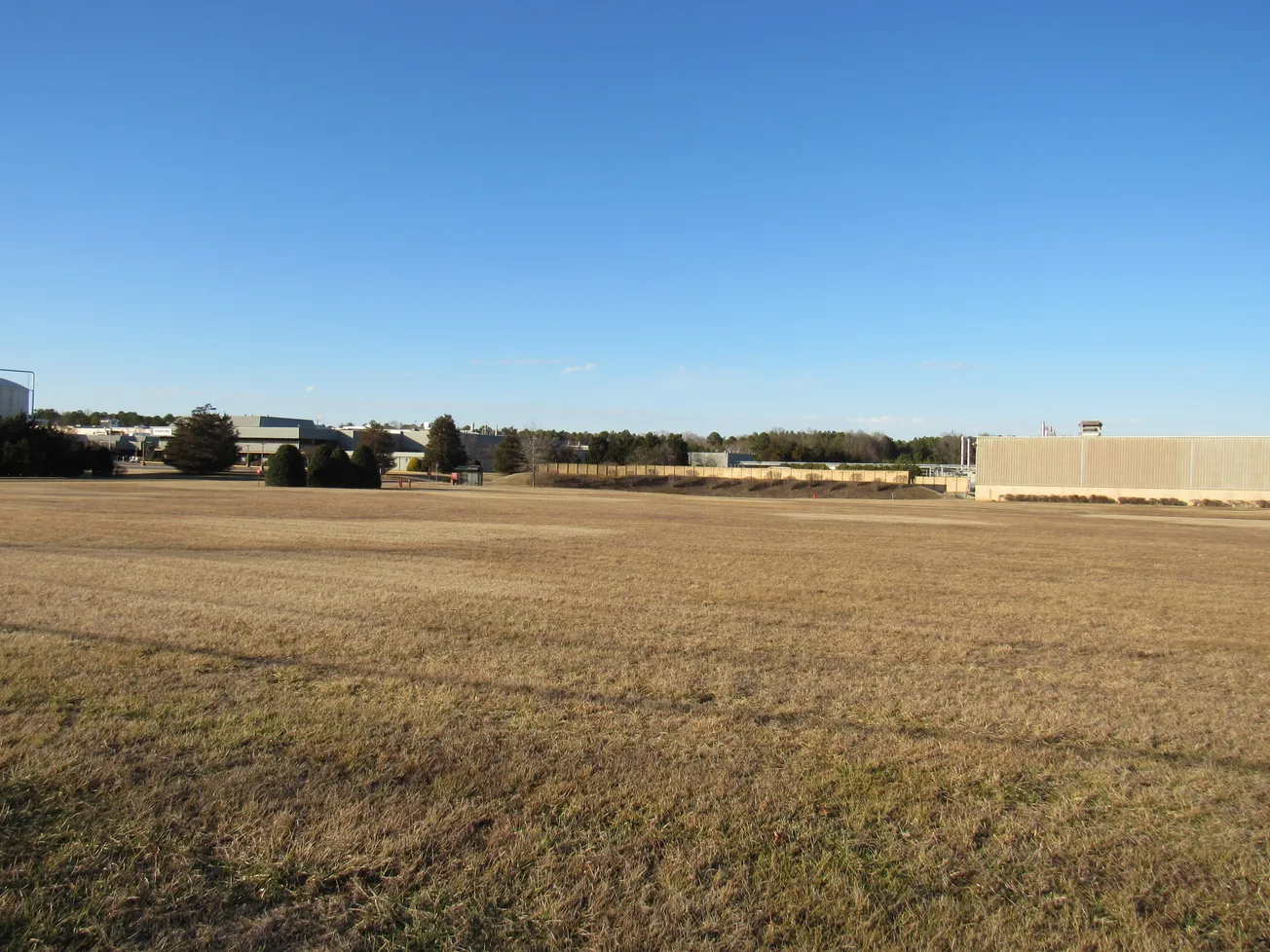
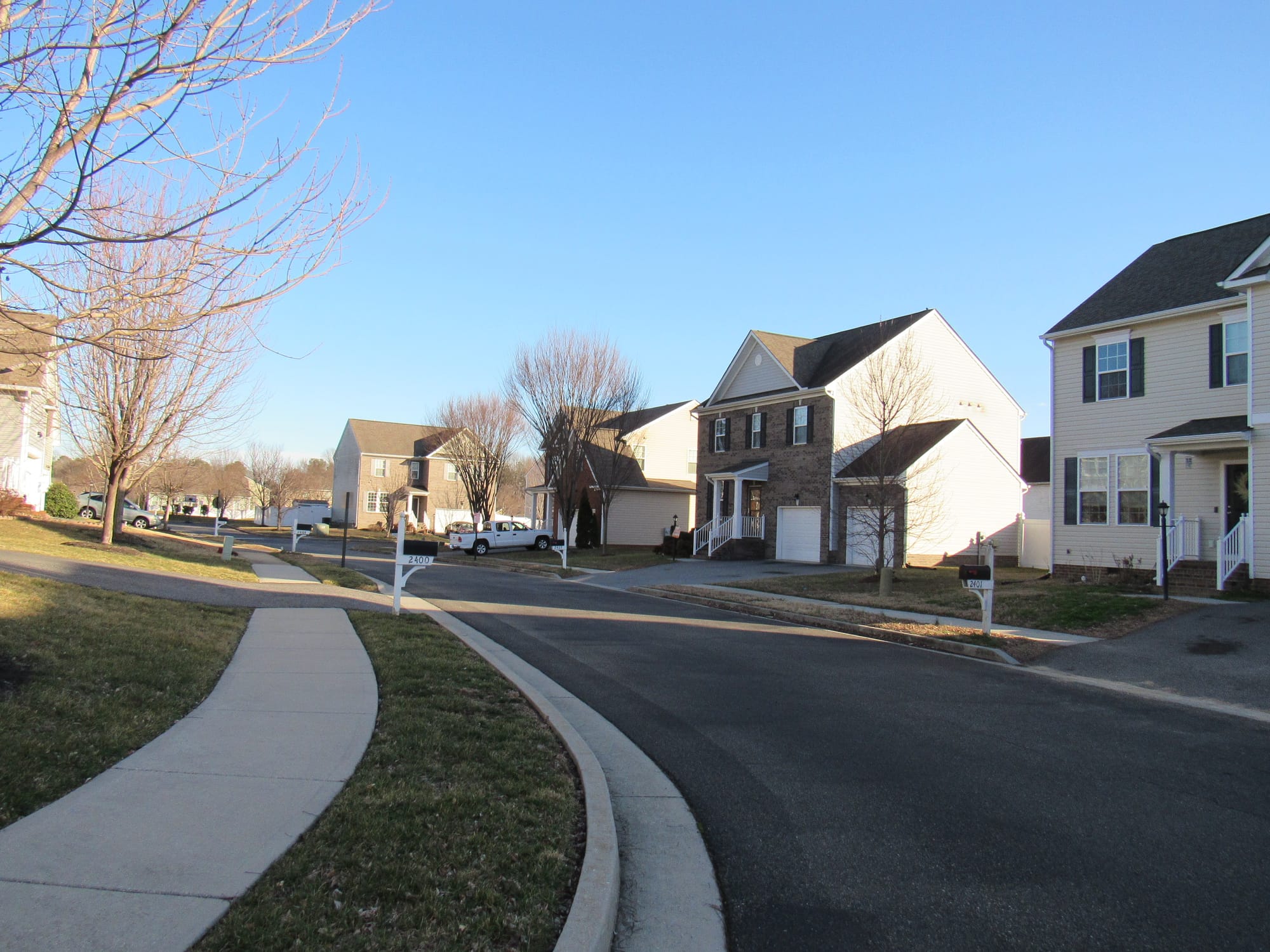
New Market Village, a predominantly-Black middle-class suburb in Eastern Henrico, might be getting a new neighbor: a one million-square-foot data center complex that spans 27 football fields.
That possibility – which could by decided Feb. 26 during a Henrico Board of Zoning Appeals meeting – is not a welcomed one for many community members. The data center would be located just off Darbytown Road near its intersection with Labunum Avenue – and just across the street from New Market Village’s several hundred residents, many of whom have deep-rooted concerns about how a data center could dominate the area’s resources.
A typical hyperscale data center – a large facility that stores vast amounts of internet data – uses as much electricity as 100,000 households and consumes as much water as 50,000 people. Data centers also rely on diesel generators for backup energy, sparking worries about how diesel emissions could impact the surrounding air quality.
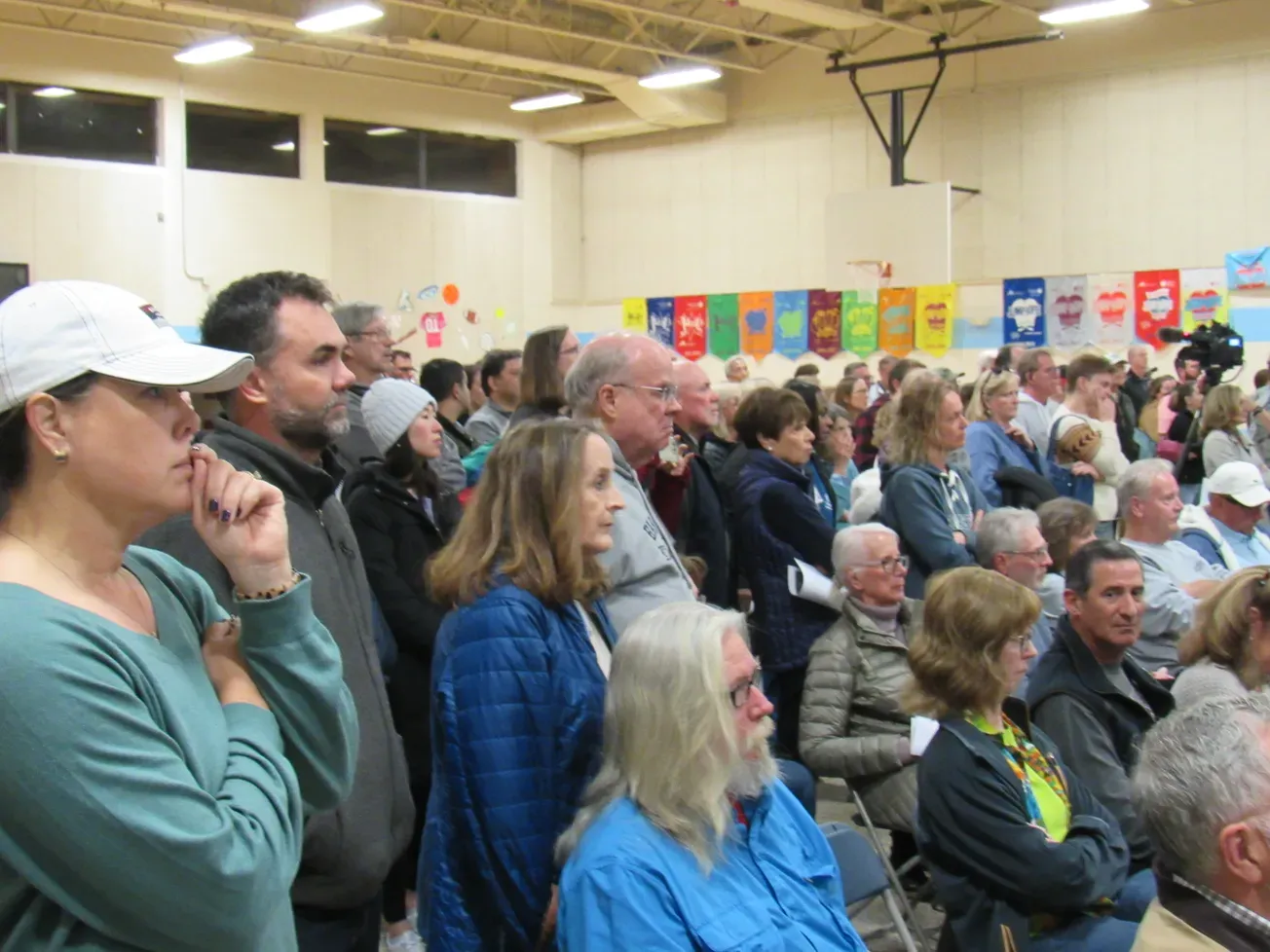
For nearly 100 different community members, these fears were strong enough to bring them face-to-face with developers at a community meeting back in August. During a tense couple of hours, dozens of speakers lined up to confront the leaders of Centra Logistics, the locally-based company that wants to build the complex, and were backed by an audience of their – visibly angered – peers.
“You didn’t invest in us and you didn’t ask us. You wouldn’t want a data center near your house or your child’s school,” said 48-year-old Jacklyn Bruce, who has lived in New Market Village since 2020. “We do not deserve this across the street from our home.”
“Are you that hard up for money that you’re willing to put the health of a community at risk? Or is it because it’s a Black community, that we don’t matter,” said 58-year-old Amy Burrell, another New Market Village resident.
Standing in front of a sea of opposition, 33-year-old developer David Wagner was slightly shocked. The young, white businessman was not a big-name developer from out of town; he had grown up in Henrico County, attended Henrico public schools, and only a few years ago, had started his own small company.
“I was not prepared for what happened. Honestly, I felt bad,” Wagner said. “And the thing I felt worst about was just that people felt like it was being rushed and thrown on them. That’s the last thing we wanted to do.”
Two weeks later, Wagner came back to New Market Village, this time with boxes of cookies and donuts, some additional details on his plan, and a big incentive – a promise that he would invest $1 million into the local community over the next five to 10 years.
The ensuing reaction likely was not as positive as he expected.
“That million dollars is an insult to us,” said Burrell, who sits on New Market Village’s homeowners association board. “They feel that if they dangle this million dollars in front of a predominantly Black community, oh, we’ll be okay with it. No. We’re smarter than you think we are.”
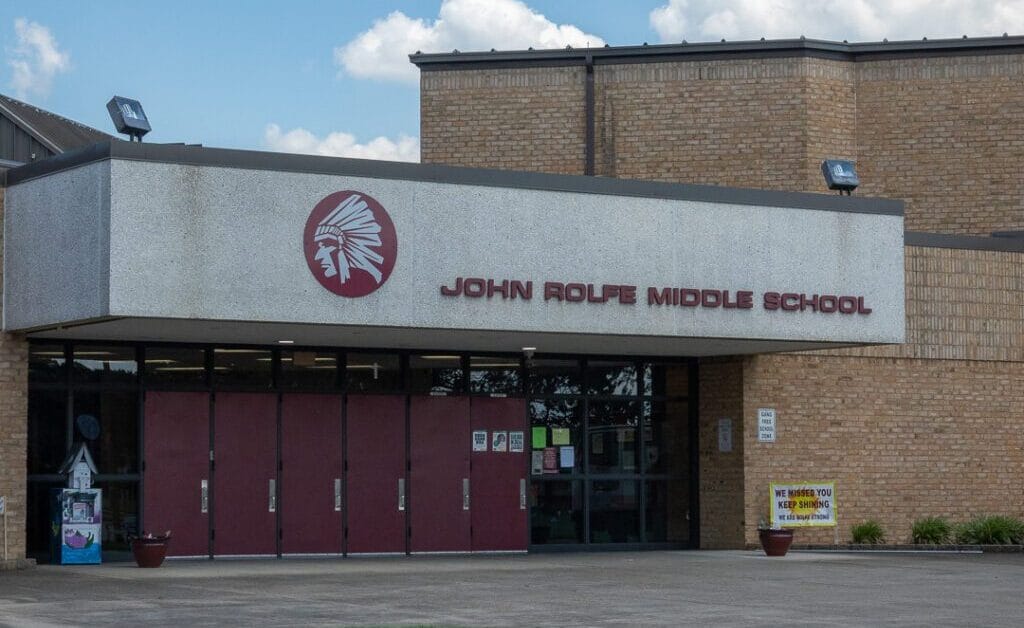
The $1 million would primarily be invested into three public schools nearby the proposed site: George F. Baker Elementary, John Rolfe Middle, and Varina High. Baker Elementary, which serves 460 neighborhood students, sits less than half-a-mile from the site.
“The million dollars is very meaningful to us. That’s a big amount to invest,” Wagner said. “We truly want to do this the right way.”
But for a data center project that is predicted to generate about $25 million for the county each year, Wagner’s offer of $1 million is just “a drop in the bucket,” said residents – especially when compared to the project’s possible health and environmental consequences.
“The dangling of the million dollars, for three schools, that is nothing. You can’t even replace a roof on one of those schools for a million dollars,” said New Market Village resident Koya Johnson. “And it’s still not worth the health of our community. It’s not worth it.”
What: Henrico Board of Zoning Appeals meeting
When: Thursday, Feb. 26, 9 a.m.
Details: The BZA will hear an appeal from Darbytown LLC, a subsidiary of Centra Development, which is seeking to locate a data center complex on about 195 acres off Darbytown Road in Varina.
Background: Centra originally sought to build a data center complex on the site "by right" (without a public hearing necessary) since the site was zoned for industrial usage, which at the time permitted data centers by right. But last year, Henrico officials removed the by-right option and voted to require all hyperscale data centers to go through a public hearing process. Centra's proposal was recommended for denial by the Henrico Planning Commission, and the company withdrew its case from consideration by the Henrico Board of Supervisors.
But then, Centra argued that it should enjoy "vested rights" to build the data center complex under the rules that were in place when it originally filed its plans. Late last year, Henrico County Planning Director Joe Emerson denied that claim, saying the company did not have vested rights. Centra now has appealed that decision to the BZA.
Nelson: Eastern Henrico 'done with data centers'
Virginia is home to a third of the world’s data centers, with most concentrated in a handful of wealthy counties in the northern part of the state. In Virginia, data centers benefit from lower electricity rates, sophisticated data transmission infrastructure, and about $1 billion in total tax breaks each year.
But developers have begun looking farther south in Virginia for available industrially-zoned, undeveloped land. In the Richmond area, much of that land is located in Eastern Henrico – historically a more rural, sparsely-populated area than Henrico’s built-up West End.
During the last few decades, Henrico has encouraged data center development. In 2017, the county reduced its tax rate on data centers to the lowest rate in all of Virginia. Henrico’s zoning code also gave data centers by-right approval on any industrially-zoned land, allowing developers to avoid a public approval process.
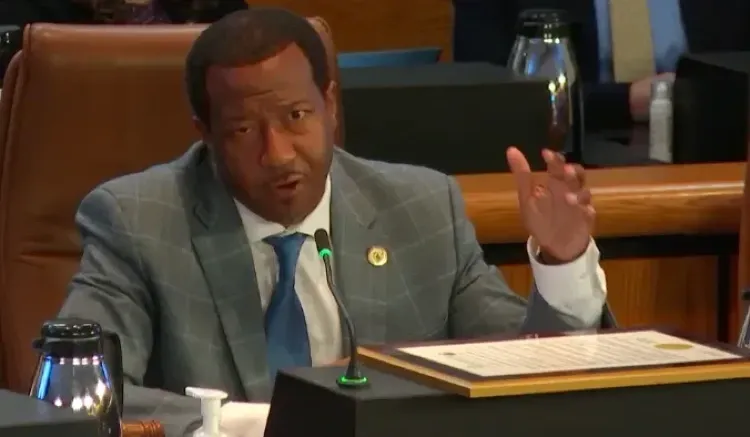
But the tide turned last year, when Henrico’s board of supervisors voted to rezone land in Eastern Henrico’s Varina District to bring a 622-acre mega data center facility to the area. Varina District supervisor Tyrone Nelson, and many of the area’s residents, decided they were effectively “done with data centers.”
“We have in Eastern Henrico, particularly in Varina, carried the burden of industrial and manufacturing development in Henrico for decades,” Nelson said. “Before we knew it, we could end up with data centers all over the Varina District. The people who live in this district are saying there are other things that we can have here. . . We’re not trying to build Varina out.
“I made it clear . . . in 2024 that I was done with data centers. And we were done, especially in Varina. Data centers can go in Tuckahoe or Three Chopt, but I don’t want any more in our district.”
In January 2025, when Wagner first brought his data center proposal to the county, planning staffers were supportive, he said, of both the project and its proposed site across from New Market Village. For the next two months, “everything was positive” when it came to feedback from the county on his project, Wagner said.
But in June, Henrico supervisors voted to change zoning codes and took away the by-right approval for hyperscale data center projects proposed in the county. Now, all developers looking to build such facilities in Henrico must go through the provisional use permit process, including public hearings and a board of supervisors vote.
Wagner and his team became caught in the crossfires of this rule change. Suddenly, the project Wagner had been working on since December of 2024, one in which he already had invested more than $700,000, could be dismantled by a board vote.
And by that time, Henrico’s White Oak Technology Park – the only area where data centers previously could have been built by-right – already had run out of land available for data centers, according to Wagner, essentially placing the company in double jeopardy.
“Why didn’t Henrico County just come out and say that they don’t want any data center development outside of White Oak?” Wagner said at a board meeting earlier this year. “We don’t have the manpower or funding to spend time on a site that is subject to a [PUP].”
Months later, after several contentious community meetings and a recommendation from the Henrico Planning Commission to deny the project, Wagner withdrew the PUP application. The withdrawal came just a day before the board of supervisors was scheduled to vote on the case.
“We celebrated it when we heard it was withdrawn,” said New Market Village resident Amy Burrell. “It was a short-lived celebration.”
Just two days later, Richmond BizSense published an article revealing that Wagner was looking for another way to move forward with the data center project. On Oct. 1, Wagner’s company Centra filed a vested-rights claim, arguing that Centra was legally entitled to build the data center on the Varina site.
In December, Henrico Planning Director rejected the vested-rights claim, stating that Centra would still need a PUP to proceed with the data center project. But Wagner appealed that rejection, with a back-up plan to place an industrial distribution center on the site if his efforts fall through.
Wagner’s appeal is scheduled to be heard by the Henrico Board of Zoning Appeals on Feb. 26.
For multiple New Market Village residents, Wagner’s choice to withdraw the case just before a board vote, circumventing the public approval process, has broken any remaining trust the community had in the company.
“Why would you want to trust someone that is dishonest?” said Bruce. “You don’t take it through the full provisional use process, and now you want to backdoor it. This shows a lack of good faith.”
At this point, Centra has accumulated more than $14 million in costs for the project – including the $13 million cost of purchasing the site back in November – Wagner told BizSense, and the company has to continue moving forward.
“I’ve got a business and employees to look after,” he said.

'This is not what we signed up for'
When Burrell sits in the backyard of her New Market Village home, she can barely make out the sounds of cars driving down nearby Darbytown Road. In the summertime, she hears kids laughing and playing around Baker Elementary. In the fall, she hears the marching band practicing at Varina High.
One day, Burrell drove about eight miles east of New Market Village to White Oak Technology Park, Henrico’s biggest data center hub. She wanted to hear for herself what it would be like to live next to a data center.
The sound, she said, was hard to describe; it was almost like the buzzing of a mosquito, except louder and constant, with no stopping – it’s the whirring of each data center’s thousands of computer servers. Wagner had likened the noise to a dishwasher or a lawnmower, but Burrell said the sound was noticeably louder and more irritating.
Burrell moved to New Market Village in 2013, about five years after the single-family subdivision was established. The quiet, suburban neighborhood sits across a grassy field from Baker Elementary and several other residential subdivisions.
Koya Johnson moved to New Market Village with her husband in 2019. She was recently diagnosed with asthma, and after hearing about Wagner’s project, she worried about how diesel emissions from a data center would impact her health and the health of her nearby grandchildren.
“I already have breathing issues. My husband has already said that if the data center comes in, we’re selling,” Johnson said. “I am an empty-nester, but my grandchildren come over a lot. I don’t want them exposed to anything. This is not what we signed up for.”
Diesel generators are only used by data centers for backup in case of emergencies, but facilities run monthly tests to ensure generators are working. Generators run for a very small time period each month – just for two 30-minute intervals – and Wagner has said the emissions produced from them are minimal.
But environmental researcher and University of Richmond professor Mary Finley-Brook said that even just an hour of exposure to diesel generators can produce “unsafe levels” of emissions, specifically for more vulnerable people such as pregnant women, older folks, and people with breathing conditions.
“For people who live there and who are breathing it, especially if you have asthma, especially if you are a pregnant mom or a little baby or a grandparent, even that much exposure can definitely be harmful,” she said. “Even in a short amount of time, the contaminants can be alarmingly high.”
Diesel emissions contain high levels of particulate matter – microscopic solid or liquid particles that are small enough to be inhaled and can cause serious health problems. In her research, Finley-Brook has found that even the emissions from small diesel golf carts are enough to spike air pollution in the surrounding area.
New Market Village residents also have concerns about the large amount of water data centers need to cool their servers. Wagner does not have exact numbers on how much water or electricity the center would need because the facility would not be built out until at least 2029.

'Every single person should be worried' about water availability
Centra plans to use a closed-loop water system, a newer technology that typically uses an ethylene glycol solution to recycle water through a sealed loop, aiming to reduce water usage and prevent contact with the surrounding environment. Henrico’s nearest water treatment plant has enough capacity to handle 62 million more gallons of water a day, so the data center likely would have no impact on residents’ water, Wagner said.
But the Richmond area has had its fair share of water shortages during the past year.
Last January, most areas in Eastern Henrico, including the New Market Village neighborhood, lost access to water for several days after a water treatment plant in Richmond failed. Virginia’s Department of Environmental Quality has also begun issuing fewer water permits to facilities along the James River, said Finley-Brook, and enforcing more limits on water usage.
“I have seen such water stress in our region that our regulators have already been pulling back on industry,” Finley-Brook said. “I think every single person should be worried about the availability of water in the future.”
When it comes to electricity, the addition of one single data center would likely not increase nearby residents’ power bills, Finley-Brook said. But a large number of data centers in a consolidated area, and the fossil fuel infrastructure upon which data centers rely, could definitely overload an area’s power grid.
“Imagine it’s August or September, we’ve had a heat wave and everybody's running everything. Is the data center going to keep going, or is people’s air conditioning going to keep going?” she said. “They’ve only got so much on the grid, so somebody’s going to get blackouts.”
Even a site like White Oak Technology Park – Henrico’s attempt to limit data center sprawl – is “impossible to justify” environmentally, said Finley-Brook. Concentrating so many data centers in one area will create a “hot spot” where water and electricity issues are more frequent, she said, even though the park is set away from residential areas.
And the proposed site for Wagner’s data center on Darbytown Road – just across the street from several hundred residents and an elementary school – is “unfixable,” she said.
“I felt for the guy when I looked at it. I have seen this happen many times, when we turn down the small-scale developer with the good intention that was trying to do the right thing, and then come back around and seal a much worse deal,” Finley-Brook said. “But we need to be smart about the number of data centers we let in overall. And I do hear from local people that putting it by the school, having those local residents there, that’s unacceptable.”
Residents of 'sacrifice zone' subdivision: 'We've done enough'
In 2022, Wagner founded Centra Development, a small company that employs less than a dozen people. Just a year later, Centra met with Henrico’s Economic Development Authority to request space in White Oak to build a data center.
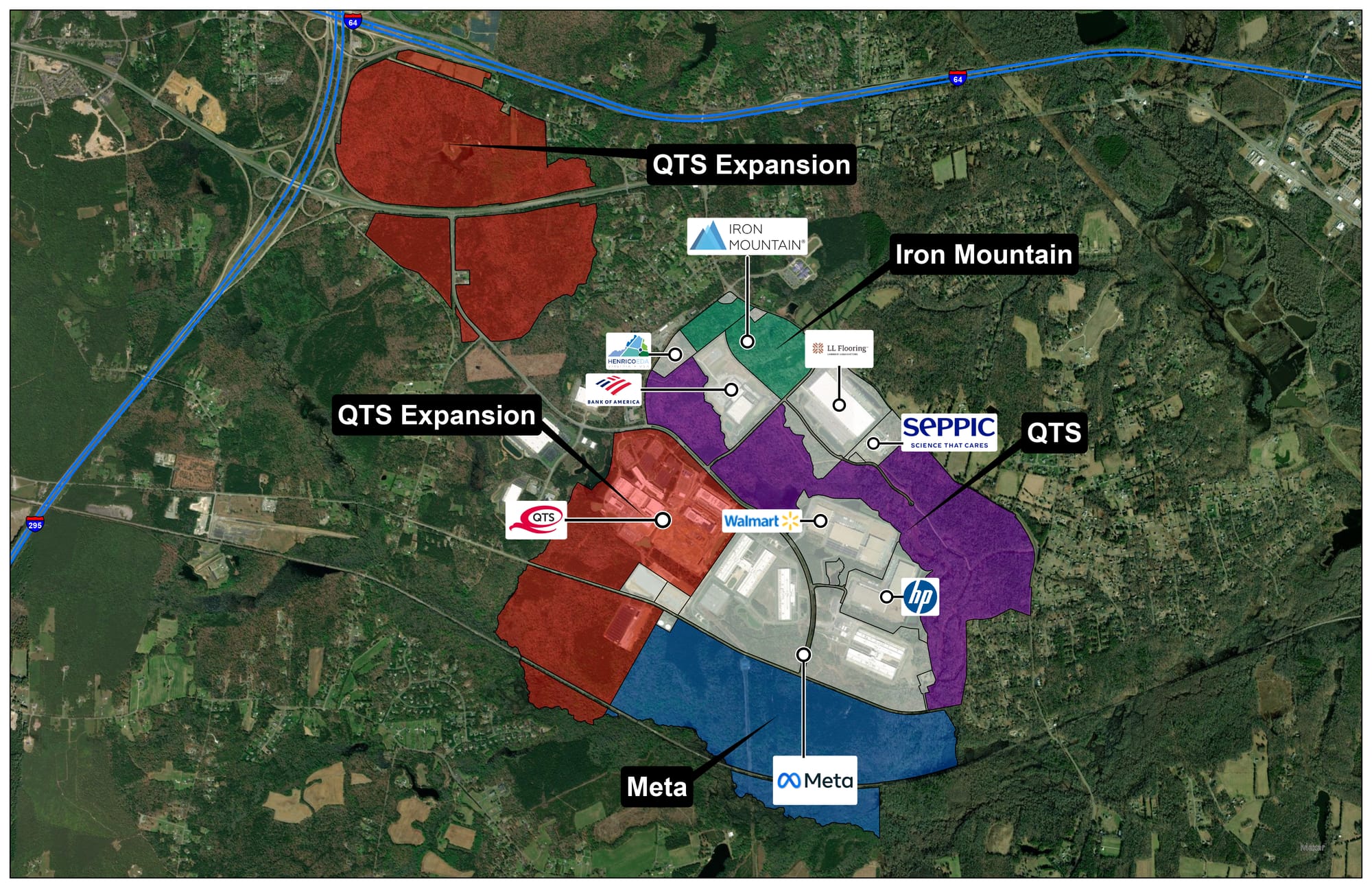
But Henrico already had prioritized the 3,000-acre land in White Oak for bigger tech companies such as QTS and Meta, Wagner said, and encouraged him to look outside of the park for other industrial land in the county. For a small company like Centra to build a data center, Wagner would need a large, undeveloped, industrially-zoned piece of land that was located near data transmission lines – the site on Darbytown Road fulfilled those requirements.
“This really was one of the only properties that was available,” Wagner said. “In the Richmond area, there’s just not that much industrially-zoned land in general, and land that’s both vacant and has transmission lines running through it.”
Throughout a months-long saga that has generated continuous community pushback, Wagner has emphasized how Centra has remained invested in the local community, spending more than 100 hours meeting with residents to listen to their concerns and proposing the $1 million fund for the three local schools.
At community meetings, Wagner underscored that he is not a big-name Northern Virginia developer; he is from Henrico County. He attended Henrico public schools.
At August’s community meeting, a New Market Village resident asked Wagner, “You said you graduated from Henrico schools, was it in this area, in the East End? Or did you graduate from the West End?”
“I grew up in the West End,” Wagner replied. A chorus of murmurs arose from the crowd.
For some Eastern Henrico residents, the West End could be considered an entirely separate county. Western Henrico is predominantly white and contains more residential and commercial development than the historically Black, more rural East End.
One of the wealthiest areas in Western Henrico, Wyndham, has a median household income of $235,000. The median household income of Montrose, the area next to New Market Village, is $45,000.
With more industrially-zoned areas, Eastern Henrico contains most of the county’s landfills, storage facilities, and manufacturing plants. The area containing New Market Village is sandwiched between multiple landfills and the Richmond International Airport.
“You say you’re from Henrico, but Western Henrico and Eastern Henrico are two different things,” said Taryn Wynn, a New Market Village resident who has three small children that will attend Baker Elementary. “You mentioned you are a father. I’m sure you wouldn’t want a data center with the toxins going into your children’s body, breathing it. So when can my children breathe in good air? It feels like we’re dumping all of the trash here for us.”
The area surrounding New Market Village is not just a figurative dumping ground – decades of industrial mishaps have made it a literal one.
In 1992, the groundwater in the area just across the street from New Market Village, which was previously owned by Pfizer, was found to contain chloroform and other hazardous pollutants from a chemical spill. The Environmental Protection Agency continues to monitor clean-up on the site to this day.
In 2022, Sterilization Services of Virginia, a facility just north of New Market Village that sterilizes medical equipment, was flagged by the EPA for producing ethylene oxide emissions – a contaminant linked to increased risk of cancer. An EPA risk assessment identified an elevated cancer risk in the surrounding community.
And now, a data center – which residents say is just one more thing they have to fight against to preserve the health of their community.
“Our neighborhood is already considered a sacrifice zone,” said Bruce. “We have enough environmental load over here. We have the landfill, we have the airport, we keep taking more and more load. We’ve done enough.”
$1-million offer 'just felt wrong'
But what about the $1 million?
In late August, Wagner began coordinating with principals from the three local schools to determine where the $1 million would best be used. The schools have some significant needs; between 55% to 65% of students at Baker Elementary, John Rolfe Middle, and Varina High experience poverty. At both Baker and Rolfe, less than half of students passed their state Standards of Learning exams in 2025.
Not just the $1 million, but some of the $25 million the county will get annually in taxes from the data center could “transform” the East End’s schools, said Aaron Mullins, an analyst for Centra who used to teach at an elementary school in Eastern Henrico.
“I am not an out-of-town developer trying to take advantage of a development opportunity in the East End. I am deeply familiar with the roots of Varina,” Mullins told the Henrico Board of Supervisors at a meeting this past May. “I know what it’s like to be a teacher in the East End and not have a robust PTA behind you. . . I know what it’s like to spend your precious planning time working on grant applications, hoping that someone outside the county will see the needs of your classroom.”
In emails obtained by the Citizen, Varina High Principal Cherita Sears wrote to Mullins about the school’s “immediate needs”: $25,000 to repave the football stadium entrance, $50,000 to build additional seating for the football stadium, $200,000 to fix the auditorium lighting, money for monthly teacher incentives, money for student T-shirts, and more.
On Aug. 15, Rolfe Middle Principal Darryl Johnson invited Mullins to speak at a back-to-school staff meeting about the data center. After explaining the proposal to about 80 staffers, Mullins added a call to action, said one Rolfe Middle staffer who requested to remain anonymous.
“He was like, ‘I want to encourage everybody in this room to contact your representative, to voice that you would like a data center to be built in the East End of Henrico. Because if Centra is able to secure a contract in the East End of Henrico, then Centra would be willing to invest in End End Henrico schools,’” the staffer said.
The comments were not well-received by many staff, according to the staffer.
“It just felt wrong,” they said. “You’re kind of dangling a carrot in front of our faces, like, oh, if you’re willing to sell out on all of these potential health issues, air pollution, all of these unknowns, then we may throw an undisclosed number towards East End schools, which you know are struggling for resources.”
“Mind you, we’re sitting in a school building that’s had air conditioning issues the entire summer that the public schools aren’t addressing,” the staffer said. “So clearly there’s a resource issue here, and you’re kind of capitalizing on that.”
Wagner said that he and Mullins have visited all three schools to help inform staff about the data center proposal, but in no way were trying to coax staffers into supporting the project. The $1 million is not a bribe, but a true commitment from Centra, he said.
“The intent is educational. Not like, ‘you have to support this by any means,’” Wagner said. “It’s really, ‘Hey, this is what we’re doing, we’re here to answer questions about it, and you can support it or not support it. But we want to make sure you have the facts.’”
Henrico Schools officials have not publicly commented on the data center proposal or the potential $1 million investment. But Varina District school board member Alicia Atkins has repeatedly expressed her concerns about the data center being so close to Baker Elementary, saying the chosen site for the proposal is “beyond unfathomable.”
“I do not support any effort to treat Varina as a sacrifice zone. Our communities deserve investments that uplift – not exploit – our residents, our land, our air, and our water,” Atkins wrote in an August email to other school and county officials. “I will not support decisions that continue to rape our communities of the resources we depend on to live, thrive, and breathe freely.”

Group brainstorms plans for potential $1-million donation
Despite opposition from many nearby residents, a small group of community members have come together as a team to directly support the data center and the $1 million investment.
This past fall, Wagner reached out to several Varina residents to form the “Varina Community Investment Committee,” a group that would work directly with Wagner to help decide how the $1 million should be spent to best serve the local community.
The committee includes four residents of the area nearby Baker Elementary, including one resident who works as substitute teacher for Baker. Small business owner Farrah Massenburg, who lives in the Hughes Farm neighborhood right behind Baker, was the first to join the committee. She previously had started working as a contracted employee of Wagner, conducting community outreach for the project and consulting Centra about its construction plans.
Massenburg attended the contentious community meeting held by Wagner in August. Despite the negative backlash from the audience, Massenburg remembers being impressed by Wagner’s willingness to answer hard questions from community members, as well as his genuine and upfront responses.
“He wasn’t hiding behind his team, he’s not hiding from anything. He’s trying to figure out ways to listen to everybody,” she said. “And when other residents just paint him to be an individual that just doesn’t care, you can see the overwhelm and just the hurt – like, ‘wow, this is how they think I am.’ And that is really not the case.”
During the past few months, Massenburg has met with local businesses and organizations to discuss the data center project and potential community investment.
Massenburg has two children at Varina High and one at Baker Elementary. Since moving to the area in 2015, she has “not seen a great deal of investment” in the local schools, she said. Driving around Western Henrico, the neatly-packed mulch and rows of tree saplings that adorn the front of the schools starkly contrast the damaged pavement surrounding Baker Elementary.
“I have not seen any major investments on improving the schools,” Massenburg said. “Baker Elementary, I can’t even tell you when the last time they had their playground or equipment updated. My daughter is in the second grade, and four times since the school year has started, they’ve had a drainage issue or a bathroom overflowing.”
The committee has generated several ideas for how the $1 million could be used at the three local schools: equipment and lab upgrades, teacher stipends, career-connected mentorships and job shadowing, transportation for extracurricular programs, afterschool tutoring, and more.
With the data center project on hold as Centra awaits a final decision from the county, Henrico Schools officials have paused many of the conversations involving the $1 million, said Massenburg.
But the committee has already been brainstorming with Centra about other small projects outside of the $1 million, such as beautifying the front entrance to Baker and creating a walkable path from the school to New Market Village.
During the summer, Centra sent the Varina High principal a check for $1,000 to use for immediate school needs and also raised $1,200 in total for the three local schools during a community fundraising event, according to emails obtained by the Citizen.
“We really were being proactive and reaching out to these schools and to local communities and organizations,” Wagner said. “That’s where we thought we were doing a good job with community outreach.”
And if community members rallied together and put pressure on county leaders, Massenburg believes that some of the tax revenue from the data center could be funneled directly into improving Eastern Henrico schools.
“When you’re saying no to the data center, then you are prohibiting all this tax revenue. I know the data center would [be] good for the entire county,” Massenburg said.
Data center debate expands westward
Since Wagner’s proposal, multiple other data center projects have popped up in areas near the Henrico County border. This past November, Goochland County approved a five-mile-long technology overlay district just west of Henrico in a bid to lure data centers to the area, despite significant resident backlash.
And after a data center project just north of Henrico’s Wyndham community fell through, another developer proposed a data center just miles away from that site, close to the Henrico-Hanover County border.
“Seeing how encroachment is happening around our whole borderline, this is no longer just a Varina issue,” said Bruce. “Even our upper class communities like Wyndham, they are also facing these same issues. For too long, it has been, ‘that’s their issue, that’s their district.’ We have to be unified in these things. It shouldn’t be racial.”
Local regulations surrounding data centers, both in Henrico and other counties, are still lacking, argued Finley-Brook. In preliminary plans for the data center, Centra is not required to give estimates for how much water or electricity the facility would use, only qualitative insights for how the facility might impact residents.
“People need to take this piece seriously: we don’t really have the regulations in place, either in Henrico County even with their improved regulations, and certainly not at the state level, to be making sure there is a transparent process where data centers are actually using the best technology and really reducing their water impact,” said Finley-Brook.
Not just across Virginia, but across the country, large-scale and small-scale developers alike have fed into the “data center craze,” with both wealthy and low-income communities fighting against a flurry of data center projects popping up near people’s homes.
“We are a microcosm for what is happening all across the country,” Bruce said. “It doesn’t matter if it’s a cornfield in Iowa, a rural community in Georgia, or us here in [Metro] Richmond. This is happening all across our nation, and it is posing significant strain.”
With Wagner’s proposal being the first since Henrico changed its data center regulations, Burrell and other New Market Village residents believe the outcome of this case will set a precedent for the county and the inevitable future data center proposals that are to come.
“Especially in Varina, it’s not going to be as easy for them as they think it’s going to be. We’re not pushovers,” she said. “We are very aware of the historical significance of this case, and we're here for the long haul. We're not going away.”
Liana Hardy is the Citizen’s government and education reporter. Support her work and articles like this one by making a contribution to the Citizen.