Data center bills dominated this year’s General Assembly. Here’s what passed.
The rapid growth of Virginia’s data center industry was a key point of focus during the 2026 legislative session, as lawmakers sought to balance the sector’s benefits — including over $80 billion in state investments and thousands of jobs — against its enormous electricity and water needs, which are a growing concern for communities statewide.
Legislators filed dozens of bills directly aimed at regulating the industry but only a handful passed, with some significant changes.
Distribution Costs
Senate Bill 253, by Sen. L. Louise Lucas, D-Portsmouth, caused a stir in the middle of the session. The bill extends Dominion Energy and Appalachian Power’s weatherization programs, which help low-income households save on their monthly bills by making their homes more weather proof.
The bill also allows the State Corporation Commission to decide if they will approve shifting more costs onto data centers and large manufacturing facilities for the electricity Dominion Energy generates and distributes to them.
The bill that now heads to the governor’s desk puts energy auction costs onto the data centers, with SCC approval. When Dominion needs more power on the grid beyond what they are producing, they may buy more power at an auction run by the regional grid operator PJM to help meet demand.
The financing costs for distribution lines and substations that mainly bring power to data centers could also be levied onto data centers and other companies in their rate class, with SCC approval.
Lucas advocated repeatedly during the session for data centers to “pay their fair share,” as residents’ energy costs climb. The Joint Legislative Audit and Review Commission found in their 2024 report that data centers are paying the appropriate cost of operating, but as power demand grows, driven by data centers, costs will continue to climb for everyone.
The average Dominion Energy residential customer “could experience generation- and transmission-related costs increasing by an estimated $14 to $37 monthly … by 2040 (independent of inflation),” the report found.
Water use
Sen. Kannan Srinivasan, D-Loudoun, set out to reveal how much water data centers are using from local utilities.
Data center operators are often able to shield their water usage needs from the public as industry secrets, which leaves communities in the dark about how much of their local water resources are being used.
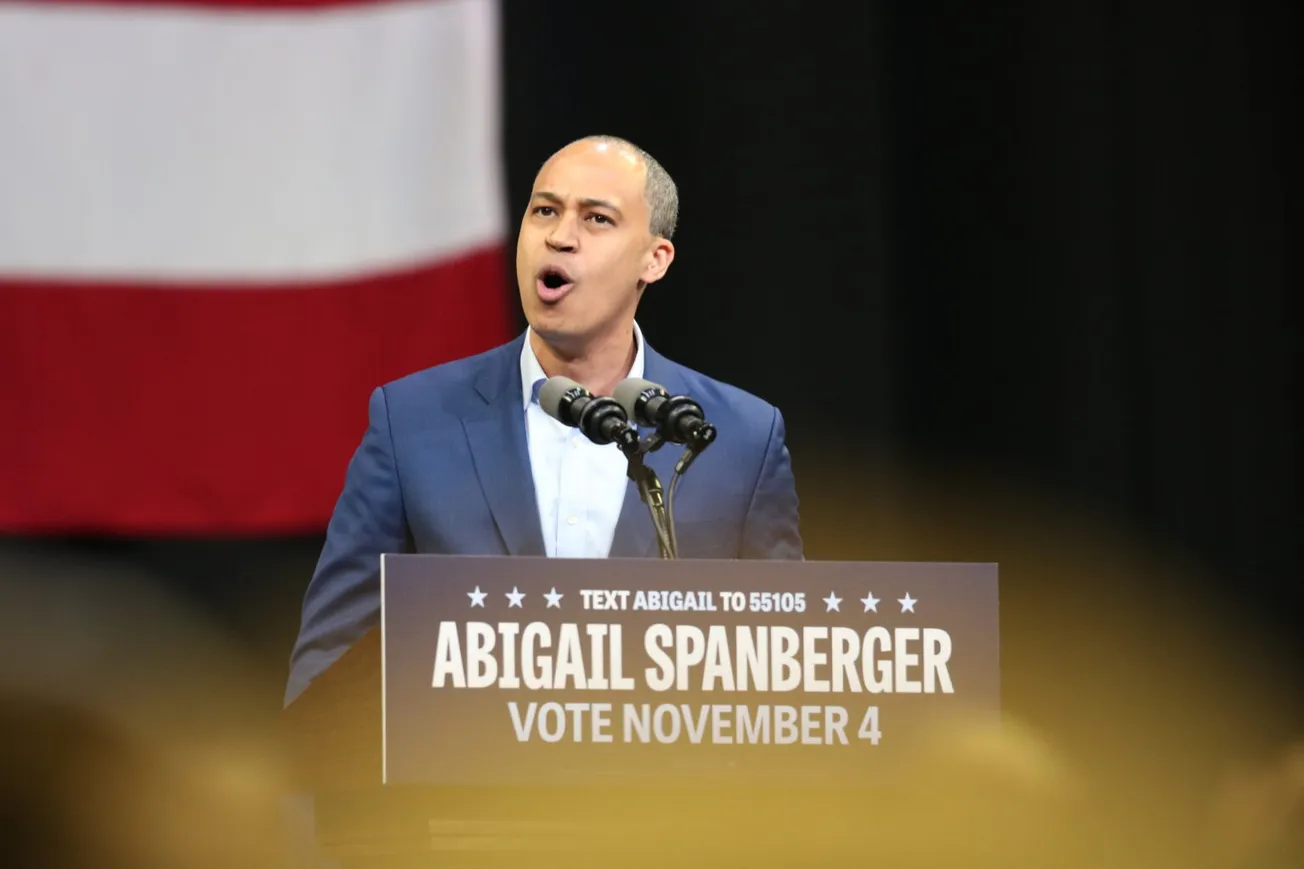
SB 553 directs water utilities to report monthly or quarterly, within their ability without raising rates, an aggregate estimate of how much water is going to data centers. The measure cleared both chambers and is under consideration by Gov. Abigail Spanberger.
“You’ll be able to compare data centers versus industrial versus commercial,” Srinivasan said.
The senator explained that he lives in Loudoun County’s Data Center Alley, containing the world’s densest concentration of data centers, and he’s seen how the evolution of data center technology, including closed-loop hyperscale data centers that require less water.
“They have done a lot of innovation. This will clearly be the fair way to bring the data set out,” Srinivasan said.
Some water utilities have already begun reporting the data center usage separately but the legislation aims to get more operators on board to boost transparency for the public.
Siting
SB 94 and companion HB 153 require applicants asking localities to rezone for “high load users” like data centers that would use over 100 megawatts of power to submit a site assessment report.
This report will examine the project’s potential impact on agricultural resources, parks, historical sites, and forestland, and confirm alignment with the locality’s sound and zoning ordinances.
Sen. Danica Roem, D-Manassas, the Senate bill’s sponsor, said it’s the first step towards stronger regulations about where data centers can be located and how much of an impact on the surrounding communities should be permissible.
Roem acknowledged that the measure could have been more stringent, saying “we should strengthen this” on the chamber floor Friday. But the current version of the legislation is what could garner enough votes to pass, Roem said, calling it “ the bare minimum.”
Diesel generators
The data centers housed in the commonwealth host over 9,000 backup generators. Some of those generators run on diesel fuel and emit toxic emissions when they are running. There are already limitations on when the generators are allowed to run, which is regulated by the Department of Environmental Quality.
But residents living in neighborhoods close to data centers have flagged concerns about breathing in the diesel fumes from the Tier II generators, which are most commonly run during monthly testing and during power outages. There is a push to get the industry to switch to the more energy efficient and cleaner Tier IV generators.
House Bill 507, by Del. John McAuliff, D-Fauquier, mandates that the Department of Environmental Quality deny any air permit submitted for a data center generator after July 2026 unless they are equipped with a Tier IV generator or the environmental equivalent. The measure passed the legislature and is waiting for Spanberger’s signature, amendment or veto.
“I will note it’s probably not the final step toward making sure that we have the best possible tech out there and being used, and those generators are being used in the right way for our communities, but it is a very good first step,” McAuliff said in a Feb. 11 committee meeting.
Data center waste heat
The server equipment that fills data centers’ warehouse-style facilities generates a lot of heat. Millions of gallons of water are used to cool them but there is a growing interest in finding ways to use heat that would otherwise be wasted.
A university in Dublin exemplifies one solution, where the heat of an Amazon Web Services data center is piped into a number of buildings on campus, according to CNBC.
House Bill 323, by Del. Rip Sullivan, D-Fairfax, tasks the Department of Energy with accelerating efforts to use data centers’ waste heat here in the commonwealth. The department must make a workgroup to study how waste heat can be transferred between buildings that are already close by or plan to be built near data centers.
If the governor signs the bill, a report will be due to the General Assembly by September of this year to help shape future legislation to regulate the use of waste heat.
Taxes
The question of whether or not the state should continue allowing data centers to opt out of the 5.3% sales and use tax on their server equipment and software was a surprise debate this session that hampered budget negotiations and forced lawmakers to leave the Capitol without finalizing a budget.
Lucas, who led the Senate version of the budget proposal that axes the exemption, said it causes the state to lose out on about $1.6 billion annually.
The House version of the budget kept the exemption in place – albeit with some new environmental and energy requirements for data centers must meet in order to qualify for the exemption. House Speaker Don Scott, D-Portsmouth, House Appropriations Committee Chair Del. Luke Torian, D-Prince William, and Spanberger said keeping the exemption would honor existing business contracts with data centers and preserve the industry’s presence in the state.
“I don’t think it does anything to the industry. A lot of folks are saying they are going to be leaving and going to other places. I don’t believe that’s going to happen. I think they will continue to build in Virginia but I think they understand it will be a different playing field now,” Lucas said in February following the passage of the Senate budget.
The industry has hit back on the idea of cutting the exemption and said the provision paved the way for data centers’ billions of dollars in investments in Virginia. Industry leaders have also joined forces with the state’s largest electrical workers union, who build the data center facilities, to urge lawmakers to keep the incentive for the industry.
The issue does not fall on traditional party lines, with a bipartisan mix of lawmakers from various regions of the state voicing support and opposition to the proposal.
The pitch to remove the exemption threw a wrench into lawmakers’ budget negotiations. Spanberger has called a special session on April 23 for the legislature to cement the state’s spending plan.
Virginia Mercury is part of States Newsroom, a nonprofit news network supported by grants and a coalition of donors as a 501c(3) public charity. Virginia Mercury maintains editorial independence. Contact Editor Samantha Willis for questions: info@virginiamercury.com.