Central Virginia Transportation Authority invites public input about transportation projects proposed for regional funding
Several Henrico projects are likely to receive money
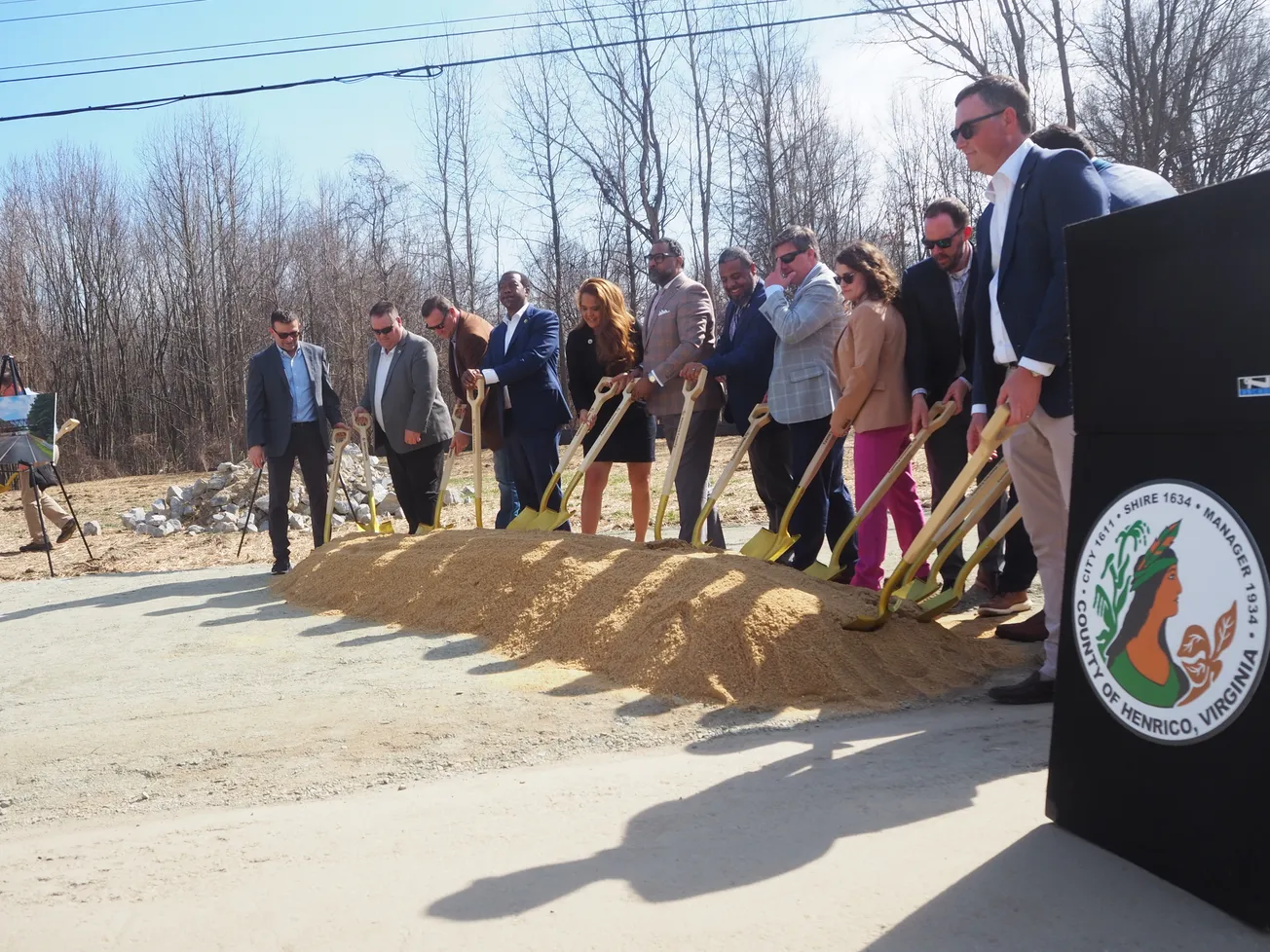
The Central Virginia Transportation Authority Board of Directors is expected to authorize an estimated $131.2 million for regional transportation projects – including several in Henrico County – during its Feb. 27 meeting, and local residents have a chance to weigh in on the process beginning Feb. 11.
At a meeting last month, the board reviewed 23 qualified projects for which about $356.5 million has been requested by CVTA member localities as part of the organization’s 2027-32 Regional Revenue Funding Scenario. Board members will vote to narrow that list later this month and make its fourth round of funding commitments since the CVTA’s formation in 2020; it authorizes such funding every other year.
Seven of the 23 proposed projects (with funding requests totaling $69.75 million) are located in Henrico (Click below to view the entire list.)
The public can weigh in on the highway, bridge, bike and pedestrian projects through Feb. 26 by emailing information@cvtava.org, and public comments also will be accepted in person and through Zoom during the board’s public hearing Feb. 27 at 9 a.m. ahead of its planned vote.
The projects submitted for funding from Henrico County and that appear likely to receive funding (after scoring well on a data-driven rating process that considers benefits, costs, safety, mobility, equity, accessibility and economic development) include:
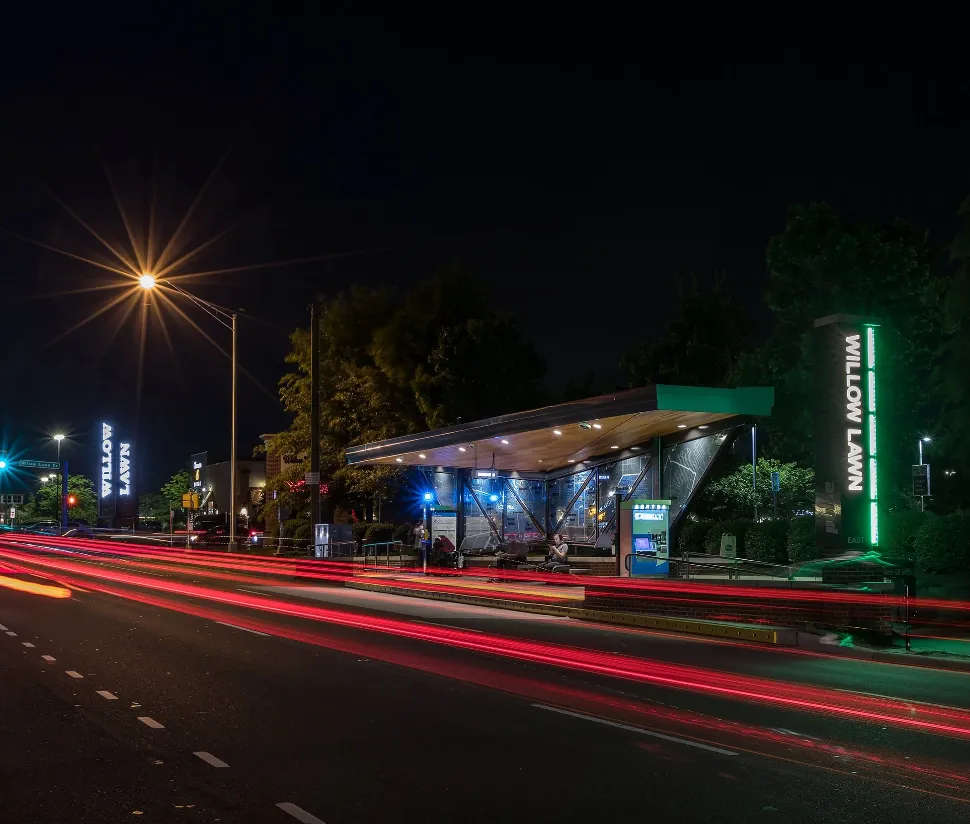
• Pulse Bus Rapid Transit western extension stations ($15 million) – This project would fund the construction of 13 new stations beyond Libbie Avenue.
• Bryan Park interchange enhancements ($10 million) – This project would make changes to improve the flow of traffic through the interchange, where I-95, I-195 and I-64 meet. As the Citizen reported earlier this week, the initial concept (which would have eliminated Exit 80 off I-95) is now likely to be altered so that the exit would remain open.
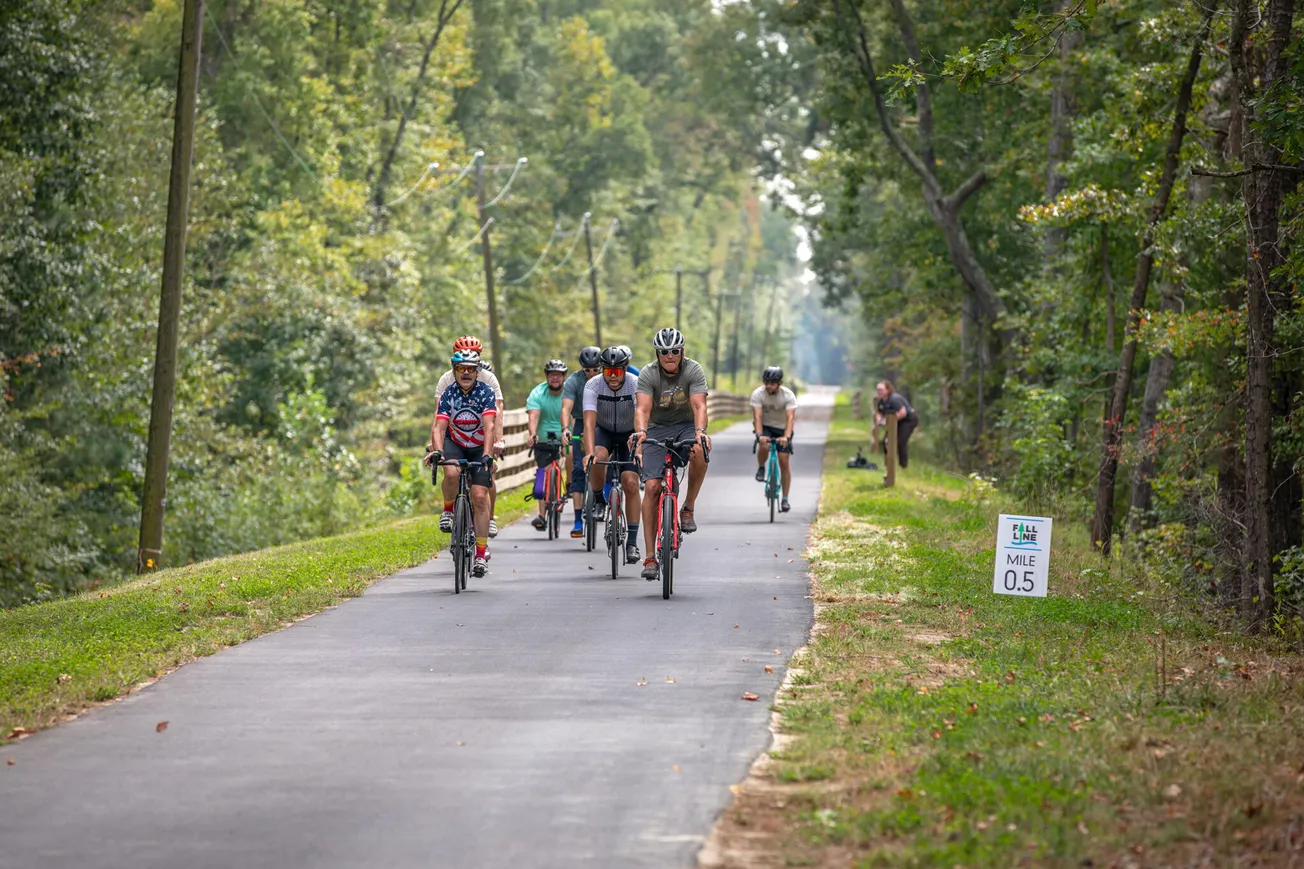
• Woodman Road improvements ($10 million) – The project would involve improvements to 1.75 miles of Woodman Road, creating a four-lane section between Hungary Road and Mountain Road and adding turn lanes (new southbound right-turn lane and left-turn lane extensions at Mountain Road/Woodman Road intersection). The improvements also would include a shared use path and sidewalk along the corridor, and pedestrian crossings with push buttons and count down timers at each signalized intersection.
• I-95 and Parham Road interchange improvements ($4.6 million) – The project would reconfigure the cloverleaf interchange to create a diverging diamond interchange that officials believe would be safer and more efficient. The change would be designed to accommodate additional future traffic expected to be generated from developments and overall growth in the area, which would potentially cause the existing interchange to be over capacity, according to officials. The project also would include a separate pedestrian bridge for a shared use path across I-95, providing pedestrian and bicycle connectivity between the east and west sides of I-95, and will consider possible geometric deficiencies and bridge height improvements.

Henrico seeks redirection of some funding to two other projects
After the hour-long CVTA meeting last month, Henrico Deputy County Manager for Community Operations Steve Yob said that the county has offered to de-allocate funding it received two years ago from CTVA for enhancements to the West Broad Street-Parham Road intersection in order to support two other regional project proposals involving the county.
One of those projects is the multimodal Beulah Road relocation project, for which $9 million has been requested. The road is described as impeding the Virginia Army National Guard aircraft operations by blocking aircraft taxiway access to Richmond International Airport; the proposed Beulah Road closure and relocation would reroute traffic away from the Sandston Readiness Center, thus allowing the VAARNG direct access to RIC for its aircraft operations.
“Beulah Road is in the way,” Yob said. “It's a county road. We've supported moving it to outside of the airport. But that's a significant lift to do that. So, we've tried to get that funded to support the airport's move of that road outside the airport and increase the airport footprint, as well as give the Air National Guard their new facility.”
The new facility for the Air Guard is already under construction.
“We just can't abandon Beulah Road because there's not too many cut throughs between us, Williamsburg Road and south of the airport,” Yob said. “We have been working on trying to find a way to move that out, but we just haven't been able to get funding.”

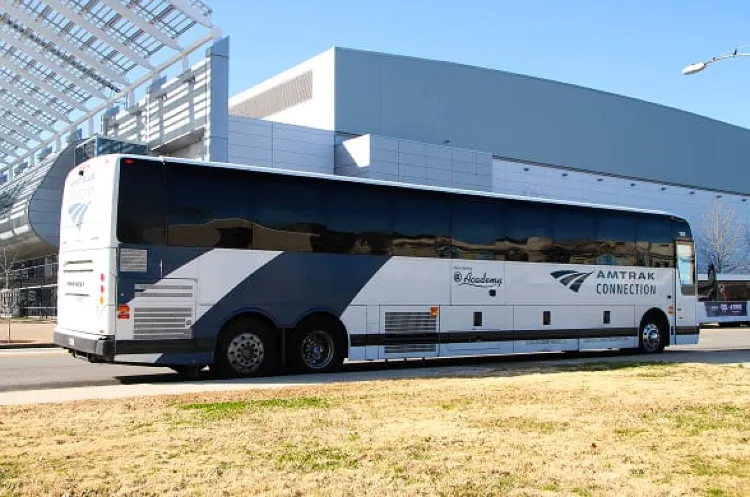
The other regional project Henrico is supporting is the Amtrak layover yard facility at Fulton, south of Williamsburg Road and east of the James River. The county’s supports funding for the project to help improve Amtrak’s operations, Yob said. The Virginia Passenger Rail Authority is asking the CVTA for $15 million for the project, which is expected to cost $60 million in total.
The project would provide overnight storage and servicing of Amtrak passenger trains. According to the VPRA, the layover yard is necessary to support existing and future passenger rail service, as it will eliminate non-service trips to the Staples Mill Station in Richmond, where trains currently are serviced and stored. Storing trains in the yard would help reduce rail congestion and encounters with freight operations in the area, according to VPRA officials.
The yard also would support growth in passenger rail service between Richmond and Washington, D.C. from one daily round trip to as many as. five daily round trips, serving Richmond Main Street and Staples Mill Station with connections to the Northeast.
VPRA’s project webpage for the Fulton Yard project indicates that the Amtrak layover station would improve on-time performance and mitigate train congestion. It also would accommodate the new forthcoming Airo trainsets, which have dual power engines providing faster turnaround and improved trip times.

The project would include three storage tracks, one maintenance platform, a service pit covered by a canopy, roadway improvements, a parking lot for staff and a new building.
Certain other public works projects in Henrico have been deemed candidates for bond funding through the CVTA, including Short Pump area highway improvements.
The CVTA works to address the region’s transportation needs by generating and managing local funding for its nine jurisdictions.
The body collects money through a 0.7% regional sales tax, a 7.6-cent per-gallon tax on standard gasoline and a 7.7-cent per-gallon tax on diesel fuel from the nine members localities. Then it divides those funds into three buckets: 15% is earmarked for GRTC, 50% for the individual member localities and 35% for regional projects.
CVTA allocates the former two amounts on a monthly basis to GRTC and localities, but the 35% earmarked for regional projects is allocated only every other year.
Funds totaling $114 million were distributed to local area jurisdictions in 2025, with 31% (or $35 million) of that total going to Henrico County. Revenue contributed to the CVTA from shoppers in Henrico County in 2026 is anticipated to be $25.7 million through a sales and a fuel tax.
The public can weigh in on the highway, bridge, bike and pedestrian projects being considered for CVTA regional funding through Feb. 26 by:
• emailing information@cvtava.org;
• clicking here to submit comments online;
• speaking in person at the CVTA board's Feb. 27 meeting at 9 a.m. at PlanRVA, 424 Hull Street, Suite 300, Richmond 23224;
• speaking on Zoom during the same meeting.
Dina Weinstein is the Citizen’s community vitality reporter and a Report for America corps member, covering housing, health and transportation. Support her work and articles like this one by making a contribution to the Citizen.