At Va. journalists’ forum, Spanberger talks energy policy, combating health care concerns
Table of Contents
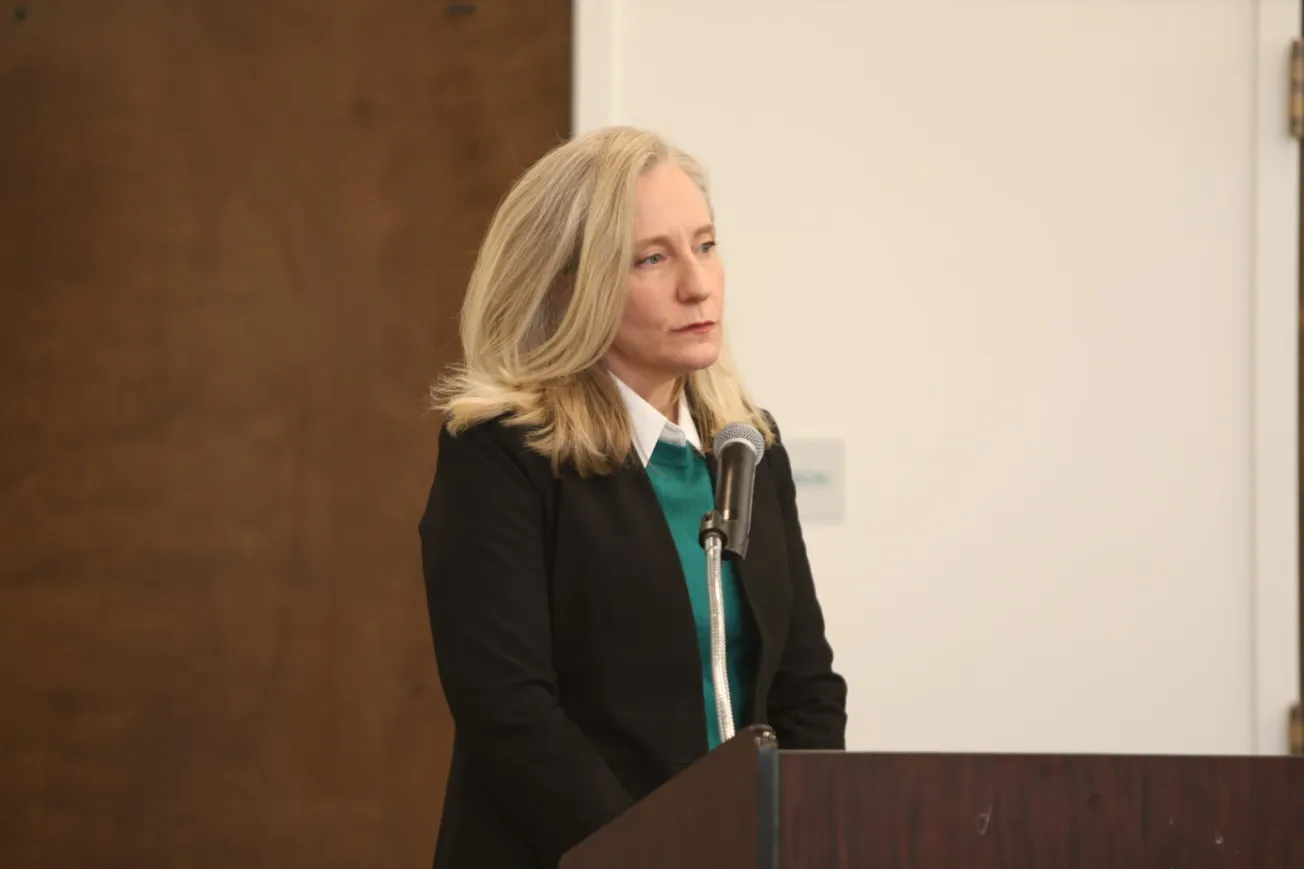
Gov.-elect Abigail Spanberger addressed the Virginia Press Association and contextualized key challenges she and legislators will face when she takes office in January. Addressing the state’s energy crisis is near the top of that list, as power demands ramp up largely due to the growth of high-powered data centers throughout the state.
Spanberger said she would be interested in revising the landmark Virginia Clean Economy Act to allow for an expansion of battery storage that allows for solar power to be dispatched hours after it is collected.
“Five years ago, when that bill was first passed, technology wasn’t where it is now. We have been employing in Virginia some energy storage infrastructure (but) certainly not nearly enough,” Spanberger said. “Having storage capacity will allow us to mitigate some of the ebbs and flows that can create, in some cases, brownouts.”
The state has seen more peak energy demand days. Dominion Energy saw 10 peak energy days this year reaching a total of 25 gigawatts of power being used at one time. They also have an estimated 47 gigawatts worth of data centers in the queue to be eventually energized, according to Scott Gaskill, vice president of regulatory affairs for Dominion.
There are alternative energy sources but they aren’t all viable in the near term, the incoming governor said. Gas energy projects, such as the Chesterfield Energy Reliability Center, are projected to take at least five years to be built due to delays in getting gas turbines. Small Modular Reactors are about a decade away from coming online in a widespread way. Bolstering solar power is the fastest way to bring more power online to meet demand and keep costs from skyrocketing, Spanberger said.
“I support looking towards energy generation of the future, like SMRs, but we’re still 10-plus years away from that,” Spanberger said. “There’s benefit to renewable energy in that it can be realized much and certainly as someone working to lower costs – meet the moment and ensure that we’re generating enough energy. We will continue to need a mix of energy generation into the future.”
As the U.S. Senate deadlocked on a measure to extend the Affordable Care Act enhanced tax credits Thursday — which, if they expire at the end of this month, will cause millions of Americans’ insurance premiums to skyrocket — Spanberger weighed in on how to tackle health care challenges in Virginia.
Over 600,000 Virginians could lose Medicaid coverage and be subjected to new work requirements under a giant reconciliation bill Congress passed this summer. Spanberger said the state needs to position itself to help people complete their paperwork in time to prevent them from losing coverage.
“We have to put our full attention to making sure that we can verify people’s employment quickly, efficiently, effectively, so that people don’t fall through the cracks, essentially creating scaffolding that allows for Medicaid coverage to continue,” Spanberger said.
Virginia hospitals and health clinics, especially in rural areas, remain concerned about potential cuts to their staff or services. Experts estimate the health care facilities could take a $2 billion hit once the federal changes are implemented.
Spanberger highlighted that the state does not have enough money to backfill the full loss of federal funding.
The governor-elect also said that the federal funding bill changed how much money students can borrow. She said these limitations will have an impact on people who want to become medical professionals but may not be able to afford schooling. She said the state could consider loan repayment programs or other ways to help overcome the financial barriers to higher education.
“It’s a problem of (Congress’) kind of ill conceived creation that will have real significant impact if we don’t figure out a way to contend with it, or frankly, just put such broad pressure on Congress for them to pass a walk back to some of their worst ideas,” Spanberger said.
Editor’s note: The Virginia Mercury is a member of the Virginia Press Association.
Virginia Mercury is part of States Newsroom, a nonprofit news network supported by grants and a coalition of donors as a 501c(3) public charity. Virginia Mercury maintains editorial independence. Contact Editor Samantha Willis for questions: info@virginiamercury.com.