As Henrico housing market warms up for spring, new analysis quantifies great disparities, barriers to home ownership
Bernice Sim, the owner of the Henrico-based Happy New Beginnings real estate sales team, is getting ready for a strong housing market this spring.
Numbers help her understand and prepare her clients.
“I do think days on market are getting shorter as we're coming into spring market,” Sim said, referring to how long it takes a home to sell.
Summer through early fall are the highest inventory months for home sales. She also watches data around original home prices versus actual sale prices.
“In April 2025, the original price of homes was higher than what they were selling for,” Sim said. People were saying, “Oh gosh, the market was softening last year.” There is some data to show that. People weren't getting all these crazy bids. In April, the original median price was $435,000 and the sales price was $401,000. If you're comparing to 2021, 2022, then the market has softened, but it's not so soft that it's still moving up in the right direction.”
Only 201 homes are currently listed for sale in Henrico County – half of what was available last July – but Sim expects a lot more listings to come onto the market.
She has been checking homes that are listed as “coming soon” or some that have been on the market a little longer than others for a client eager to buy in Henrico’s West End.
“All signs point to a very, very strong market, a very fast-moving market. I think the spring home sales market has already started,” Sim said. “There's excitement. People are coming out. Inventory is building and homes are pending.”
Housing market functioning but not producing enough attainable units
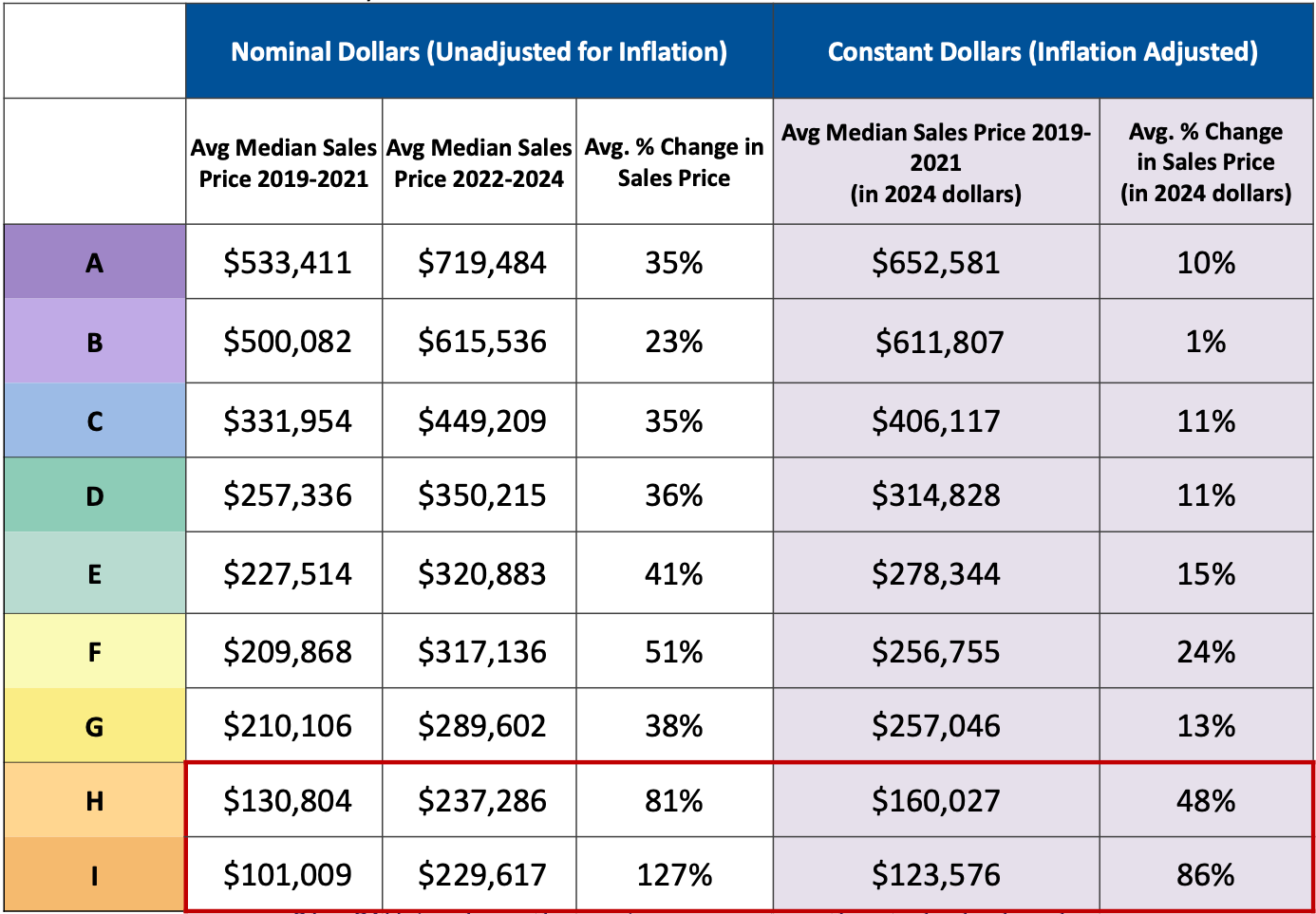
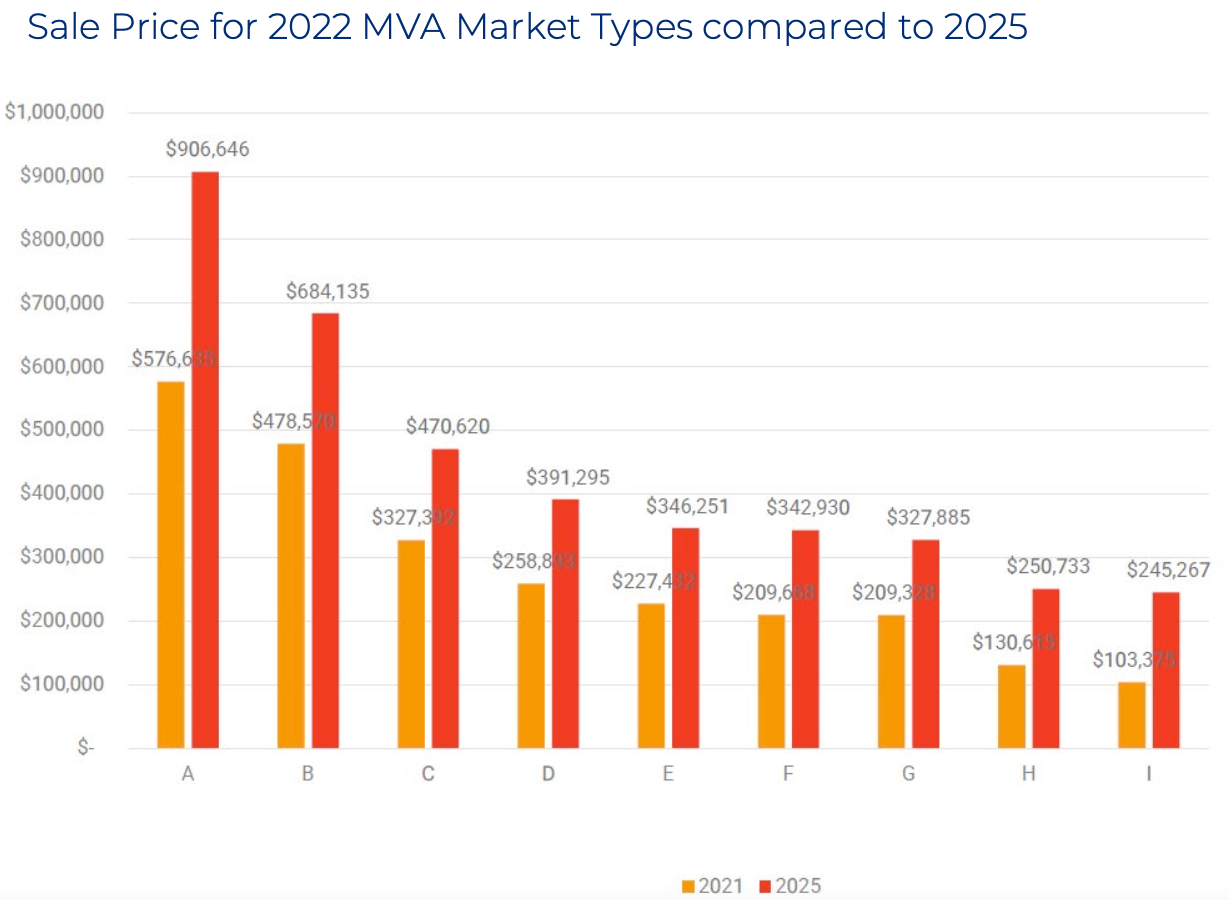
But a new report from PlanRVA (the Richmond Regional Planning District Commission) shows that the ability to afford a home in Henrico is increasingly out of reach for working households, as investor ownership depletes lower-cost markets. The displacement risk is real.
PlanRVA officials are presenting their Market Value Analysis report March 13 – data that aims to demonstrate the cost of housing and affordability of a region, taking into consideration the rate of price increases and typical salaries.
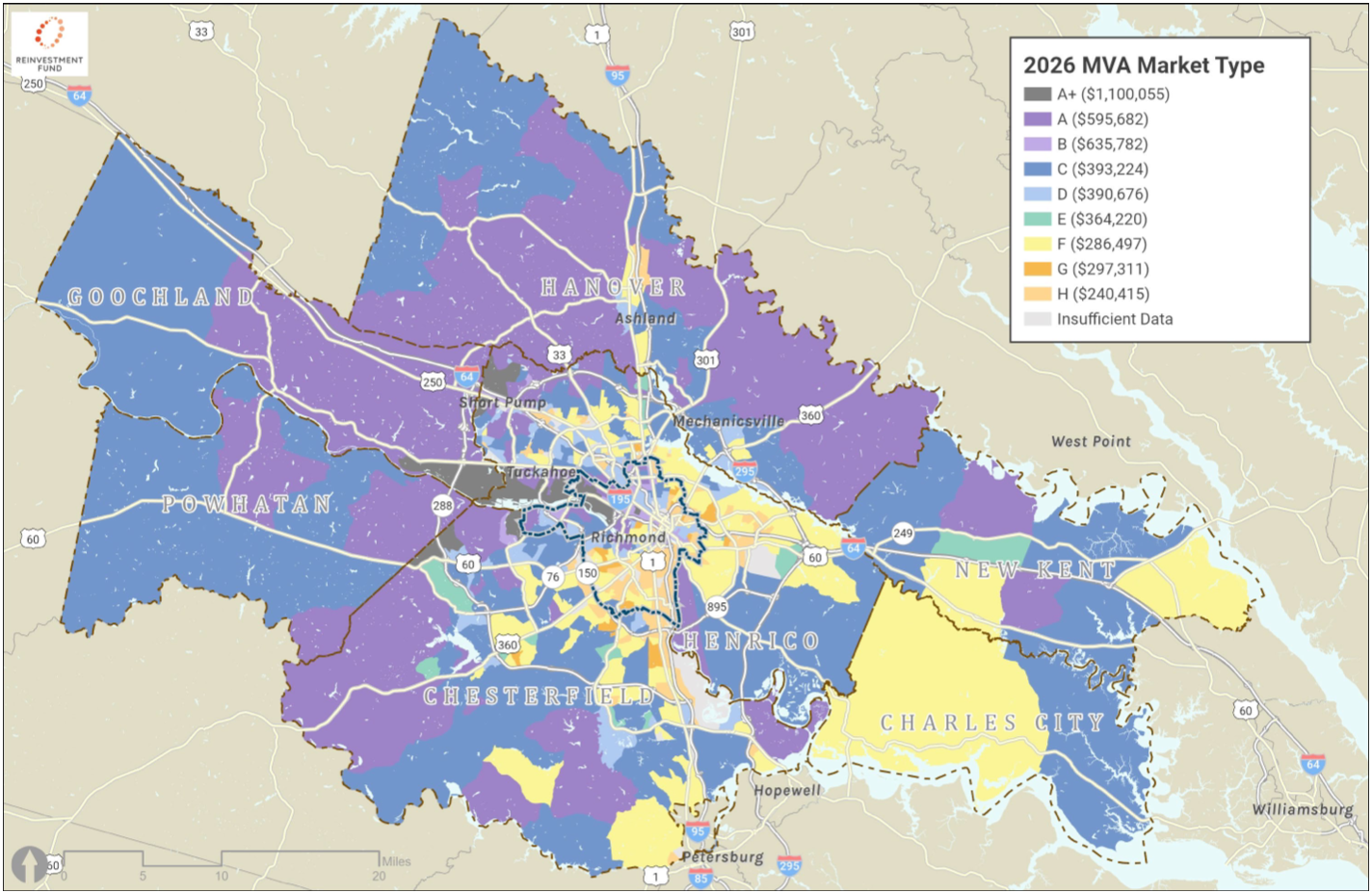
The MVA consists of two dozen pages of heat maps, graphs and charts that show home prices have risen faster than wages, summarizing that the local housing market is functioning but not producing enough attainable units.
And without intentional action, it concludes, current market dynamics are unlikely to close the affordability gap in the region.
PlanRVA’s Regional Housing + Transportation Futures Symposium March 13 – “Pathways to the Future: What a Fright!” – plays on the superstitious date the event falls on, telling attendees: “It's scary not to plan for our region's future!”
The seminar was designed to help explain the urgent housing needs the region faces and showcase a new tool that imagines how the region might address them. Participants also will vote on scenarios for transportation projects, talk about safety and explore how all these issues are interconnected across the Richmond region.
Attendees will learn, examine, problem solve, and connect with other residents, experts, and local officials to “keep our region from suffering the bad luck of uncoordinated planning.”
Eric Leabough, Henrico County director of Community Revitalization, will speak on a panel about “What the Market Value Analysis tells us about housing and demographic trends and why that's scary.”
“Housing and transportation felt really pertinent in this moment, obviously, because we're updating the long-range transportation plan right now and scheduling this spring event really naturally aligned with the public involvement process for that,” said Martha Shickle, PlanRVA's executive director.
MVA is not just about the price of real estate – it represents the underlying value based upon several factors, including comparable sales, income generated by properties and the market context based on things like location and neighborhoods.
“We're wanting to use the symposium for attendees to say, ‘Here's some data. What does that mean to you? How does this affect you?’” Schickle said. “It could be useful to a resident in the community who's thinking of moving. There's a lot of anecdotal data. Like, ‘I couldn't afford to buy my house in the neighborhood I live in.’ This gives us data to support that assumption. It might help a resident thinking about whether they should stay or try to make a move into a different neighborhood.”
'A lot to attract people'
With more than a decade in the real estate field, Sim has seen the Richmond region transition from a more affordable real estate market to one that has gone up, due in part to the influx of people from around the state, country and world.
“Richmond has also grown by a lot. There's been a lot more businesses and a lot of neighborhoods have gentrified. There's a lot of construction. There's a lot to attract people to Richmond. It's not just because real estate generally appreciates, Richmond has become and always was a city that attracts people, though a smaller city than some of the more expensive cities, namely Northern Virginia,” Sim said.
“There are still people moving from Northern Virginia, especially after Covid, when there were a lot more opportunities to work from home or remote work. People had more options on where they were living. Anybody who wanted to have more bang for their buck were looking in areas that were less expensive.”
Shickle said PlanRVA’s MVA could be helpful for the development community to think about locations across the region that might have favorable conditions, particularly if there's a developer that has historically operated in one locality.
Henrico uses MVA data for understanding how it might want to target some of its Henrico Affordable Housing Trust Fund dollars. That $60-million program aims to produce hundreds of more affordable for-sale units by providing grant subsidies for developers who agree to price those units lower. (To date, 29 homes have been sold through the program and another 353 are under construction.)
“We found that people working in certain occupations have no way to be able to afford homes in the Richmond region,” said Sarin Adhikari, PlanRVA principal data manager.
Some of the widely understood information is quantified in the MVA.
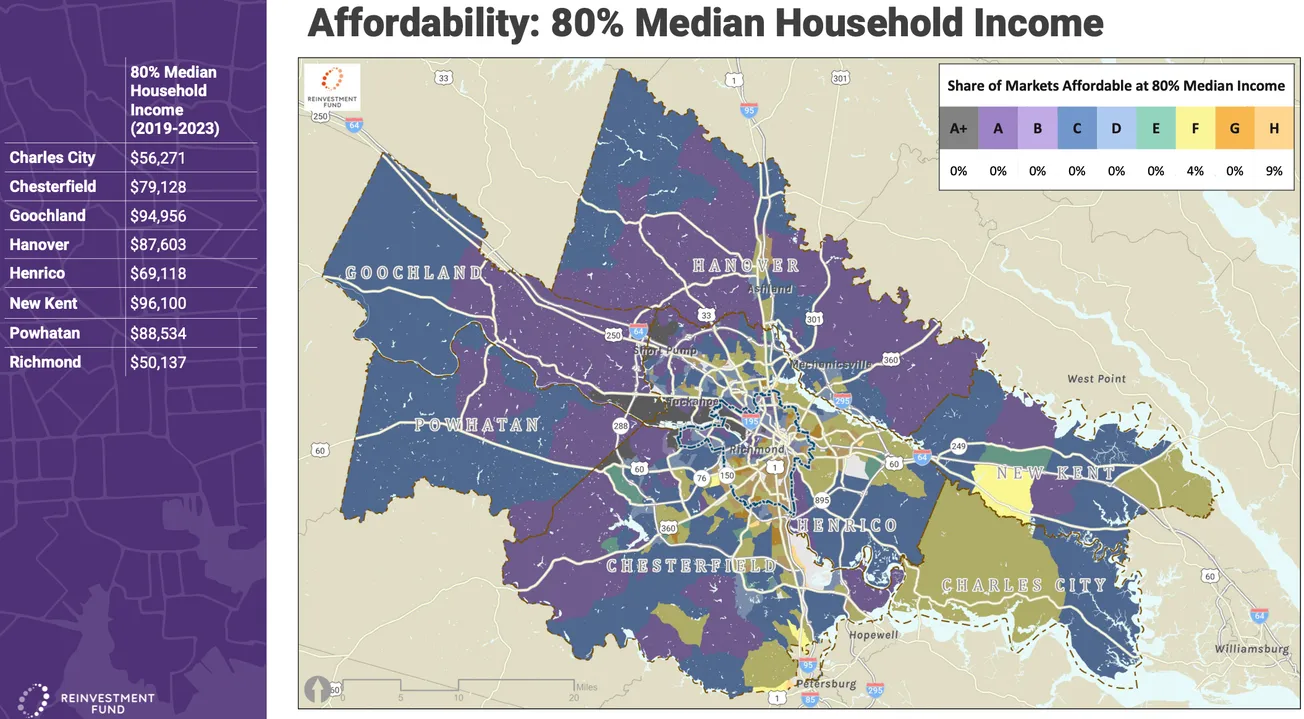
“Henrico County has a mix of very strong markets on the west, middle markets, and then all the way on the east side is all middle and weaker markets. At the same time, the east side has fewer amenities compared to the west side,” Adhikari said.
Henrico County can preemptively plan to protect affordability in those areas while also improving affordability in the high end of the markets, Adhikari said.
“There are a couple of ways localities can work to improve affordability, to prevent loss of affordable units. And at the same time, provide incentives to invite development in certain areas,” Adhikari said.
Early impact of housing trust fund
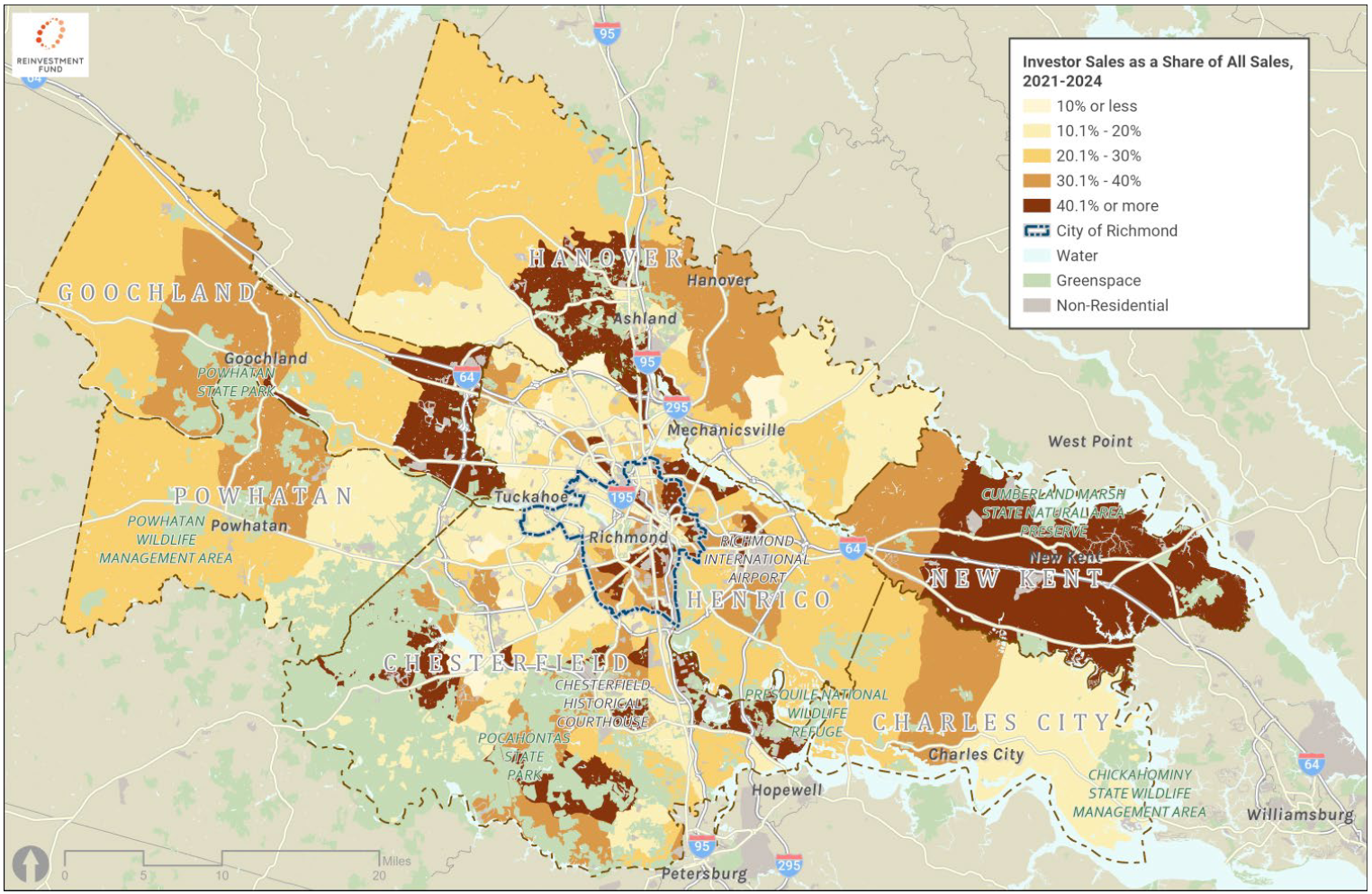
The MVA maps also show areas with displacement pressures due to investor properties.
“The market changes, price changes over time. The changing affordability where you can afford to live in Henrico has really reduced,” Adhikari said. “Those areas are getting smaller. If you are earning 80% or 100% of median household income, then the neighborhoods that you can afford to live in, in Henrico, they are shrinking over time.”
There also is a substantial amount of investor activity happening in weaker markets, which is creating a threat of loss of affordable units.
“Investor activity is not bad in their own sense, it is the investment coming into the county, which is good. But we have to be careful that we don't lose all of our affordable units during that process,” Adhikari said.
Henrico is the second most common locality where people are calling to the Partnership for Housing Affordability housing resource line for support about housing needs.
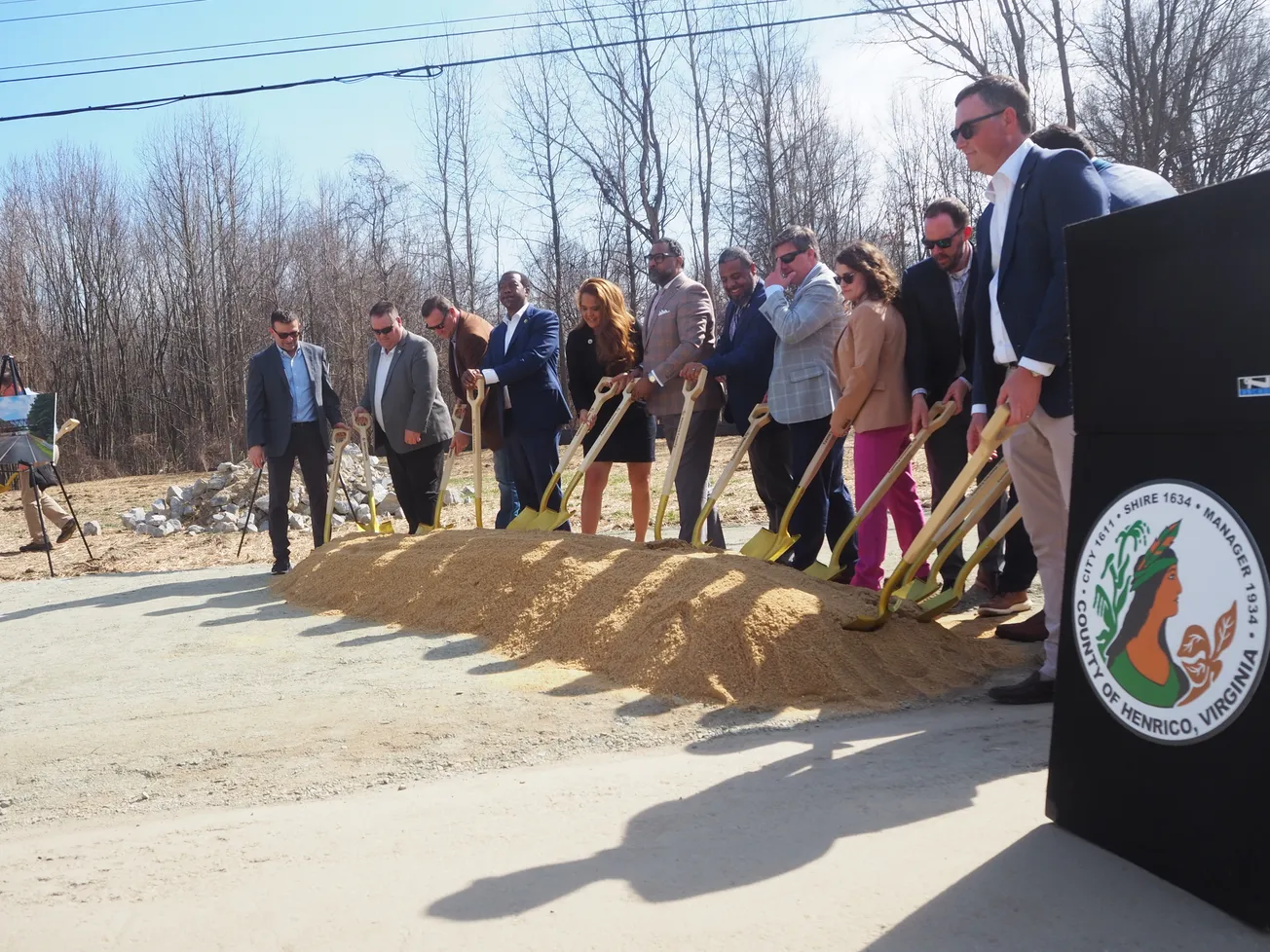
PHA Policy Director Woody Rogers points to the Henrico Affordable Housing Trust Fund as a possible solution to the need for affordable housing in the county, where more than 380 units have been awarded trust fund dollars.
“Developers, builders who don't typically work with affordable housing programs, when the program works for them, it can pair really nicely and create units that are affordable quite quickly and at scale,” Rogers said. "After a year and a half, we've committed over half of the $60 million original investment already. It was supposed to be a five-year timeline. The interest from the for-profit building community is has been really encouraging.”
Ben Teresa, director of the Virginia Commonwealth University Eviction Lab said the MVA is useful because it gets at the different aspects of housing challenges.
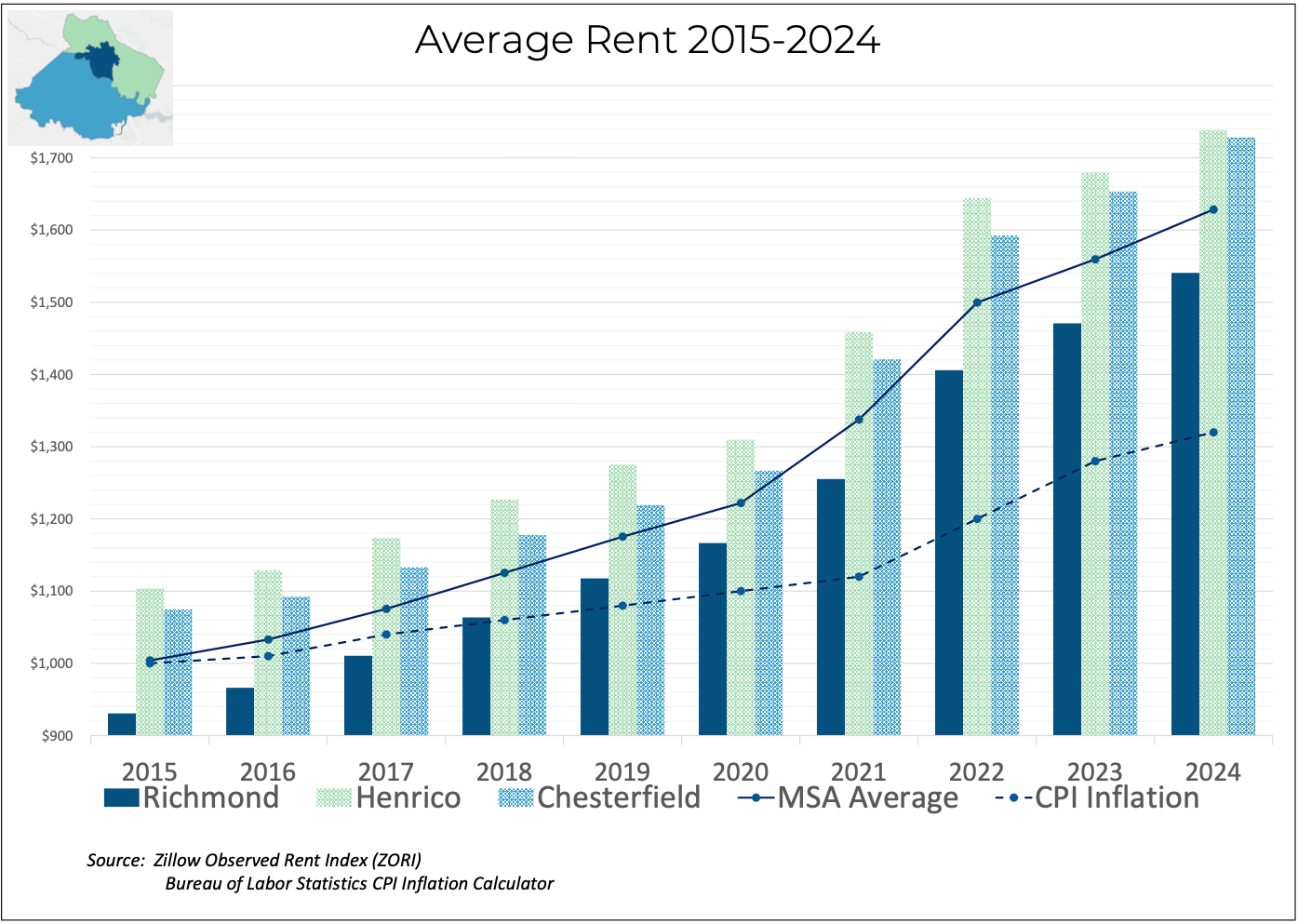
“There's rising rents that are rising faster than renters’ incomes, and in particular, how rents have increased faster than the cost of providing that housing,” Teresa said. “There's also affordability and price concerns in homeownership. Investor activity isn't evenly felt across the housing market, but it's highly concentrated in some of the lower value housing markets, which will impact both vulnerable renters, as well as, what we might have considered entry level housing stock, moderate and low priced homes, which is in very short supply.”
Teresa agrees with the conclusion that the current market dynamic is not one that's producing affordable housing.
“It's not sustainable in the sense of, if the purpose of a well-functioning housing market is to serve households across the region, obviously that's not happening here,” Teresa said.

'A very robust, exciting market'
Sim, as a realtor, sees this spring as another high demand season.
“We do obviously need more housing, but that doesn't necessarily make it more affordable, unless it's somehow subsidized because everything has gone up, materials and labor. To create a house now is not the same cost that it was 10 years ago,” Sim said.
If inventory that is better price per square foot can be found in Chesterfield, then people might just switch, she said.
For buyers who insist on living in pricier sections of Henrico then, there are going to be options that are limited by inventory that's available in certain price points. Sim may help her clients seek out grants.
She also doesn’t see the rising housing prices as a completely negative thing.
“It's a good sign on some level because it means that the value of all the homes are going up. And for the homeowners, that's good. That's part of why they bought a home. You buy it with the hope that this is your biggest investment and it's going to go up in price,” Sim said.
“We want to see an upward trend. The flip side of that is that we're not back in 2016 when a 20-something can buy a home that's $125,000. It’s a very robust, exciting market. There's already activity building. It's still one where both sellers and buyers can be happy depending on what strategy you're using.
“I'm really looking forward to seeing some of my buyers get into homes that they love.”
Dina Weinstein is the Citizen’s community vitality reporter and a Report for America corps member, covering housing, health and transportation. Support her work and articles like this one by making a contribution to the Citizen.