After last year’s overhaul, Va. lawmakers consider tweaking K-12 assessment testing
Bills would address students’ final grade, administration of tests and retakes
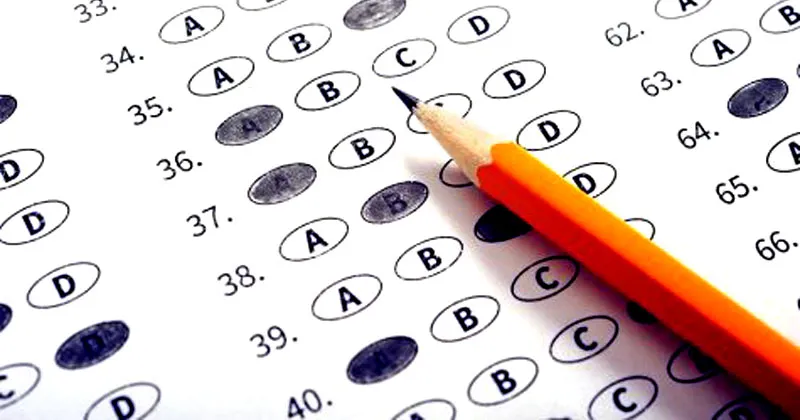
Less than a year after it was enacted, lawmakers will revisit a proposal that brought major changes to Virginia’s K-12 public school testing system, with the main debate centering on whether to keep or repeal a provision passed last year that requires assessments to count for 10% of students’ final grades.
Overhauling the testing system aims to raise student performance, strengthen outcomes and make the Standards of Learning (SOL) assessments in core subjects (math, reading, history and social science) more meaningful.
The changes made to SOL testing to tie test scores to final grades, shift test timing, and give parents clearer results garnered widespread support in the General Assembly. However, some lawmakers, like Del. Kelly Convirs-Fowler, D-Virginia Beach, who opposed certain portions, argued the education community did not entirely support the revamp.
“Overall, it is meant to be an assessment of how these SOLs are being taught, if it’s working, and so it shouldn’t be a part of their grade,” said Convirs-Fowler, a retired educator, last week.
She added that “Standards of Learning are standards and the testing is what we’re using to assess that we’ve done what we’re supposed to do … and if we do that, then that’s the goal.”
Last year, the legislation carried by Del. Dan Helmer, D-Fairfax, and Sen. Schuyler VanValkenburg, D-Henrico, took different measures to improve how the SOLs are administered and used to evaluate what students should know at the end of each grade or course.
VanValkenburg, a History and US Government teacher at Glen Allen High School, said he is aware of the Convirs-Fowler’s view, but had not spoken to her at the start of the session. He said the provision was intended to alleviate end-of-year testing and improve testing.
He said the primary goal is to reduce overtesting by replacing separate teacher-led finals with standardized end-of-course exams, ensuring students face only one major cumulative test.
VanValkenburg said adding these scores to the final grades motivates students and gives them a clearer reason to take the exams seriously. He also said this provision reduces the burden on educators. Currently, teachers lose weeks of instructional time to repeated testing cycles.
“As a teacher, it’s incredibly frustrating when the last five weeks of your school year are bogged down in repeated final exams,” VanValkenburg said. “It doesn’t make any sense to me.”
State Department of Education data showed modest gains in 2023-2024 reading and math pass rates. These gains followed targeted recovery efforts led by Gov. Glenn Youngkin and the General Assembly. Performance in other subjects stayed below 2022-2023 levels.
Convirs-Fowler was one of the few who voted against the legislation. This year, she is carrying House Bill 189, which aims to repeal a law requiring students in grades 7-12 to have at least 10% of their final grade in a course determined by their SOL or local alternative assessment scores.
Virginia recently overhauled its accountability system, splitting its accreditation model into two systems: one to determine whether schools meet legal and regulatory requirements, and another to provide clear data on student and school performance.
Scott Brabrand, executive director of the Virginia Association of School Superintendents, said that with revisions to the state’s accountability system, Virginia now has multiple ways to track accountability without having to make the SOLs count for 10% of the student’s final grade.
“The Standards of Learning are an important part of accountability, but they’re not the only part of accountability, especially in this new performance and support framework,” Brabrand said. “Additionally, SOLs are tied to a student’s graduation. Students have to get a certain number of verified credits to pass the SOLs. So really, this 10% final grade is adding an additional layer of accountability that really isn’t necessary.”
The future of Convirs-Fowler’s bill is uncertain as Helmer and VanValkenburg have filed companion bills to refine their previous legislation. These changes focus on grading integrity, student eligibility for alternate assessments, test timing, and the public release of assessment materials.
Some of the highlights of the proposal include adding specific exemptions for students with significant cognitive disabilities and clarifying that parents and teachers are part of the team that decides whether a student should use an alternate test.
Exceptions to the test timing were added for high school seniors in the final semester, students retaking tests and student transfers.
National exams, such as Advanced Placement (AP), International Baccalaureate (IB), and College Level Examination Program (CLEP), would be exempt from the general limit of one assessment per academic quarter under the measure.
The proposal would allow school boards to request a case-by-case exemption to give a standard SOL test to an individual student, even if the rest of the class is taking a local alternative assessment, provided that the exemption does not exceed five percent of the students in that subject.
To protect the security of future exams, the proposal allows the board to release representative sample questions instead of a full past exam, if releasing the full exam would leave less than 70% of the question bank available.
Changes to the legislation are likely to affect the Board of Education’s efforts to revise how the state measures students’ performance in history and social science in the state’s Consolidated State Plan.
Social studies leaders have advocated for flexible, performance-based local assessments that allow educators to measure student learning in meaningful, varied ways while maintaining alignment with state standards. Such assessments balance accountability with recognition that students learn and demonstrate knowledge differently.
The proposed legislation would add safeguards for both mandatory and permissive local alternative assessments, including requiring permissive assessments to be graded in alignment with the “best practices” established by the Board of Education, which are slated to be made available to schools by Sept. 1, 2026.
The proposal also creates stricter rules for grading local alternative assessments, such as preventing teachers from grading their own students’ work and ensuring students have no prior access to the test prompts.
There are other bills that might impact testing on the docket. A measure being carried by Sen. David Suetterlein, R-Roanoke County, and Del. Sam Rasoul, D-Roanoke, would give Virginia school districts more time and flexibility in how they test students.
Currently, the commonwealth is rolling out a new testing system that measures student growth throughout the year. Sutterlein and Rasoul’s bill would allow schools to fully switch to the new system and continue using alternative tests until the 2027-2028 school year.
Under House Bill 1243 sponsored by Del. Israel O’Quinn, R-Washington, if a student fails an SOL test but quickly retakes it and passes, the school would count only the passing retake score when the student’s performance and the school’s overall rating and accreditation are considered.
Currently, a failing score can impact a school’s rating.
Virginia Mercury is part of States Newsroom, a nonprofit news network supported by grants and a coalition of donors as a 501c(3) public charity. Virginia Mercury maintains editorial independence. Contact Editor Samantha Willis for questions: info@virginiamercury.com.