A voter’s guide to Virginia’s 2026 redistricting push
The “why” and “how” of the current redistricting proposal that’s designed to give legislators temporary power to reshape the state’s 11 congressional districts
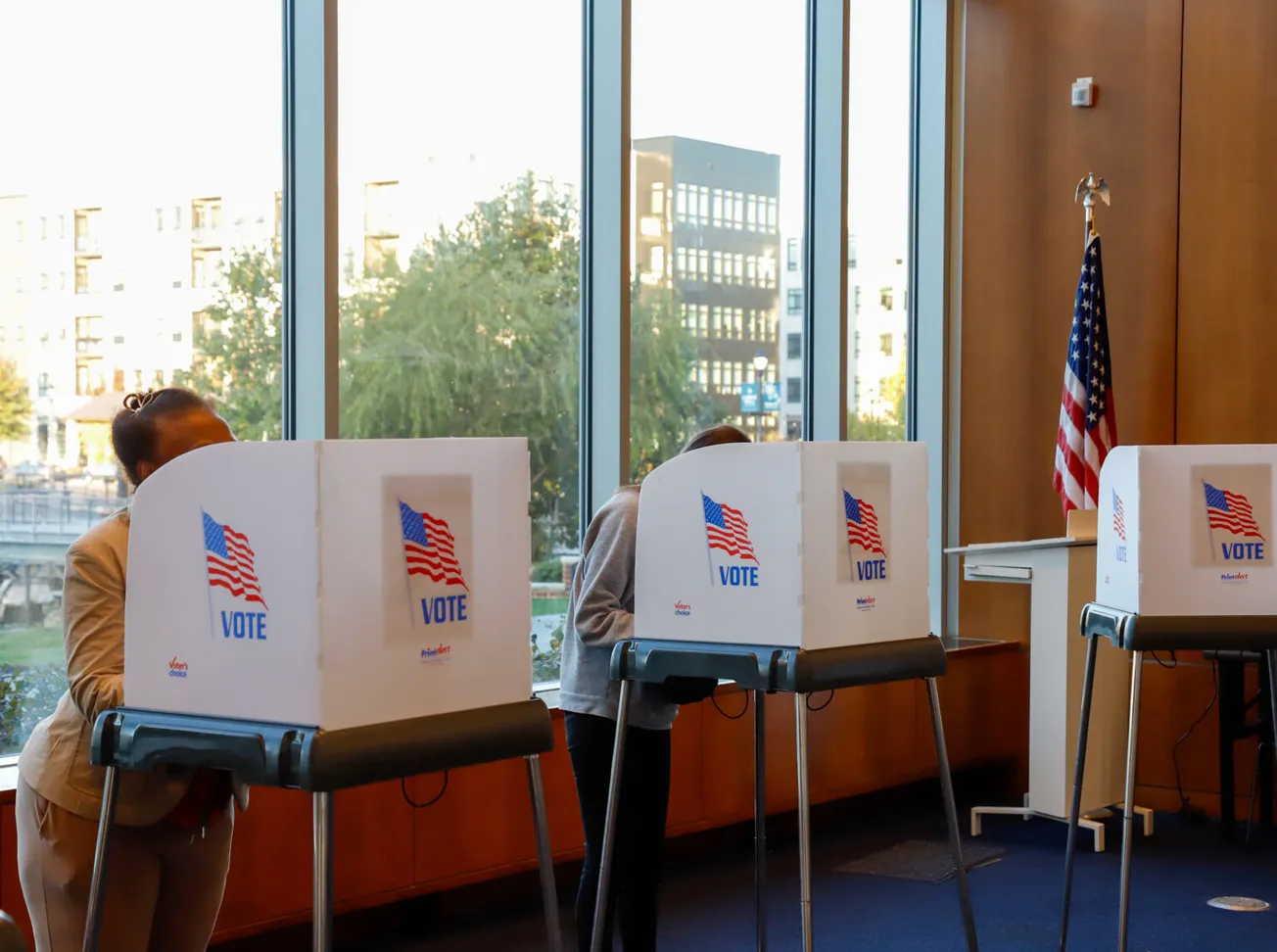
Six years ago, Robin Levey volunteered at the polls near her home in Richmond to help win voter approval of a bipartisan redistricting commission.
“I have always fought for all of us to have fair representation,” she said. “But this isn’t a moment we can stand on principle. We have to fight fire with fire.”
Levey, a 66-year-old Democrat, is alarmed that President Donald Trump is encouraging Republican-controlled states to rig congressional districts ahead of midterm elections this November.

Because of that, she’s willing to go back – at least temporarily – to an era when Virginia politicians drew districts for their own partisan advantage. The real-estate broker will vote yes for a Democratic gerrymander so extreme that it would deny hundreds of thousands of Virginia Republicans a chance to elect a congressional candidate of their choice.
“I certainly have empathy for them,” Levey said of Republican voters, “but the one they have in the White House is trying to take away from all of us.”
In six short years, Virginia has gone from the new darling of nonpartisan districts to teetering on the cusp of joining a nationwide, partisan redistricting war.
Voters will have what could be the last say on whether Virginia will temporarily suspend the redistricting commission and allow the Democrat-controlled state legislature to redraw Virginia’s 11 congressional districts before elections this November.
Lawmakers’ map-making powers would be temporary. After the 2030 Census, the commission would resume responsibility for drawing congressional maps. The measure would not affect state legislative districts.
The ballot question will be put to voters in a referendum held on April 21. Early voting is scheduled to begin March 6, pending the outcome of a second Republican lawsuit seeking to stop the ballot measure from going forward. In an earlier lawsuit, the state Supreme Court allowed the constitutional amendment to proceed. The deadline for arguments in the case is set for two days after the election is held.
It’s possible that no matter what voters say, the court will have the last word.
Confusion for candidates, voters
Virginia’s possible head-spinning reversal has created uncertainty for candidates and voters alike.
When bestselling author Beth Macy decided to run for Congress, she said friends gave her a map of the 6th congressional district. She festooned it with color-coded notes marking her appearances scheduled up and down the Shenandoah Valley.
Then things changed.
Earlier this month, the Democrat-controlled General Assembly rolled out a proposed redistricting plan that would carve the Shenandoah Valley into four different congressional districts.
That leaves Macy juggling two potential maps, unsure which set of voters she ultimately will be seeking to represent.
When the Mercury caught up with Macy, she and her campaign manager were driving to Harrisonburg, which happens to overlap with the current and proposed districts.
But Macy, who lives in Roanoke, said she now has to figure out how to split her time between the Valley or follow the proposed map, which would take her to Blacksburg, Lynchburg and Charlottesville.
The uncertainty also affects voters.
The proposed map would move 48% of Virginians to a new district. And outside of far Southwestern Virginia, those now represented by a Republican would find themselves in one that would favor Democrats. This raises questions that don’t yet have clear answers.
Will Republicans in Mathews County near the mouth of the Chesapeake Bay continue to vote in a GOP-friendly district that stretches from Tidewater to the Richmond suburbs, or become part of a safe Democratic district with its population anchored all the way up in Alexandria?
Will residents of Danville along the North Carolina line continue to be part of a solid Republican district that extends north along the Route 29 corridor, or become part of a safe Democratic district with a population based in Richmond?
Virginians who want to find out what changes could be coming to their congressional districts can use a free online tool created by the nonpartisan Virginia Public Access Project.

Comparing current and proposed maps
To understand what Virginia’s foray into mid-decade redistricting means for the average Virginian, it helps to understand the starkly different intent of the current congressional maps and the proposed ones.
The existing maps went into effect in 2022 and contain the first-ever congressional districts drawn under a voter-approved constitutional mandate for bipartisan redistricting.
The redistricting commission failed to produce maps, which under the constitution gave the state Supreme Court the authority to draw districts. The court hired two experts – one Republican, one Democrat – to craft maps to reflect Virginia’s current left-of-center lean.
In a December 2021 memo, the bipartisan mapmakers said their creation was well-balanced and “does not unduly favor any party.”
The court-drawn congressional maps were first used in 2022, resulting in 6 Democratic and 5 Republican representatives. That partisan split was almost identical to the way Virginians voted in the 2020 presidential election.
Virginia was one of 22 states that received an A from the Princeton Gerrymandering Project.
As a general rule concerning the current congressional maps, if you live in or near an urban area, you are likely to be represented by one of the six Democratic members of the state’s congressional delegation.
Likewise, if you reside in a largely rural area, such as the Shenandoah Valley or the Northern Neck, chances are good that you are represented by one of the five Republicans.
By contrast, the proposed Democrat map is a deliberate partisan gerrymander that seeks to limit Republican control to only one district in the state’s far Southwestern corner.
In order to achieve a 10-D, 1-R map, Democrats created five districts that originate in densely populated Northern Virginia with fingers that reach deep into sparsely populated rural areas.
Pending the result of midterm elections this fall, it’s possible that rural voters in places like the Shenandoah Valley, the Piedmont and a wide swath of Tidewater all would be represented by Democrats who reside in the Washington suburbs.
A Democratic victory in 10 districts would not be a slam dunk. Two proposed districts – the 6th (Blacksburg-Roanoke-Lynchburg-Charlottesville) and the 2nd (Suffolk, Chesapeake, Virginia Beach-Eastern Shore) – are considered toss-ups, based on an average of statewide elections this decade for governor and president.
At the last minute, Democratic legislators rejiggered the 2nd District to make it slightly easier for them to win.

Spanberger’s apparent caution
Redistricting is a process that states typically do at the start of each decade, right after the Census updates population numbers.
But last July, Trump started the mid-decade redistricting arms race. He ordered Texas Republican lawmakers to adjust district lines to squeeze out five extra GOP seats, which could help House Republicans maintain their razor-thin majority. Soon, California Democrats announced they would seek voters’ permission to redraw maps to cancel Texas’ gains.
As other states jumped in, Virginia appeared immune from the tit-for-tat battle. With the redistricting commission enshrined in the state constitution, there didn’t appear to be sufficient time to get an amendment before voters, a process that typically takes two years.
In late October, however, Democrats reconvened a special session of the General Assembly and unveiled a timeline they claimed could shorten the constitutional amendment process to just six months. Once they cemented control of both chambers of the legislature and the victory of Democrat Abigail Spanberger in the governor’s race, Democrats had cleared all political obstacles to their plan.
Spanberger, who campaigned on her congressional reputation as a bipartisan problem-solver, initially distanced herself from Democrat’s call for a maximalist 10-1 gerrymander.
In interviews after her election, Spanberger questioned whether such an extreme redraw was necessary. She noted that her campaign had won 8 of 11 congressional districts, including the 1st and 2nd districts now represented by Republicans. She also worried that a map that sought to flip two additional Republican districts could make some existing Democrats vulnerable.
While she has never explicitly endorsed the 10-1 gerrymander, she signed the bill to set a referendum for the redistricting amendment and three others saying she would let the voters decide.

National Democrats say, “Whatever it takes”
After California canceled Texas, Trump found three other states willing to join the mid-decade voluntary redraw. Missouri and North Carolina changed their maps, each expected to yield one extra GOP congressional seat in elections this November.
A third state, Florida, will hold a special legislative session on redistricting in April. That effort is expected to yield two to five more GOP seats.
The net result could swing as many as seven GOP seats.
National Democrats tried without success to recruit other states with Democrat-controlled legislatures to join California. Illinois has shown no inclination after Republican legislators in neighboring Indiana passed on Trump’s gambit. Maryland Gov. Wes Moore has failed to persuade the Democrat-controlled legislature there to wipe the state’s only GOP seat off the map.
That leaves Virginia as national Democrats’ last hope to counter Trump.
House Minority Leader Hakeem Jeffries said earlier this month that national Democrats would do “whatever it takes” to ensure Virginia’s ballot initiative passes on April 21.
“We will spend tens of millions of dollars to make sure … that voters have all of the information necessary to make a decision around whether they want Donald Trump to rig the midterm elections and halt the ability for the American people to decide who’s in the majority,” Jeffries told CNN Feb. 15.
So far, national Democratic groups have donated $10 million to Virginians for Fair Elections, a group that is encouraging a yes vote on April 21.
Virginia’s neutral congressional map makes it ripe for a partisan gerrymander.
Many other states already had drawn districts that favor one party or the other. For example, North Carolina Republicans had to squeeze hard to deliver one more GOP seat for Trump. In Virginia – which has a smaller population than its southern neighbor – Democrats think they can create four times as many blue seats.
In a TV spot released this week, the Virginians for Fair Elections campaign features an original member of Virginia’s redistricting commission expressing his support for independent and bipartisan maps.
“But when Trump orders MAGA governors to rig their maps so he can hold onto power, we cannot sit by and do nothing,” said James Abrenio, a Democratic lawyer from Northern Virginia.
The 30-second spot says a yes vote would “restore fairness” in national elections, but sidesteps any consideration of whether it would be fair to impose a 10-1 map on Virginia Republicans.
By releasing the maps ahead of the vote, Democratic legislators say the process is transparent and that the final decision will be left in the hands of the voters.
What early polls say
Early polls suggest Democratic leaders have yet to make their case.
“We wouldn’t win if the vote were held today,” Virginians for Fair Elections warned Monday in a fundraising appeal to supporters.
Earlier that day, Roanoke College released a poll that found that 52% of 800 Virginians surveyed would vote against the proposed constitutional amendment, while 44% would vote in favor.
Brian Cannon, who led the successful 2020 campaign to win voter approval for the redistricting commission, noted that the Roanoke College poll showed that 61% disapproved of Trump, but only 44% would vote for the constitutional amendment.
“That is a pretty big delta,” Cannon said in an interview Tuesday.
It’s hard to know how accurate predictive polling will be because there is no past record of turnout models for a statewide ballot measure held in April.
Some Democrats who fought for nonpartisan redistricting say they will oppose rigging Virginia maps in such an extreme way.
“It’s wrong and it’s not necessary,” said Wendala Shannon, a database manager who lives in Richmond’s Museum District.
Shannon believes that Democrats could pick up two or more seats without touching the current lines.
“If I thought the Republicans had a shot, then I would be in less in the ‘Do the right thing’ camp,” she admitted. “But I don’t think they do. I think Trump is so unpopular.”
Two “no” groups organizing
Cannon is leading a bipartisan group called No Gerrymandering Virginia that is seeking to ensure there will be no lapse in the redistricting commission’s authority.
He said the goal was to raise $1 million, which is less than the Democratic ‘Yes’ group is spending a week in TV advertising.
This week, No Gerrymandering Virginia launched a digital ad featuring a photograph of Spanberger and her 2019 tweet that condemned gerrymandering as a threat to our democracy.
“She was right on principle, and those principles still matter,” a woman’s voice says in the ad. “But now there is a proposal to set aside our independent safeguards and hand map-drawing back to politicians in Richmond. It would replace fair districts with a distorted map designed for a single party.”
Meanwhile, Republicans are gearing up for an eight-week blitz to rally opposition to the constitutional amendment.
The campaign is a test for Jeff Ryer, a longtime GOP operative who this month was named chairman of the Republican Party of Virginia.
“If their rigged maps pass, millions of Virginians would be ignored and forgotten by Democrats who only care about appeasing urban elites,” Ryer said in a Feb. 13 statement, the day the state Supreme Court said it would allow the amendment vote to proceed.
“Our message is simple: this amendment is a partisan power grab that undermines the Virginia Constitution, subverts democracy, and betrays the will of the people,” Ryer said.
One possible sign that Republicans are energized emerged this week in New Kent, where County Treasurer Charles Evelyn was so riled up that he posted a long message on Facebook about the redistricting question.
“I don’t usually post politics here,” said Eveyln, whose feed is filled with photos of his two young children. “Y’all know that. I’d rather argue about brisket bark or whether Duke’s mayo is superior to everything else on earth.”
Eveyln concluded with his contention that the state constitution should be a foundational document, not something you suspend temporarily depending on political expediency.
“The Constitution isn’t a weapon,” he wrote. “It’s not a loophole machine. It’s not a playbook for power grabs. It’s a restraint on everyone, especially the people in power.”
What is “fair?”
Republicans are particularly alarmed that Democrats abandoned a long-time practice of presenting constitutional questions to voters in neutral, straightforward language.
In the April referendum, voters will be asked if the state constitution should be amended to “restore fairness in the upcoming election.”
On the House floor last month, Republicans sought to amend the language, which they say is deceptive and designed to lead people to only one conclusion. But Democrats cut off debate and approved the ballot wording on a straight party-line vote.
Mark Cole, a former Republican state legislator who chaired the House elections committee for a decade, said he’d never seen a ballot question with such a loaded question.
“If it was presented honestly,” Cole said in a telephone interview, “I think the voters would vote it down.”
Democratic leaders contend the most important part of the process is that voters have the opportunity to see the maps ahead of time and decide for themselves what is fair.
“I think voters are smart enough to figure it out,” House Speaker Del. Don Scott, D-Portsmouth, said in an interview.
Voters have the first say, not necessarily the last one
When the state Supreme Court opted to allow the April 21 referendum to proceed before legal appeals were exhausted, it reserved the right to have the last say.
Two days after the ballot question, the court will receive briefs in a Republican lawsuit claiming that the ballot measure was invalid because Democrats, in their rush to speed up the process, ignored their own procedures and cut legal corners.
If voters reject the constitutional amendment, the lawsuit will be moot. Elections this fall will proceed in the existing districts that the court itself approved.
If voters approve the constitutional amendment, the court – which has long avoided becoming enmeshed in political questions – would also have an easy out if the justices find no merit in the Republican case. Elections this fall would take place in the new districts.
But if the high court finds for the Republicans, it could face an extraordinarily difficult decision. Would an appropriate remedy include invalidating the results of the just-completed election?
In one swoop, the court could second-guess the legislative branch and overturn the will of the voters.
Editor’s note: David Poole founded the Virginia Public Access Project in 1997 and served as the organization’s executive director until 2023.

Virginia Mercury is part of States Newsroom, a nonprofit news network supported by grants and a coalition of donors as a 501c(3) public charity. Virginia Mercury maintains editorial independence. Contact Editor Samantha Willis for questions: info@virginiamercury.com.